
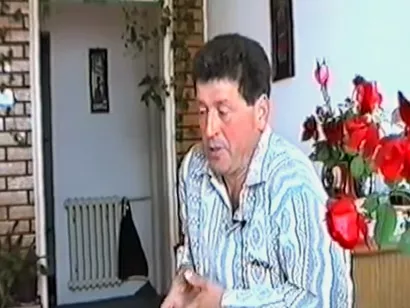
I turned around and saw that the Serbian soldier couldn't see me and that I could escape. At that moment, it was as if someone pulled me downwards. I knew there was a sewage pipe in the basement where I could hide – recounted Mehmed Heremić from Mrkonjić Grad, a former prisoner of the Army of Republika Srpska, a witness to the shooting of prisoners in Oborci near Donji Vakuf, reports the Bosnian news agency Patria (NAP).
Heremić is the sole survivor of the execution carried out by Serbian soldiers on September 13, 1995, in Oborci. Members of the 1st Krajina Corps of the Army of RS then killed 28 people from Mrkonjić Grad. Among the killed were 24 Bosniaks and four Croats. These were people previously arrested by Serbian forces in Mrkonjić Grad, who were then forced to dig trenches for the RS Army on battlefields in Mrkonjić Grad, Trijebovo, Manjača, Kupres, Bugojno, Donji Vakuf...
They were killed shortly before the withdrawal of the Army of RS from Donji Vakuf. Serbian soldiers took the prisoners from the Railway Station in Oborci and shot them in groups of five, writes NAP.
Heremić survived by hiding in a sewage pipe of the building where he was imprisoned. In his interview given to journalist Ibrahim Halilović several years ago, he recounted the horrors he and his friends went through, and how he listened from the pipe to the killing of his friends.
- The Serbs from Donji Vakuf packed up and were leaving. We were locked in some rooms and we could watch their departure through the window. Trucks, tractors, civilians were passing by on the road... – Heremić recalled.
- No one spoke to us for two days. We didn't even receive food during that time. We weren't scared; we figured we could manage without food until we returned home, because we believed they wouldn't kill us.
However, around two or three in the afternoon, a Serbian soldier came into the room. He was tall, young, at most 25 years old. He had a black scarf tied around his head. He came in, checked what was in the rooms, said nothing, just looked at us ugly, and then left.
Half an hour later, he came again and told us to sit down and not to look out the window. If anyone looked outside, he said he would shoot and kill them. After that, he left, but he kept coming back every half hour.
Around three or half past three in the afternoon, that same soldier came back into the room where we were imprisoned, but this time with the police commander of Donji Vakuf. They harassed us for a while, then left.
I managed to look through the window and then I saw the two of them parting ways with the soldier who had previously been in charge of our work squad. I thought that was good – either they would leave us locked up alone, or they would let us walk home - Heremić recounted.
Unfortunately, he says, his assessment was poor.
- That guy with the black scarf around his head came back into the room where the prisoners were and took out five of my friends, including my brother. We thought those five people needed to do something, to load something. That didn't happen. After ten minutes, we heard gunfire. We started saying they were shooting to scare us. We didn't want to believe they were executing them.
Ten minutes later, the same guy came again and took another five people. It became clear to me then that something was happening. I started convincing people that they were shooting ours and that we had to do something. I suggested we run, and whoever survives - survives. Whether it was fear or I don't know, but everyone was convinced they were just scaring us with those bursts of fire and that running would only make things worse.
When the Serbian soldier with the scarf came for the last group, which included Heremić, he firmly decided he would try to escape.
- I stood at the front of the column and waited for the chance to run. And, since we were on the floor, from which we had to go down a semicircular staircase, at one point I found myself in a situation where the Serbian soldier at the end of the column couldn't see me. I turned into the basement and hid in a sewage pipe.
I was terrified. I stayed there until three in the morning. Under my feet in the pipe, there was some sheet metal that made noise at the slightest movement, so I had to stay in one position until three in the morning. When I finally came out of the pipe, my body was stiff. I couldn't move – Heremić recalled.
Outside, he says, heavy rain was falling, and nothing could be seen in the darkness. From that building where he spent the night, he fled into the nearby cornfields.
- All night, rain fell on me. I was terrified, but I also hoped I would survive. There were no more Serbian soldiers nearby. They had left Oborci. Only corpses remained behind them. I watched them lying on the road. When I saw soldiers of the Army of the Republic of Bosnia and Herzegovina in the morning, tears streamed down my face. It was as if I was born again – Heremić recounted.
The media previously reported that the Prosecutor's Office of Bosnia and Herzegovina is conducting an investigation against several persons suspected of crimes in Oborci, but their names have not been disclosed, writes NAP.
You can watch the complete interview with Mehmed Heremić HERE.
Komentari (0)
Prijavite se za komentiranje
PrijavaJos nema komentara. Budite prvi!
Minuta
Sve →Iz drugih kategorija

High Representative Not Elected: Germans, French and British Sabotaged Americans, New Attempt at End of June

ČOVIĆ WITHOUT MERCY: How Those Who Brought Ademović to Office Created a Political Hell for Him



Sunny Saturday, quite warm



Tragedy in Albanian resort: Two minors drown












