
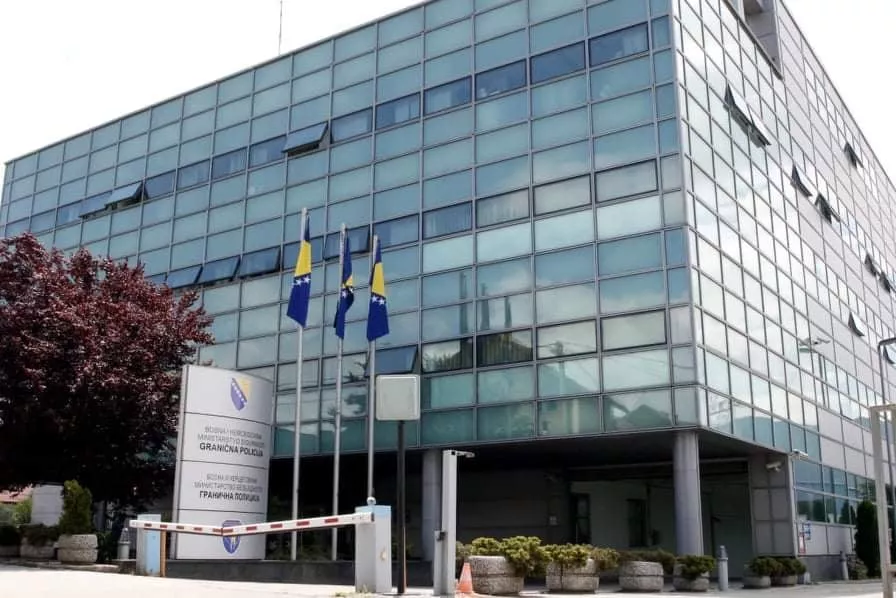
(Patria) - In its latest report, GRECO (Group of States against Corruption monitors the compliance of 49 member states with the Council of Europe's anti-corruption instruments) pays special attention to the fight against corruption in state police agencies, with an emphasis on the BiH Border Police and the State Investigation and Protection Agency. The Border Police had several convictions against police officers for corruption during the reporting period, and several employees were dismissed. One of the biggest corruption scandals is related to the recruitment of 150 cadets in the Border Police. That competition was never concluded, and in the meantime, a trial has begun for rigging the competition. Money was requested and taken from candidates, and in return, their names would appear on the list of those hired. Although the list was published in September 2021 due to an arrest operation and court proceedings, the process of deciding on appeals has not been concluded to this day, nor has a final list been published. The Border Police is facing a brain drain, due to natural attrition (retirement, death of employees), as well as resignations, emigration, changing police agencies, or other jobs.
GRECO notes that in BiH there is a legal vacuum regarding anti-corruption policy. The Strategy for Combating Corruption 2020-2024 and its Action Plan have not been adopted to date, and a holistic anti-corruption policy is lacking at the state level. The Council of Ministers of BiH, without explanation, removed this important Strategy from one of its last sessions, which the APIK expressed regret over and expectation that the Strategy will be adopted as soon as possible.
When it comes to the Border Police and SIPA, existing ethical codes need to be supplemented with practical guidelines that will illustrate all issues and risk areas with concrete examples. GRECO warns about gender representation and the promotion process, in order to ensure that appointments of senior police officials in the Border Police and SIPA are based on merit and that they are conducted through open, standardized, and transparent competitions.
"It is also necessary to introduce an institutional system for rotating police personnel in risk-prone areas. In addition, a legal provision should be adopted that defines incompatibilities with police duties and properly records authorized secondary activities. Furthermore, rules should be adopted to ensure transparency and limit the risks of conflicts of interest when police officers leave the Border Police and SIPA to work in other sectors. Finally, the protection of whistleblowers should be reviewed and strengthened," the report states.
As for the Border Police, the services and situations most prone to corruption include conducting border checks on persons considered to be at high migration risk at border crossings where technical equipment (video surveillance) is not installed, and general checks at border crossings.
The report pays special attention to the security checks of police officers. In the last year alone, the BiH Prosecutor's Office has arrested several police officers for connections with individuals from the criminal milieu. Therefore, special attention must be paid to the integrity of police officers and inspectors in these two agencies.
"GRECO notes that security checks are fully focused on access to police documents, with their frequency depending on the level of confidentiality (10 years for confidential documents and 5 years for secret and top-secret documents). They are based on security questionnaires covering issues such as personal income and immediate family, real estate, vehicles, savings, legal entities (if included or family), records of sanctions of any kind nationwide. If there are suspicions of misconduct by a police officer, e.g., unexplained enrichment, contacts with the criminal milieu, in addition to regular legal checks, extended checks can be initiated by the SIPA Internal Affairs Department.
A frequency of 10 years for most current security checks seems too long, and the frequency should depend primarily on whether the person works in a high-risk area, in which case integrity checks should be more frequent. In addition, these integrity checks should cover various resources (as current security checks for document access do to some extent). GRECO believes that random checks of a certain number of individuals should be conducted annually.
Given that some sectors have already been identified as particularly prone to risk, such as border crossings, and others are particularly sensitive areas such as corruption and organized crime, it would be more beneficial to ensure more frequent checks for staff working in these areas.
GRECO also specifies that it seems necessary to include the directors and deputy directors of both agencies in these regular integrity checks, as well as annual random checks of police officers' selections.
GRECO notes that some sectors, including border crossings, have been identified as particularly prone to corruption, as reflected in cases that have led to sanctions. Sectors such as organized crime, including human trafficking, or police officers dealing with informants are traditionally sectors where risks are higher due to daily proximity to individuals gravitating towards the world of crime.
Although some form of rotation is possible in the Border Police, it appears to be extremely restrictive and limited, despite several corruption cases at the borders. There is no rotation in SIPA at all. Authorities claim this depends on the different nature and specialization of units (financial investigations, witness protection, organized crime, war crimes, and human trafficking). Regardless, GRECO believes that some form of rotation should exist because most of these areas are particularly exposed to corruption risks, and these risks will increase if the same individuals hold the same positions for extended periods. Such rotations can be planned well in advance, allowing sufficient time for training.
GRECO calls on the authorities of Bosnia and Herzegovina to report by June 30, 2024, on the measures taken to implement the aforementioned recommendations. GRECO will evaluate the measures through its specific compliance procedure.
Komentari (0)
Prijavite se za komentiranje
PrijavaJos nema komentara. Budite prvi!
Minuta
Sve →Iz drugih kategorija

High Representative Not Elected: Germans, French and British Sabotaged Americans, New Attempt at End of June

ČOVIĆ WITHOUT MERCY: How Those Who Brought Ademović to Office Created a Political Hell for Him



Sunny Saturday, quite warm



Tragedy in Albanian resort: Two minors drown












