
By Armin Sijamić
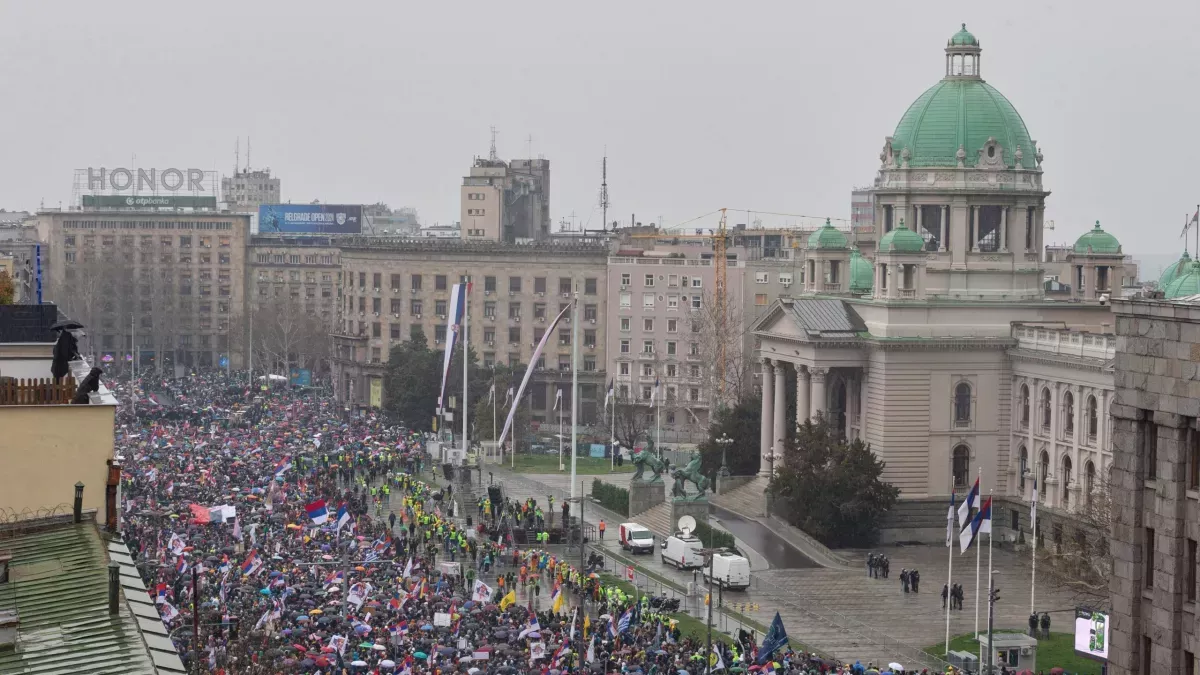
Four days ago, Serbia marked the first anniversary of the canopy collapse at the Novi Sad Railway Station. Sixteen people lost their lives then, and the court process about who is responsible for that tragedy is still ongoing. But the protests have initiated political processes that the West cannot ignore.
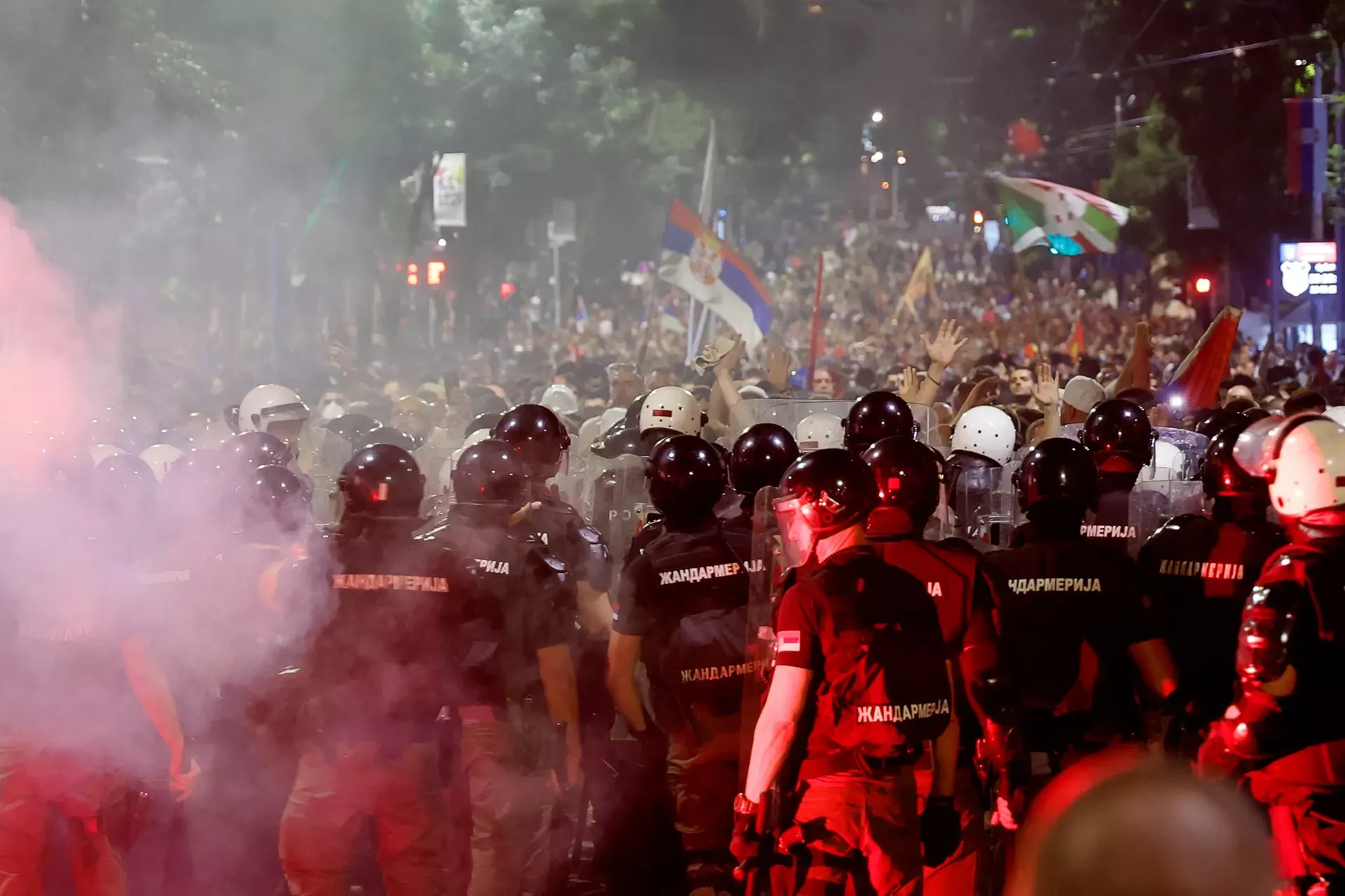
On November 1st last year, Serbia was once again plunged into darkness. After two mass shootings, one at a school in Belgrade and the other in villages near Mladenovac, Serbia mourned victims again. In Novi Sad, fourteen people lost their lives, and the number later increased to sixteen. This was the reason for protests demanding that those responsible for the tragedy be punished by law. The authorities responded with belittling and attempted to cover up the entire case with various tricks.
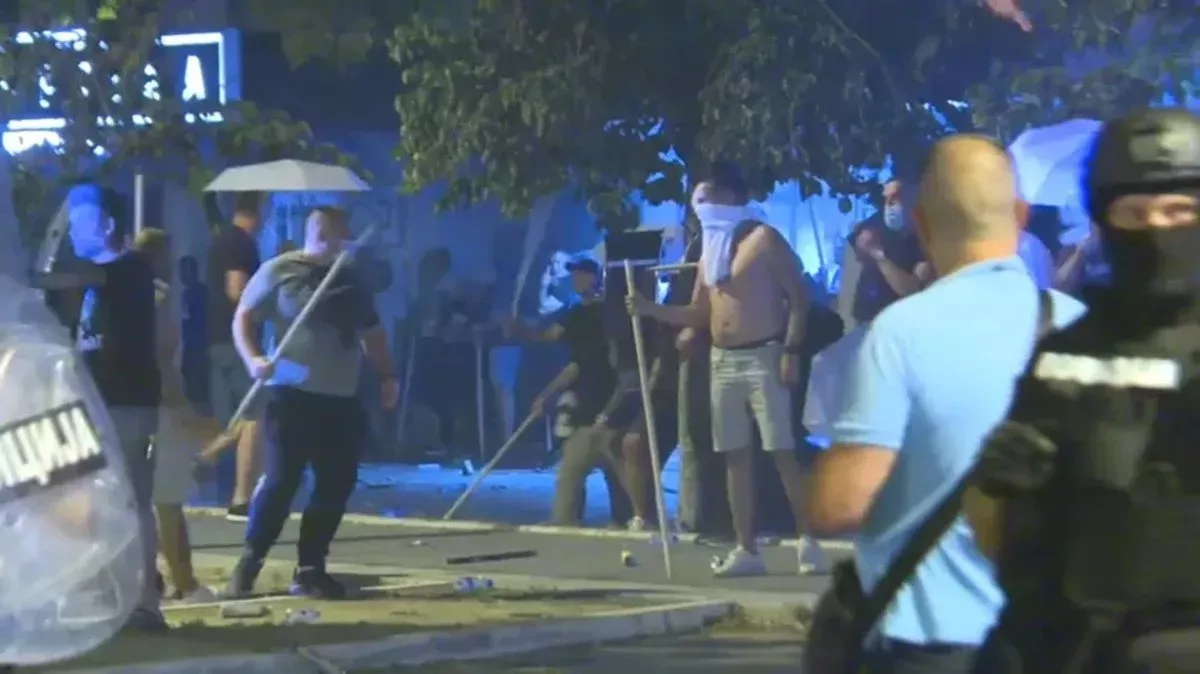
Students were the first to take to the streets, and the protest turned into a popular uprising within a few months. In addition to demanding accountability for the canopy collapse, citizens presented various demands from one protest to another. Each new protest, some of which saw hundreds of thousands of people, gave rise to new demands, while police brutality and arrests of demonstrators on various pretexts grew in parallel. Some were punished more severely than those detained for the canopy collapse.
What particularly hurt Serbian citizens was that President Aleksandar Vučić's government broke up protests with the help of, as the opposition and demonstrators call them, "thugs" – individuals with criminal records who defend the premises of the ruling Serbian Progressive Party (SNS), state institutions, beat up demonstrators, maintain order at sporting events, block streets, reinforce police cordons...
The West's Silence
All of this happened with the West's silence. The European Union was mostly satisfied with criticisms in its parliament, which do not oblige anyone to take any action. Essentially, this was how the idea of a segment of Serbia's citizens, that their country should become a member of the European Union and base its policy on stances different from those that have dominated Belgrade's politics for over three decades – a policy pursued by Slobodan Milošević and Vojislav Šešelj – was being killed.
Such a stance from the West is legitimate and legal, but it is multiply dangerous, not only for those living in Serbia. Besides Vučić, according to accusations from the opposition and demonstrators, attempting to incite unrest in the majority Bosniak-populated Novi Pazar and Slovak-populated Bački Petrovac in response to student protests, similar accusations against Belgrade are linked to events in Bosnia and Herzegovina, Montenegro, and Kosovo.
For example, these days some are blaming the authorities in Belgrade for the unrest in Montenegro – where enraged crowds chased Turkish citizens through the streets, and from Pristina, they report that a Kosovo citizen and ethnic Serb, who is fighting for his life in Niš hospitals, was wounded and kidnapped on the Kosovo side of the border. This incident strongly resembles the fatal events near the Orthodox monastery of Banjska in September 2023, which Serbian courts have yet to resolve.
This way of using various groups is reminiscent of the 1990s, when official Belgrade sent soldiers, police, and criminals disguised as "volunteer" units to the Croatian, Bosnian-Herzegovinian, and Kosovo battlefields. Later, it was proven in courts that these individuals worked for Serbian public and secret services. According to the confession of a Hague convict and "Chetnik Duke" Vojislav Šešelj, under whom Vučić gained political experience in the Serbian Radical Party before forming the SNS, Milošević's government armed his "Chetniks" who are attributed crimes in Croatia, Bosnia and Herzegovina, and later in Kosovo.
If, during the breakup of Yugoslavia, the West could claim not to have been aware of the operations of its secret services, which had been successfully operating worldwide for decades, that cannot be said today. The West has brought almost all segments of society in the countries formed from the breakup of Yugoslavia under its control. This implicitly means that the West is aware of whom Vučić relies on, even as the region faces threats of conflict and as he buys Russian and Chinese weapons with Western money.
The expressions of "concern" from Western officials have reached a point where people are talking about it on social media as a bad joke, convinced that the European Union, in its policy towards Serbia, has abandoned the norms applicable to its member states, forgotten all the values it aggressively advocates on the international stage, and turned to realpolitik in its own backyard.
Anniversary of an event that divided Serbia
The commemoration of the first anniversary of the canopy collapse in Novi Sad was dignified. Students and citizens came from various parts of Serbia, despite traffic being jammed towards Novi Sad. As with previous large protests in the past twelve months, rail traffic was interrupted, bomb threats paralyzed some institutions, and roads were congested.
Nevertheless, tens of thousands of people paid tribute to the victims. This simultaneously shocked and frightened Vučić, who apologized for his harsh words directed at demonstrators over the past year, and in the days before and after, continued to insult the same people. Such a reaction shows that it was important to him that the gathering did not pass as it did, because one of the hallmarks of Vučić's policy is large rallies celebrating his successes.
The rallies organized by Vučić, using hundreds of buses to bring people from Serbia and surrounding countries, are no longer as massive as before. This may mean that a part of Vučić's voter base has tired or that his party is strategizing with these activities, saving resources for new battles.
Protests against Vučić's government are not subsiding, although fatigue is present on that side as well. The start of the school year in many educational institutions, after months of strikes, is an important victory for the authorities, but not a final triumph over the rebellious citizens.
Some public opinion polls in Serbia, according to local media reports, indicate that Vučić has entered a phase where he is trying to maintain his voter base, as he has nowhere else to look for new voters. If he succeeds in retaining his voter base, it will allow him to remain a dominant figure on the political scene, as there is no other individual with remotely similar support.
This means that the confrontation with the rebellious citizens will continue along the current lines, and one of the two sides will prevail – because the authorities do not want to back down, as it has become clear that they cannot find common ground. The defeat of the students and the people they rally means that Serbia could lose many of them, as they might leave their homeland due to repression.
After hundreds of thousands of young and educated people left Serbia in the 1990s, unwilling to participate in Milošević's wars, the defeat of the demonstrators could now be a new blow to the idea that official Belgrade should cease to be a threat to its own citizens and those of neighboring countries. Such a scenario inevitably leads to the strengthening of policies that emerged from the shadows of Milošević and Šešelj.
With its policy towards official Belgrade, the West can determine whether to leave people who want change in Serbia or to open its doors to them, as in previous years. The fact that Serbia has been brought to a situation where any outcome of this political confrontation will be a defeat is exclusively the fault of official Belgrade, i.e., those who have ruled there since the late 1980s.
Komentari (0)
Prijavite se za komentiranje
PrijavaJos nema komentara. Budite prvi!
Minuta
Sve →Iz drugih kategorija

High Representative Not Elected: Germans, French and British Sabotaged Americans, New Attempt at End of June

ČOVIĆ WITHOUT MERCY: How Those Who Brought Ademović to Office Created a Political Hell for Him



Sunny Saturday, quite warm



Tragedy in Albanian resort: Two minors drown












