
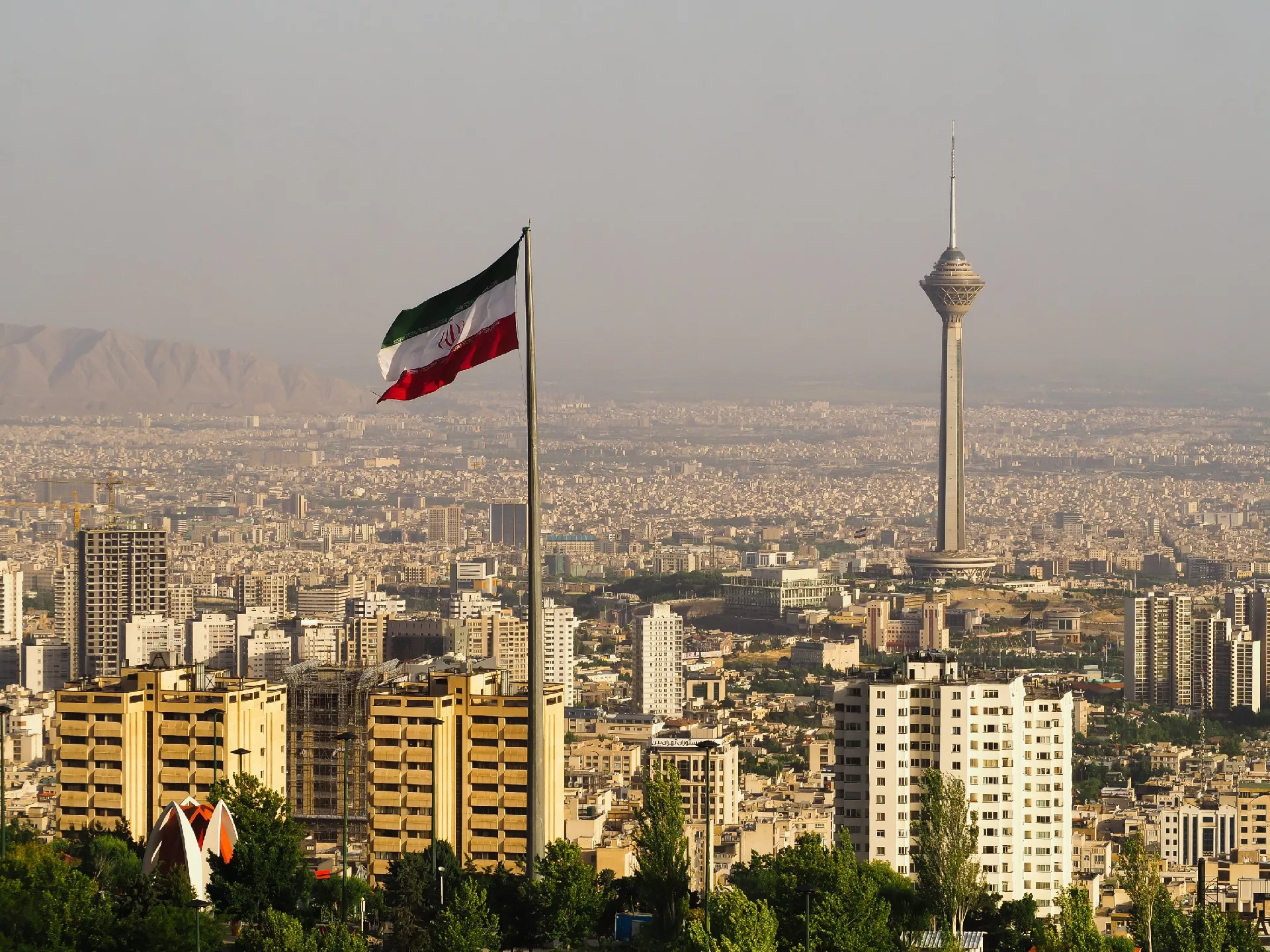
(Patria) - The Speaker of the Iranian Parliament, who led peace talks with the United States in Pakistan, stated yesterday that his country will not give in to threats after US President Donald Trump ordered a naval blockade of the Strait of Hormuz.
"If they fight, we will fight, and if they come up with logic, we will deal with logic. We will not bow to any threats, let them test our will once more so we can teach them a bigger lesson," Mohammad Bagher Ghalibaf told reporters upon his return to Tehran from Islamabad, several Iranian news agencies reported, as cited by Al Arabiya.
The commander of the Iranian Navy, Shahram Irani, called Trump's threat to blockade the Strait of Hormuz "ridiculous," after marathon talks between Tehran and Washington in Islamabad failed to yield an agreement to end the war in the Middle East.
"The brave men of the Navy of the Army of the Islamic Republic of Iran are monitoring and watching all the movements of the aggressive US military in the region. The US president's threats to blockade Iran at sea... are very ridiculous and laughable," he said.
Iran's Islamic Revolutionary Guard Corps (IRGC) announced that any warship attempting to approach the Strait of Hormuz would be considered a violation of the two-week ceasefire with the US and would be dealt with "sharply and decisively."
The strait is under the control and "smart management" of the Iranian Navy, the IRGC said in a statement carried by Iranian state media, adding that it is "open for safe passage of non-military vessels in accordance with special regulations."
Trump's anger
Trump ordered the US Navy to blockade the key shipping route, furious at Iran's refusal to abandon its nuclear ambitions after peace talks in Pakistan failed.
In a lengthy statement on his social media platform, Trump wrote that his ultimate goal was to clear the strait of mines and reopen it for navigation, but in the meantime, Iran should not be allowed to profit from its control over the waterway.
"Immediately, the US Navy, the best in the world, will begin the process of BLOCKADING all ships attempting to enter or exit the Strait of Hormuz," Trump wrote.
"Any Iranian who shoots at us or at peaceful vessels will be THROWN INTO HELL!"
Tehran itself had been restricting traffic through the strait, a crucial route for global oil and gas shipments, while allowing passage to vessels deemed to be working for friendly countries, such as China. There were unconfirmed reports that Tehran planned to charge tolls.
"THIS IS WORLD EXTORTION," Trump said.
"I have also ordered our Navy to search and intercept any ship in international waters that has paid passage to Iran. No one who pays an illegal toll will have safe passage on the high seas. We will also begin destroying the mines that the Iranians have placed in the strait."
The US military announced on Saturday that two US Navy warships had passed through the strait to begin mine clearing and demonstrate that it is a "safe route" for tankers, which Tehran denied.
Trump later threatened Iran's energy infrastructure again in an interview with Fox News, before warning that he would impose a fifty percent tariff on Chinese imports if Beijing attempted to assist the Iranian military.
"I can destroy Iran in a day. I could have all of their energy, all, every one of their power plants, their power stations," he said.
Trump's latest ultimatum appears to have been triggered by the failure of negotiations to reach an agreement to end the six-week war. Iran's refusal to abandon its right to a nuclear program frustrated the US delegation, led by Vice President J.D. Vance, White House envoy Steve Witkoff, and Trump's son-in-law Jared Kushner.
"I have always said, from the very beginning and many years ago, IRAN WILL NEVER HAVE NUCLEAR WEAPONS!" Trump said.
"The blockade will begin soon. Other countries will be involved in this blockade," he added, without specifying which ones.
Negotiations in Pakistan
Following the talks, the highest-level meeting between the two sides since the Islamic Revolution in 1979, Vance warned that Washington had given Tehran its "final and best offer" for an agreement, adding: "We will see if the Iranians accept it."
Ghalibaf said he had "put forward constructive initiatives," but the US team had not gained Iran's trust.
The failure of the talks will raise concerns that a return to fighting could increase global energy prices and further damage shipping and oil and gas facilities.
Pakistan has called on both countries to continue to respect the temporary ceasefire.
Tags: USA, Iran, Donald Trump, Mohammad Bagher Ghalibaf, Pakistan, China
Komentari (0)
Prijavite se za komentiranje
PrijavaJos nema komentara. Budite prvi!
Minuta
Sve →Iz drugih kategorija

High Representative Not Elected: Germans, French and British Against Americans, New Attempt at End of June

ČOVIĆ WITHOUT MERCY: How Those Who Brought Ademović to Office Created a Political Hell for Him



Sunny Saturday, quite warm



Tragedy in Albanian resort: Two minors drown












