
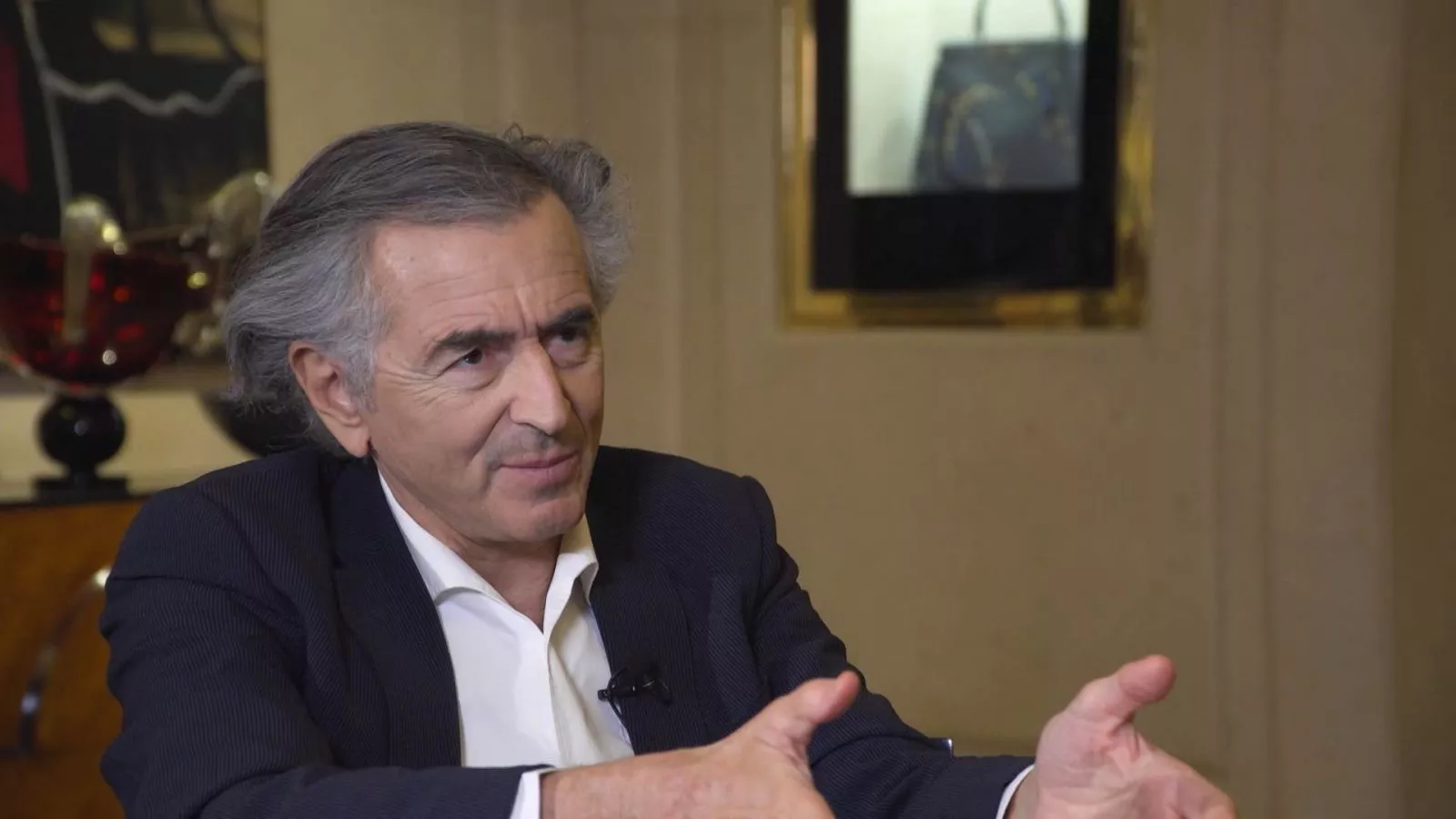
(Patria) - French philosopher, writer, and journalist Bernard-Henri Levy, one of the most influential and engaged intellectuals of our time, speaks in an exclusive interview for N1 about his relationship with Bosnia and Herzegovina, the events of the '90s, but also about the future of Europe and Bosnia and Herzegovina.
"Europe has betrayed itself in Sarajevo, and Europeans have a great debt to Bosnia and Herzegovina," Levy said, reports the Patria agency.
With his play "Looking for Europe," Levy started a tour from Milan at the beginning of March, and he is finishing it in Paris, or due to the events surrounding Brexit, in Britain. In Sarajevo, which Levy says carries the heritage of European civilization and multi-ethnicity, the play will be performed on April 13 at the National Theatre.
A manifesto written by Levy at the beginning of January this year, signed by 29 other writers including Orhan Pamuk, Milan Kundera, Salman Rushdie, and Abdulah Sidran, warns that Europe is in danger and that it is now necessary to fight for the idea of Europe before it disappears in waves of populism. It is one of the tools of Levy's 'fight' for the survival of a Europe of equality and democracy.
With your play, you send a clear message that Europe must not betray itself in the 21st century as it did in Sarajevo at the beginning and end of the 20th century. Judging by the audience's reactions tonight in Prague, as well as the reactions of audiences in other cities, it seems that ordinary people understand that message. But will those who make decisions understand you, asked Amir Zukić, editor of the show Pressing?
"Those who made bad decisions, most of them are no longer with us, they have died. Among those who make decisions today, I think there is a dawning understanding of the great mistake we made, against ourselves and not just against Bosnia and Herzegovina, when we decided to abandon it, to betray it, not to defend Sarajevo. It seems to me that this message I want to convey through my performances is starting to find its way to the public, but also to the ruling circles in Europe. A sense of guilt is being born, at least a sense of regret, the idea that we did not act correctly towards Bosnia at that time."
You have often emphasized that multi-ethnic, multicultural, multi-religious Bosnia and Herzegovina can become a new hope, new fresh blood for Europe. How?
"As I said in the play, I said it literally, in the part where I state that not only should BiH be in Europe, but that one of the most important, main European institutions should be moved from Brussels and located in Sarajevo. I believe in that. One of my characters believes in it. Of course, there is a degree of exaggeration, but that's what I think. I think so because, roughly speaking, Europe itself believes less and less in its own values, and it is often on the margins of Europe that we find people who still believe in the Grail. In Bosnia, in Ukraine too, I would say the same for Ukrainians, they are more European than people in Prague or Paris. Because there is a dream of Europe that has not been fulfilled, and which is so intense, and the same is true for Sarajevo."
You are a strong critic of Russian leader Vladimir Putin. You have mentioned him already. And you have previously accused him of turning Russia into a crypto-fascist state and developing radical Russian nationalism. But in the Balkans, Putin gives strong support to Serbia, as well as to a part of Bosnia and Herzegovina called Republika Srpska.
"Dodik is one of those populists, I can mention him too, and he is one of Putin's puppets. I recall a novel by Milan Kundera where a mad doctor injects his sperm into women, a gynecologist, and after nine months you have many babies who resemble that doctor. That is exactly what Putin is doing. In Serbia, he injects and out comes Dodik. In Hungary, he injects a bit of his intellectual sperm and you get Orban. In France, it's Marine Le Pen. And so on. These are all little Putin babies, these populists are Putin's clones. They form a kind of international. An international of clones, pale imitators of Putin. But Putin is strong, truly strong. I don't like him, he embodies the worst for me, but at least he is strong. And these others, they are not strong. Dodik is nothing, honestly," he stated.
Dodik is currently the Chairman of the Presidency of BiH and always speaks of Bosnia and Herzegovina as an invented state, as a state that must be destroyed. How to convince people in Bosnia and Herzegovina, who, despite all the hardships they face, are very afraid of the possibility of new conflicts in their country, that Bosnia will win, that it will survive?
"I generally believe that spirit is stronger than force and that intelligence is stronger than stupidity. I believe that there is enough intelligence and spirit in Bosnia to overcome any cretinism. I believe in that. The spirit of Bosnia may be going through a period of dormancy, but it will ultimately prevail."
Do you personally fear the possibility of a new war breaking out in Bosnia and the rest of the Balkans?
"I don't know. I hope there won't be a war, of course, and I don't think there will be. I think the lessons from the past are still too alive and fresh for the people in that region to take that risk. I do not believe in the possibility of a new war."
No one wants to say it directly, but is the real problem for Europe that Muslims form the majority in Bosnia and Herzegovina? Is Europe ready to accept such a country into its family, and are all the justifications just bad excuses. What do you think?
"Perhaps it is, but if so, then it is a big mistake and a big misunderstanding. Europe lives and will forever live with Muslims. That is a fact. Bosnia and Herzegovina is interesting because a democratic Islam, an enlightened Islam, an Islam that respects human rights and secularism, lives there. That is the Islam of Bosnia and Herzegovina that I knew from the 90s. Europe's big mistake was not understanding and embracing this region of the world and spirit. It would have changed a lot. It would have made radical European Muslims a minority. It would have shown all Muslims in Europe what democratic Islam means and how it is possible using the Bosnian example. It would have shown that Europe is against radicalism, but not against Islam. That it is against fascism, but not against the Quran. That it is against terrorists, but not against a religion. It is a great missed opportunity for Europe, and Europe seems to be continuing with it."
The complete video interview is available on N1 television.
Komentari (0)
Prijavite se za komentiranje
PrijavaJos nema komentara. Budite prvi!
Minuta
Sve →Iz drugih kategorija

High Representative Not Elected: Germans, French and British Against Americans, New Attempt at End of June

ČOVIĆ WITHOUT MERCY: How Those Who Brought Ademović to Office Created a Political Hell for Him



Sunny Saturday, quite warm



Tragedy in Albanian resort: Two minors drown












