
By Armin Sijamić
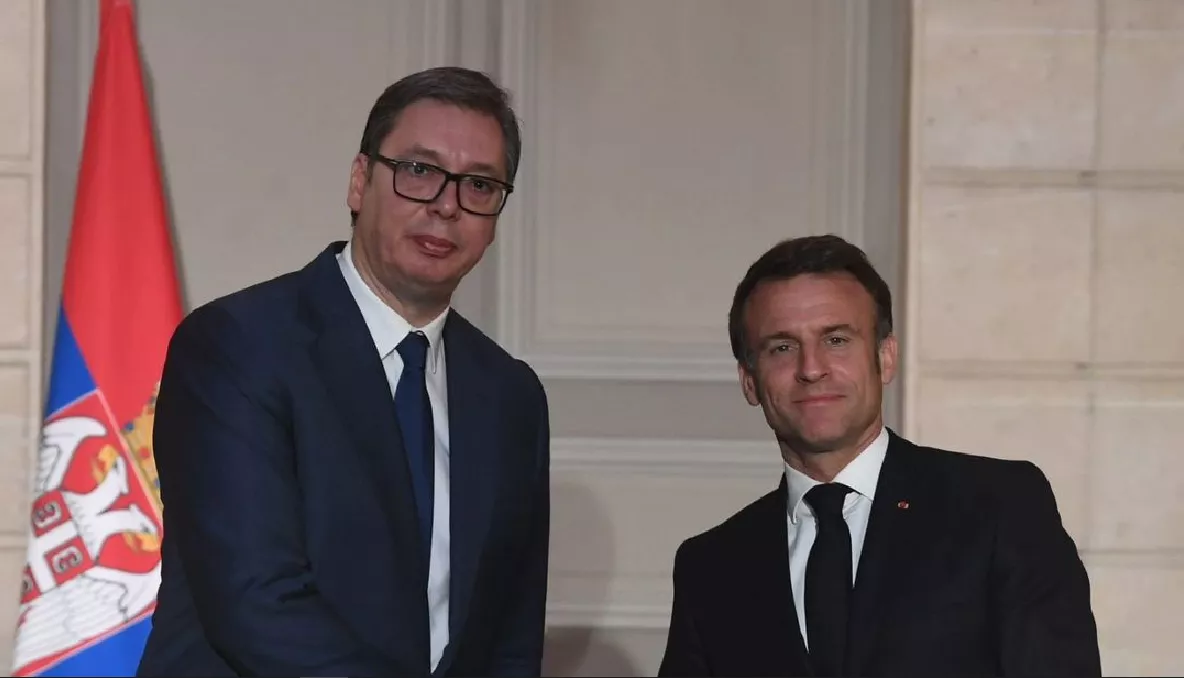
The visit of Serbian President Aleksandar Vučić to Paris and his reception by President Emmanuel Macron is significant for several reasons, one of which is France's return to the Balkans, from where it largely withdrew at the beginning of this century. The stability of the Balkans, amidst the war in Ukraine and Serbia's alleged "European path," presents an excellent opportunity for France to reassert itself as a factor.
Aleksandar Vučić's rise to power and his maintenance in that position have been linked to France by some in Serbia. According to one of the stories associated with Paris and Vučić, a meeting in a luxury hotel in 2008 is mentioned, attended by businessmen and former Montenegrin Prime Minister and President Milo Đukanović. The topic of the meeting was allegedly the situation in the Balkans.
That Paris views Vučić favorably has been evident throughout his years in power. Serious criticism, such as he sometimes received from Washington or Berlin, has been absent from Paris. Moreover, France has become heavily involved in Serbia's air transport, which certainly could not have happened without Vučić's approval. Following this, France sold Serbia a modest eighteen Mistral 3 anti-aircraft systems with only fifty missiles, as well as Airbus helicopters. This was Paris's message that they are counting on Belgrade.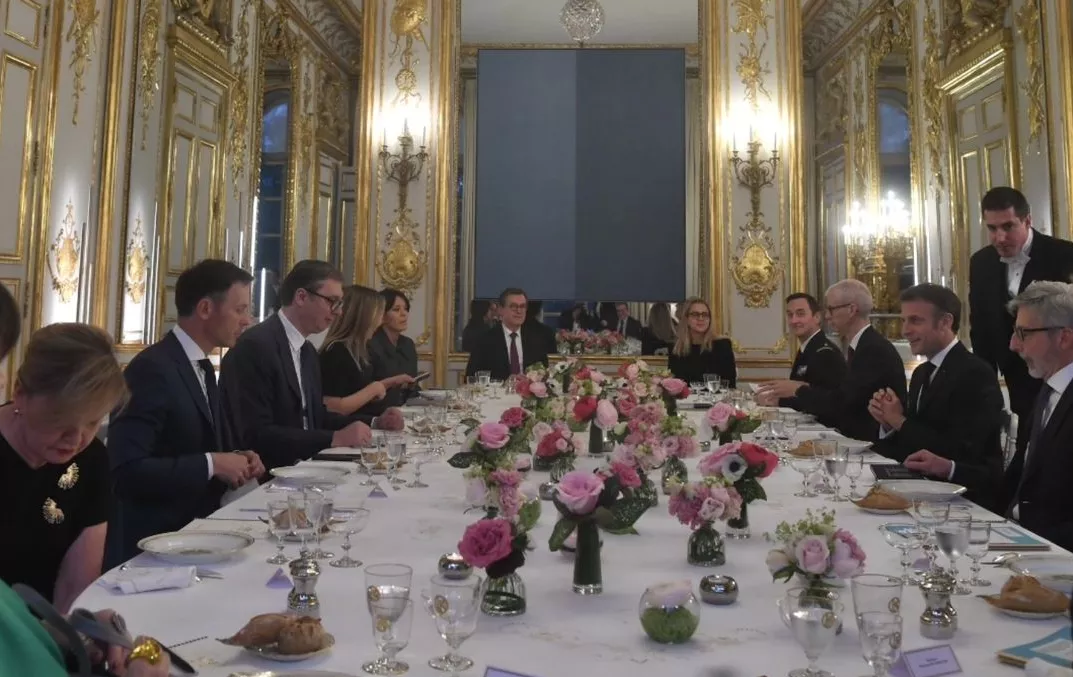
Vučić at a working dinner with Macron
Vučić with Macron
What official Belgrade can always refer to when it comes to France is the duration of allied relations. Although some argue that alliance is too strong a word, presenting numerous arguments to prove their thesis that France has not been a sincere friend to Serbia, officials of the two countries will often base their relations, at least rhetorically, on these ties.
"I am proud to be in the Élysée Palace tonight, and I have been preparing for a long time what to say in five minutes in such a place before you, esteemed President. Today we are marking 185 years since the establishment of diplomatic relations. We have counted on France the most. There are few leaders in Europe who want to listen to someone, especially when they are smaller than them. Macron wanted to listen and hear, and I thank him for that," said Vučić. France has "always been closest" to Serbia in Europe, and Belgrade has "counted on France the most in both World War I and World War II."
Such words certainly pleased the host, but it is unlikely that Vučić was pleased with the choice of topics for discussion. Kosovo, the European Union, Ukraine, and Bosnia and Herzegovina were discussed, while Milorad Dodik, the president of one of the two Bosnian entities, was in Paris. "I want to reiterate how important it is to us that BiH remains a united country," Macron said, to which Vučić repeated the mantra of territorial integrity of both the state and the entity.
Macron and Vučić thus placed the discussion in the context of regional stability, which is a cover-up for the fact that Belgrade destabilizes the region and then sells its services as a peacekeeper to the West. Of course, France is familiar with the trick. Let's recall that during the breakup of Yugoslavia, Paris supported Belgrade, and a few years later bombed Serbian targets in BiH, Serbia, and Kosovo. Thus, France, which according to Vučić has "always been closest" to Serbia in Europe, is a proponent of an independent Kosovo, which is another argument for those who claim that the alliance between the two countries is false. The implementation of the "Franco-German plan" for Kosovo is the final act of this performance, and Macron insists on it.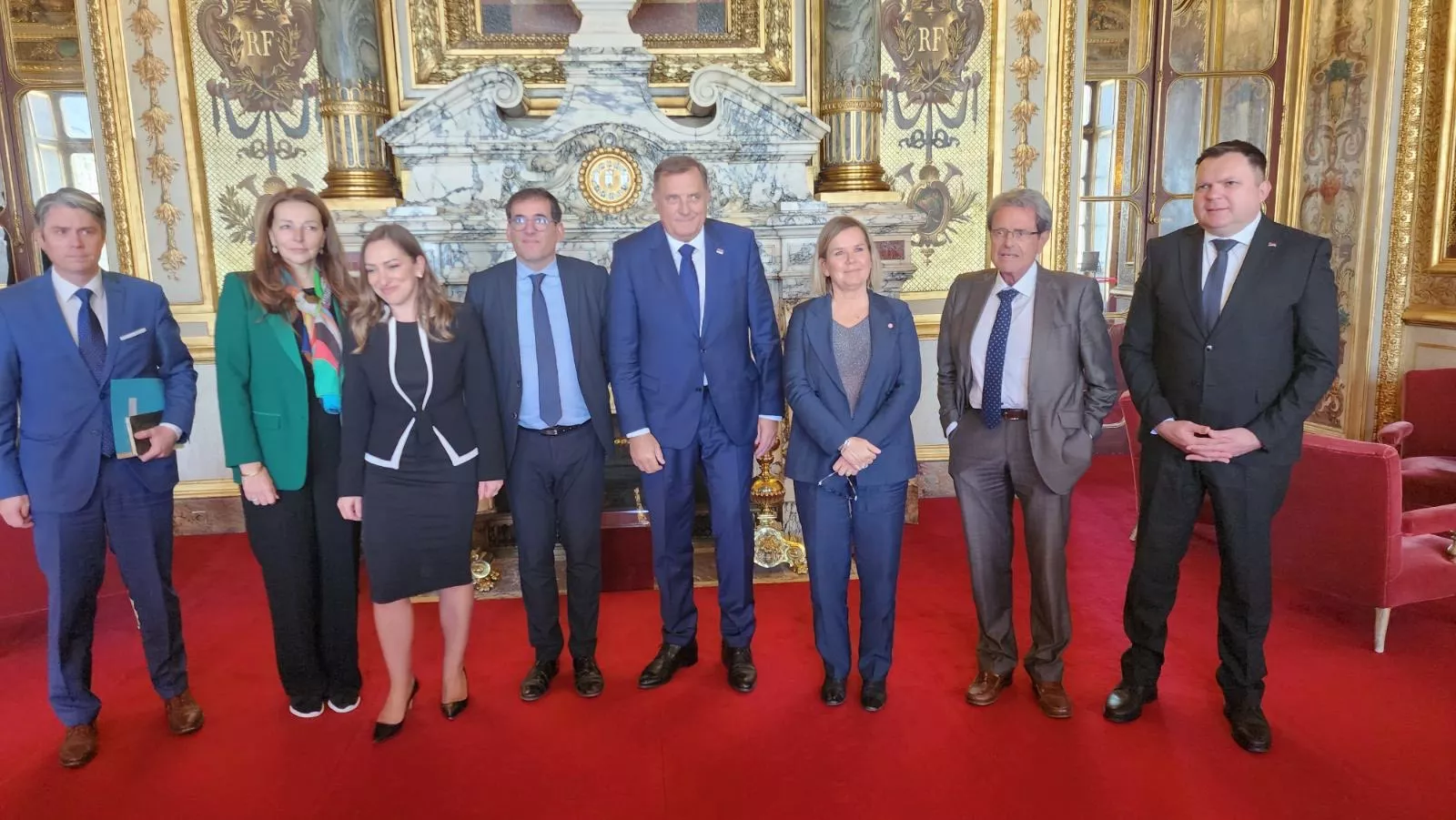
Dodik in Paris with French senators
Great Power Reflex
But France's behavior should not be surprising. France acts from a position of a great power, which it is for the small and poor Balkan countries. What no longer works for Paris in large parts of Africa, from where military juntas looking towards Russia are expelling them in recent months, works in the Balkans. The nationalist elites of the late eighties and early nineties have devastated the Balkan states so much that accepting foreign demands is now presented as an expression of mutually beneficial alliance. The leader of the "Serbian world" is perhaps the best example of this, as he has come full circle from advocating for "Greater Serbia" to the "European future" of the very space where genocide was committed.
Another power, which also uses Belgrade's political elites for its interests, has explained it plastically through its media. "How Vučić responded to the sincere invitation to abandon national interests remains unclear: news agencies do not provide his answer. By all accounts, the head of Serbia remained silent, came to Paris to beg, and could not afford to argue with the main resident of the Élysée Palace," writes Russia's Gazeta, as reported by media in Serbia. This Russian "concern" for Vučić is nothing more than encouragement for Belgrade to continue the wars it lost in the nineties, which indicates what the "ally" from the Kremlin expects from Serbia.
However, there is a difference between France's and Russia's approaches. Moscow does not offer much to the region, except talk of mythical Slavic brotherhood. On the other hand, France has mechanisms to act, invest money, and wave the offer of EU and NATO membership. The offer of EU membership is tempting, even after Macron's statement that there will be no enlargement until things are sorted out within the Union.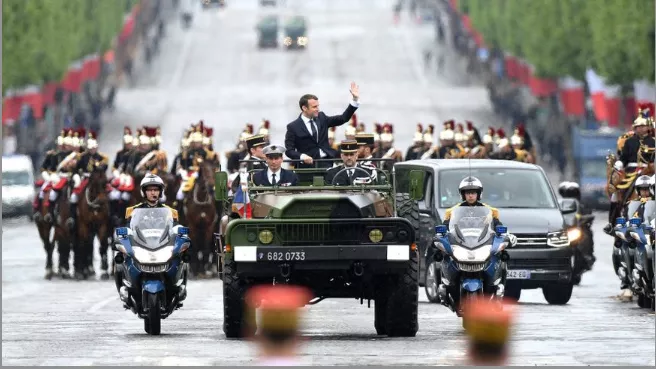
French President Emmanuel Macron
France's actions in recent years demonstrate this. Vučić stated that French investors employ over eleven thousand workers in Serbia and that trade between the two countries has almost doubled in five years. Macron said that the French Development Agency has invested 570 million euros in Serbia in the last five years and expects the two countries to cooperate in environmental protection, transport, and nuclear facilities in the future.
Some Serbian media have interpreted this as the construction of a metro in Belgrade, the storage of French nuclear waste in Serbia, and the purchase of Rafale fighter jets, which Macron has already sold to Zagreb in an attempt by Andrej Plenković to gain favor with Paris. Vučić, although not part of the signed agreements, said he hopes Serbia will have a nuclear reactor by 2035.
France has also appointed an envoy for its affairs in the Balkans. Since last autumn, René Troccaz has been visiting Balkan capitals. His job is to bring countries outside the EU and NATO further under Brussels' control. "It is important that Serbia continues to realize its choice (towards the EU), especially through greater alignment with our foreign policy decisions," Macron said. "This choice must also be strengthened by the continuation and acceleration of reforms related to strengthening the rule of law, judicial independence, and media pluralism," Macron said and called for "those responsible for the Banjska attack to be brought to justice and held accountable" and for "everything to be done to prevent such a tragedy from happening again."
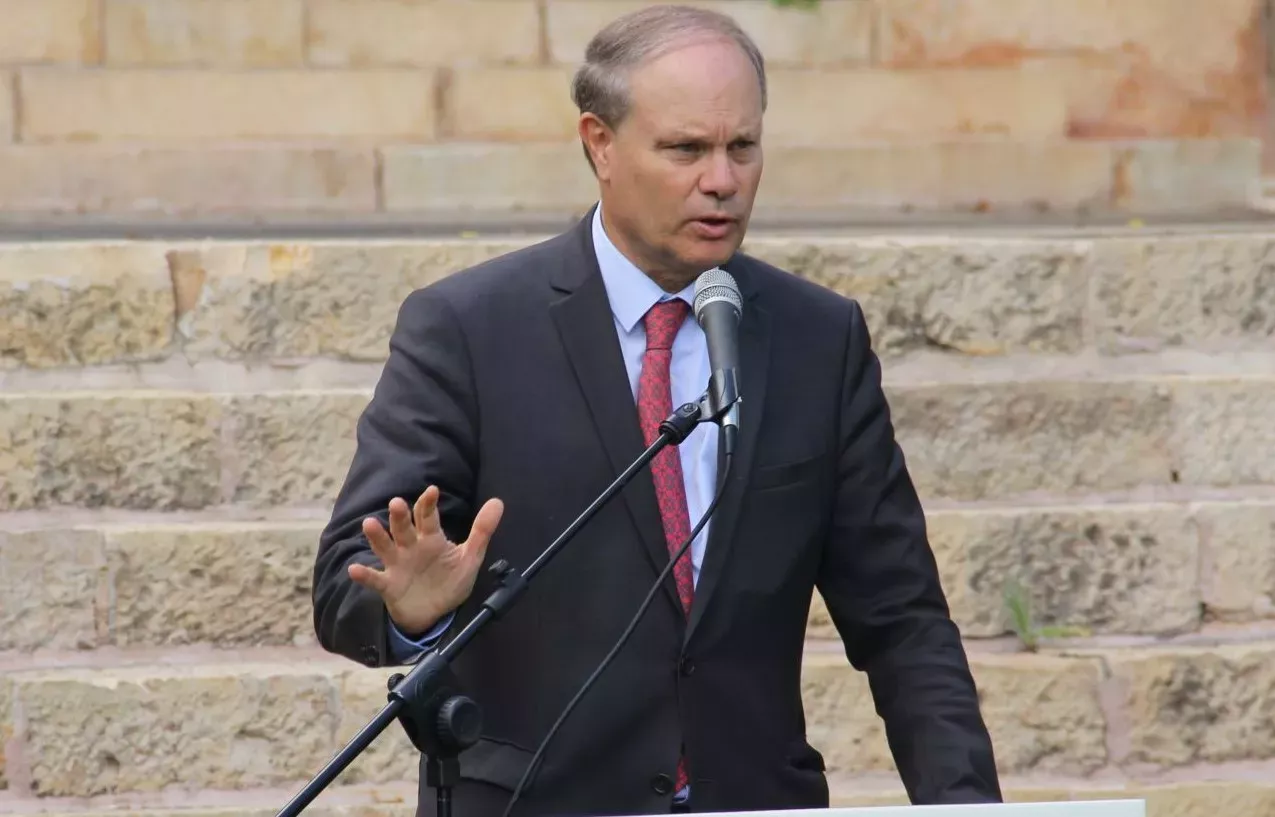
Essentially, Macron asked Vučić for Serbia to distance itself from Russia, i.e., to align its policy with Brussels. This call also illustrates how politics is conducted in the Balkans. Namely, aligning foreign policy with Brussels is an obligation for all countries seeking membership. It is evident that European powers must remind Balkan leaders, some of whom are close to Moscow, that their signatures are binding.
Serbia, Croatia, Balkans
Vučić's attempt to influence Macron may also be linked to official Zagreb's efforts to gain France's favor. This is not surprising, as the HDZ and the Serbian Progressive Party share little in ideological terms with, for example, the current US or German administrations.
There are other similarities. Namely, Zagreb and Belgrade want French Rafale aircraft. Zagreb paid about a billion euros for a squadron of used aircraft, and President Zoran Milanović claims the cost will increase. Belgrade wants a squadron of new aircraft and will pay three billion euros for them. This means that Croatia and Serbia are becoming dependent on France when it comes to military aviation.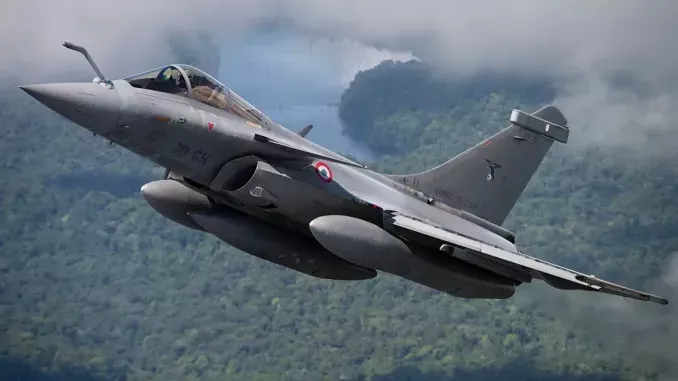
French Rafale fighter jet
A similarity is also Serbia's desire to have French nuclear reactors and the agreement for Electricité de France to enter Elektroprivreda Srbije, thus tying it to French suppliers. A similar case of French and US policy, aiming to snatch a country from Russia's grasp, occurred last year when Bulgaria agreed to replace Russian technology with Western technology.
Russia's aggression against Ukraine has changed Europe. The advance of Russian troops frightens the West, and pressure is increasing on those in Europe who look towards Moscow. Vučić's cooperativeness in Paris demonstrates this, after years of buying time while nationalist Belgrade elites dream of Russian soldiers on the banks of the Danube. At this moment, Vučić is losing the race against time, as the West is becoming increasingly impatient to sort things out in the part of the world it has controlled for decades.
Komentari (0)
Prijavite se za komentiranje
PrijavaJos nema komentara. Budite prvi!
Minuta
Sve →Iz drugih kategorija

High Representative Not Elected: Germans, French and British Sabotaged Americans, New Attempt at End of June

ČOVIĆ WITHOUT MERCY: How Those Who Brought Ademović to Office Created a Political Hell for Him



Sunny Saturday, quite warm



Tragedy in Albanian resort: Two minors drown












