
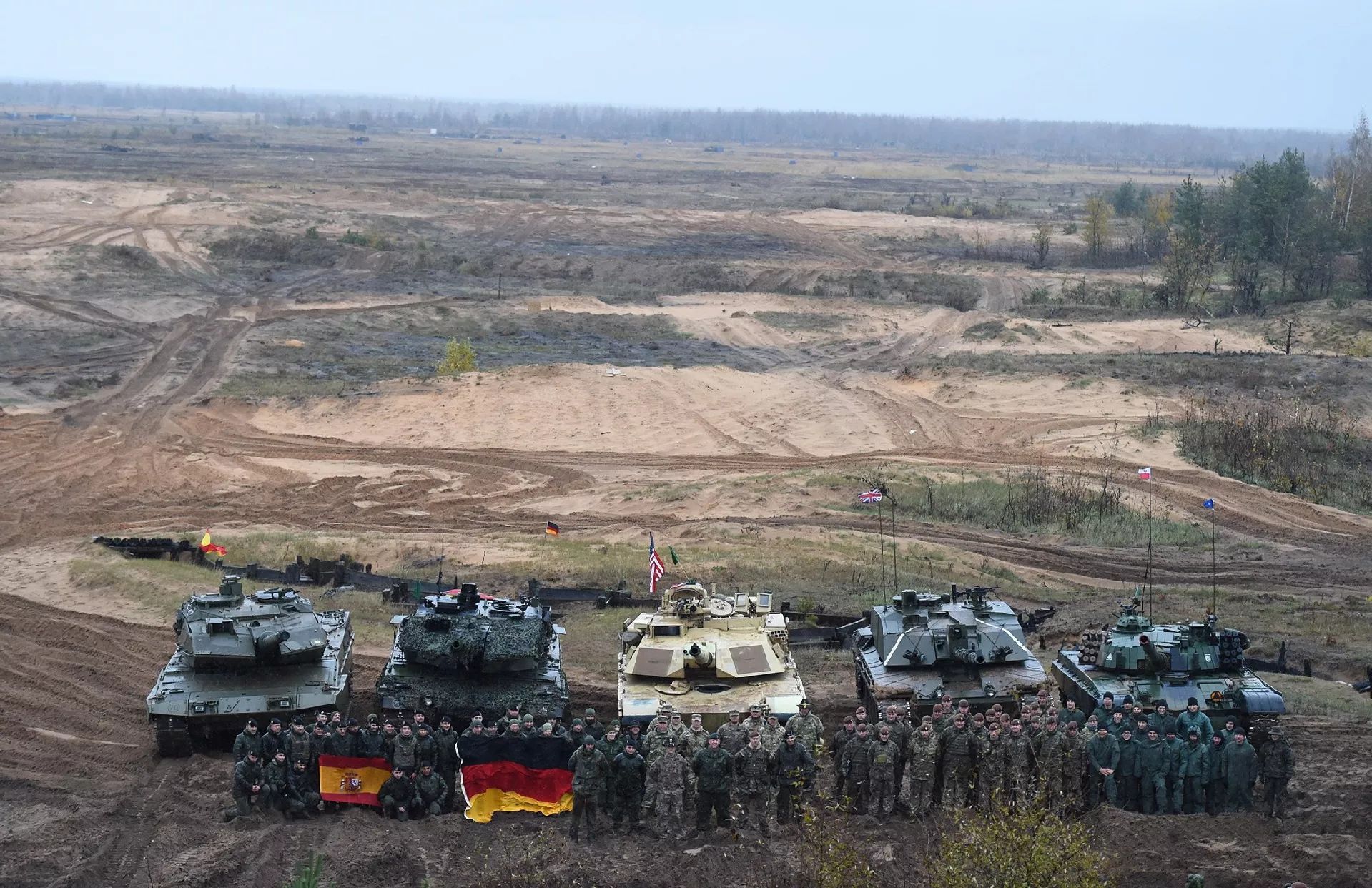
(Patria) - The largest European military powers are developing plans to take on greater responsibilities from the US for the defense of the continent, including a proposal to President Donald Trump's administration for a controlled handover over the next five to ten years, the Financial Times (FT) reported.
The UK, France, Germany, and Nordic countries are among those involved in informal discussions that would reshape the NATO alliance, the FT reported, citing four European officials involved in the negotiations, as reported by Index.hr.
Europe wants to avoid the chaos that would ensue if the US were to unilaterally decide to withdraw from NATO. This fear is growing due to repeated threats from US President Donald Trump that he could weaken or even leave the alliance that has protected Europe for almost eight decades.
The goal is to devise a plan to shift the financial and military burden to European countries and present it to the US before the annual NATO summit, which will be held in The Hague in July.
The proposal will include firm commitments to increase European defense spending and strengthen military capabilities to persuade Trump to agree to a gradual handover of responsibility. This would allow the US to focus more on Asia.
The United States, which spends more on defense than all other allies combined, remains crucial for Europe's security.
In addition to its nuclear deterrence capability, which is linked to the defense of Europe and includes US nuclear weapons stationed in several European air bases, the US provides military capabilities that European allies do not have, manages air, naval, and land bases, and maintains 80,000 of its soldiers in Europe.
Germany, France, and the UK have already started increasing their defense budgets or accelerating previously planned investments since Trump was elected president. The European Union has also launched initiatives aimed at encouraging its member states to invest more in defense.
According to estimates by European officials, it would take between five and ten years to raise European military capabilities to a level where they could replace most US capacities - except for the US nuclear arsenal.
"Increased spending is the only thing we can do – to share the burden more evenly and reduce dependence on the US. The talks have only just begun, but the task is so huge that it overwhelms many," said one of the officials.
Although US diplomats assure European allies that Trump remains committed to NATO membership and the crucial Article 5 guaranteeing mutual defense, many in Europe fear that the White House could decide to abruptly reduce its military presence, withdraw military equipment, or simply withdraw from joint NATO operations.
Some countries, officials said, have been hesitant to engage in burden-sharing discussions for fear that it might encourage the US to accelerate its withdrawal. They believe that Trump, despite his rhetoric, does not plan to make major changes to the US military presence in Europe. Others, however, are skeptical about whether the Trump administration would even agree to such a structured process, given how unpredictable it is.
"You have to have an agreement with the Americans, and it's not clear if they will want that. Can you even trust them to honor it?" said another official.
As an indication of the direction things are heading, officials point to ongoing talks led by France and the UK to create a "coalition of the willing" to support Ukraine in its war against Russia and invest in European defense. The US is not involved in these discussions, which include more than ten European military powers.
When asked what a "European pillar" within NATO would mean and whether it is possible, a senior Western official said: "We are already seeing it – the UK and France are taking the initiative on forces to strengthen Ukraine's security without the Americans".
NATO officials argue that maintaining the alliance, albeit with less or no US participation, would be much simpler than creating a completely new one, given how difficult it would be to re-draft or renegotiate military plans for European defense, command structures, and Article 5.
For the basic defense of Europe, the UK and other Atlantic maritime powers, Nordic countries for the northern part of the continent, and Turkey for southeastern defense would always be needed, officials said – all of which NATO already has.
"Even without the United States, NATO provides a structure for security cooperation in Europe. There are elements that would need to be replaced if the US withdrew, but NATO provides a framework and infrastructure that Europeans are accustomed to.
This already accomplishes a large part of the work that would have to start from scratch if a completely new structure were to be created solely for European members," said Marion Messmer, a senior research fellow for international security at the British think tank Chatham House.
Komentari (0)
Prijavite se za komentiranje
PrijavaJos nema komentara. Budite prvi!
Minuta
Sve →Iz drugih kategorija

High Representative Not Elected: Germans, French and British Sabotaged Americans, New Attempt at End of June

ČOVIĆ WITHOUT MERCY: How Those Who Brought Ademović to Office Created a Political Hell for Him



Sunny Saturday, quite warm



Tragedy in Albanian resort: Two minors drown












