
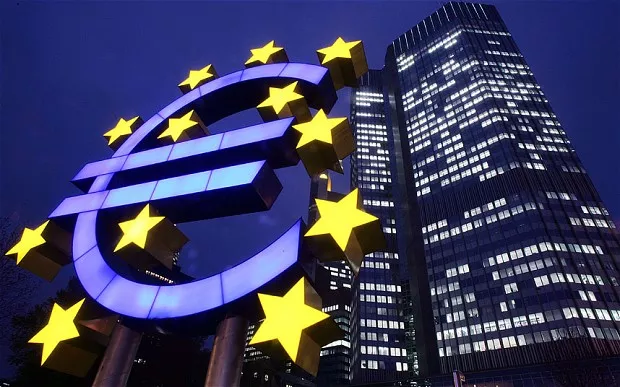
Mario Draghi, President of the European Central Bank, today, after several meetings of the ECB's Executive Board, announced new economic policy measures. This gathering also discussed monetary policy in the service of European Union development. The ECB President announced that the interest rate for the Eurosystem's main refinancing operations will be reduced to zero, Patria reports.
The interest rate on loans will be reduced to 0.25 percent, and on deposits to -0.40 percent. Monthly injections into the banking sector will be increased from 60 to 80 billion euros starting in April, in order to protect against further weakening of the euro against other currencies.
The banking sector must consolidate
Journalists' questions, following President Draghi's press conference, concerned the overall reform package and the possibility of normal bank operations with such negative interest rates for depositors. The assumption is that bank savings will decrease, and that people will transfer money to countries outside the European Union. The question is only how drastic or dramatic this will be. The ECB President touched on the essence of the overall European response to the crisis. Banks are a service to the economy, and Europe must emerge from the crisis rather than only thinking about profits from the so-called financial economy, which is most often the generator of crises. A recent statement by a member of the ECB's Executive Board was confirmed, that not only low interest rates are a problem for banks in Europe, but also non-performing loans and a lack of consolidation in the banking sector.
Nevertheless, this is not a drastic fall of the euro. These are the first tolerable measures to stimulate economic growth. The weakening of the euro will certainly continue after this meeting, in order to revive production, curb imports, and boost exports from European countries. We have already announced that the euro could be on par with the dollar by June this year. The euro will fall against other currencies, primarily against the US dollar, British pound, and Japanese yen.
Unclear situation with the "Swiss franc"
Europe must provide constant responses to the crisis and resolve it. After this, not so drastic fall of the euro, it is unclear whether the Swiss franc will "go wild" again. If it does, the reason is that Europe wants to keep money on the continent and, practically within its borders.
We have already noted that huge amounts of money from BiH are kept in European banks with a negative interest rate of almost -0.40 percent. Of course, it is absurd to lose money, while here, unfortunately, interest rates on capital continue to rise. Irrational behavior regarding these exchange rate changes costs BiH too much. The state, public enterprises, and citizens of Bosnia and Herzegovina continue to keep enormous funds, somewhere around 10 billion euros, in European banks, thereby losing serious amounts of money. At the same time, branches of European banks in the country offer overly expensive capital, so foreign investments are a pipe dream, as is development. The question is what can be done. The BAM is pegged to the euro. At one time, interest rates on the money of the Central Bank of BiH held in accounts at European banks were very favorable. Today, it would be somewhat awkward to flee European banks when there is no profit there. At the same time, these are favorable circumstances for the BiH economy and its, albeit small, yet important, more favorable conditions for exports and economic recovery. That is the only positive news, and the future is not so bleak.
Komentari (0)
Prijavite se za komentiranje
PrijavaJos nema komentara. Budite prvi!
Minuta
Sve →Iz drugih kategorija

High Representative Not Elected: Germans, French and British Sabotaged Americans, New Attempt at End of June

ČOVIĆ WITHOUT MERCY: How Those Who Brought Ademović to Office Created a Political Hell for Him



Sunny Saturday, quite warm



Tragedy in Albanian resort: Two minors drown












