
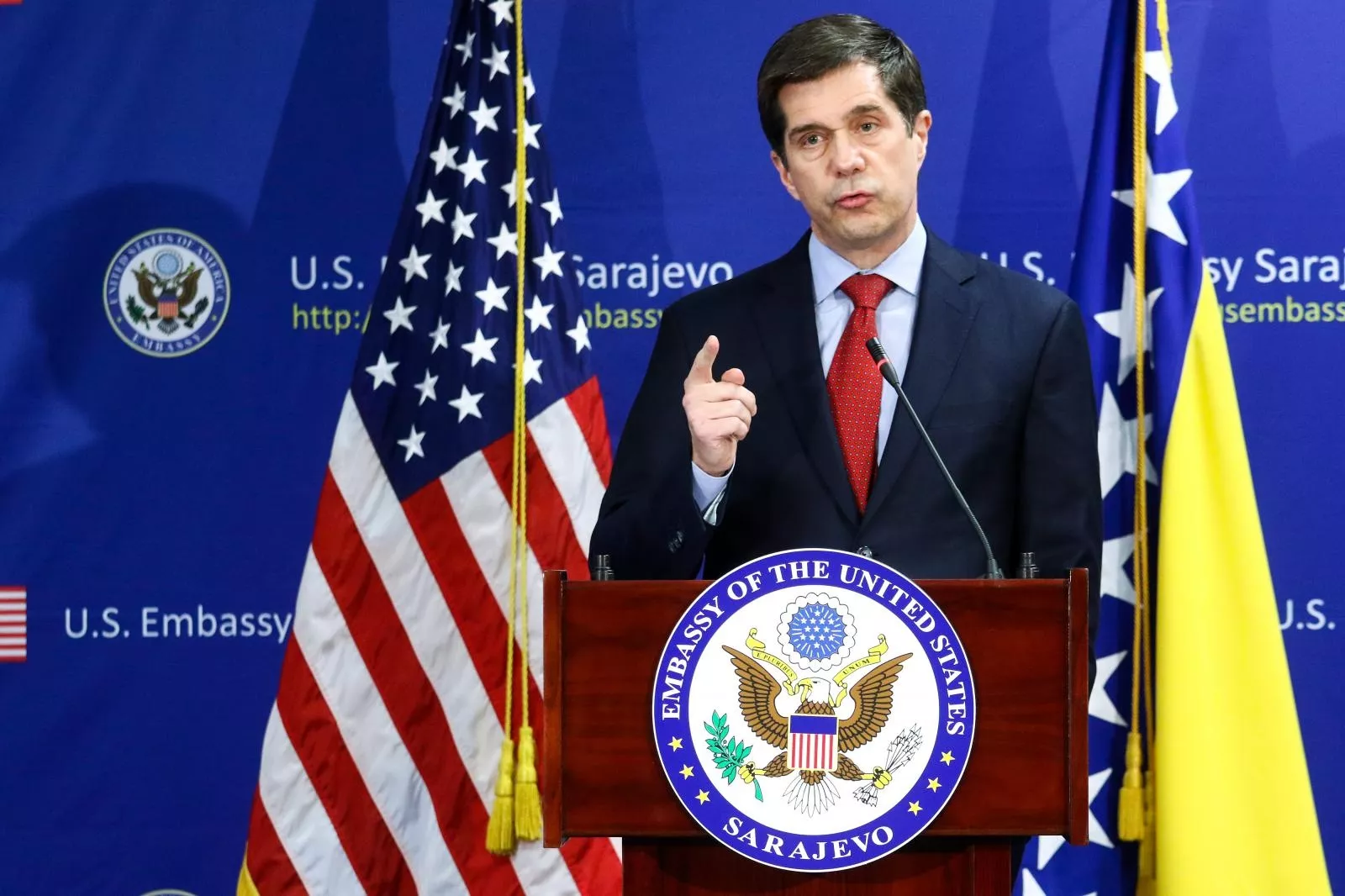
By Eric Nelson, US Ambassador to BiH
As we read the headlines about the collapse of Aluminij Mostar, we sympathize with the workers whose lives depend on this company, workers who tried to make the company continue to operate despite everything. The cantonal and Federation authorities should do everything in their power to mitigate the impact on the families of these workers.
Although the company faced difficult market conditions, with high costs of alumina and electricity, there are other additional reasons for its downfall. The painful truth is that Aluminij has been slowly collapsing since production resumed after the war in 1997, because its purpose became to benefit political parties, not the workers and the economy of Herzegovina. Now we see the logical consequences of mismanagement, the price of which is paid by the workers and their families. This is not the first time politicians have been allowed to bankrupt a company, and it will not be the last if something doesn't change. The managers of Aluminij, working for political masters instead of adapting to difficult market conditions, have created the current situation where workers are suddenly left without the employment on which they and their families depend.
This will be a difficult time for many in Herzegovina who depended on Aluminij, as well as for related companies. But the people of Herzegovina are strong, and Herzegovina's economy has many promising sectors: agricultural land, plantations and vineyards, beautiful cities, villages, rivers and mountains, and most importantly, talented people ready to do quality jobs that don't require thick envelopes or party membership, but where people are rewarded for what they do. BiH's tourism sector is already growing by 13% annually, and Mostar Airport lies unused. It takes a few days to explore the beauties of Herzegovina, but now most visitors come for a day, benefiting Croatian bus carriers, not hotels and accommodations in BiH. Mostar Airport would easily attract many more flights and tourists if it were not under party control and if it operated under a concession agreement like most airports in the region. According to data from the United Nations World Tourism Organization, tourism revenue in BiH in 2017 was KM 1.4 billion, and it can – and should – be even higher.
It's time for Herzegovina and its people to benefit from legitimate business. Unfortunately, especially its leaders continue to block reforms and measures to improve the business climate. Instead of blocking progress, they should play a leading role in reducing labor contributions, increasing tax collection efficiency to reduce the gray economy, investing in electricity production, and taking other steps that would put Herzegovina on the path of faster economic growth.
This story keeps repeating across Bosnia and Herzegovina, to the detriment of the talented people in this country. The IMF has compiled a list of about 550 Bosnian-Herzegovinian state-owned enterprises, which account for more than 20% of GDP. Most of these companies are in dire financial straits, and they account for almost 70% of public sector tax and contribution arrears. For the vast majority of them, there is no reasonable reason for them to be owned by the government other than to allow political parties to control them. Under the control of political parties, both the workers in these companies and the BiH economy are at risk of collapse. The remedy for all this is complete transparency regarding the financial situation and debt of all state-owned enterprises, and complete depoliticization, including hiring managers based on expertise, not political affiliation. While some companies, such as those responsible for public utilities, should remain public, many other state-owned companies need expert management through concessions or public-private partnerships, as well as an influx of investment through quality sales to a private entity as a partner with experience in a particular industry. This would then generate new jobs, new investments, new technologies, new growth.
Let's not waste time, let's improve the business climate to enable companies to start operating and create new jobs; let's also work together to improve the education system that will produce experts capable of taking on the jobs of the twenty-first century economy. Technology parks in Mostar, many talented young people building their careers in the IT sector, prove that this is also a promising growth sector for Bosnia and Herzegovina. Work on the real economic development of Herzegovina, so that young people do not go elsewhere to find opportunities for themselves and escape nationalist rhetoric. Citizens of BiH deserve better than the "usual".
Komentari (0)
Prijavite se za komentiranje
PrijavaJos nema komentara. Budite prvi!
Minuta
Sve →Iz drugih kategorija

High Representative Not Elected: Germans, French and British Against Americans, New Attempt at End of June

ČOVIĆ WITHOUT MERCY: How Those Who Brought Ademović to Office Created a Political Hell for Him



Sunny Saturday, quite warm



Tragedy in Albanian resort: Two minors drown












