
Written by: Rasim Belko @rasimbelko
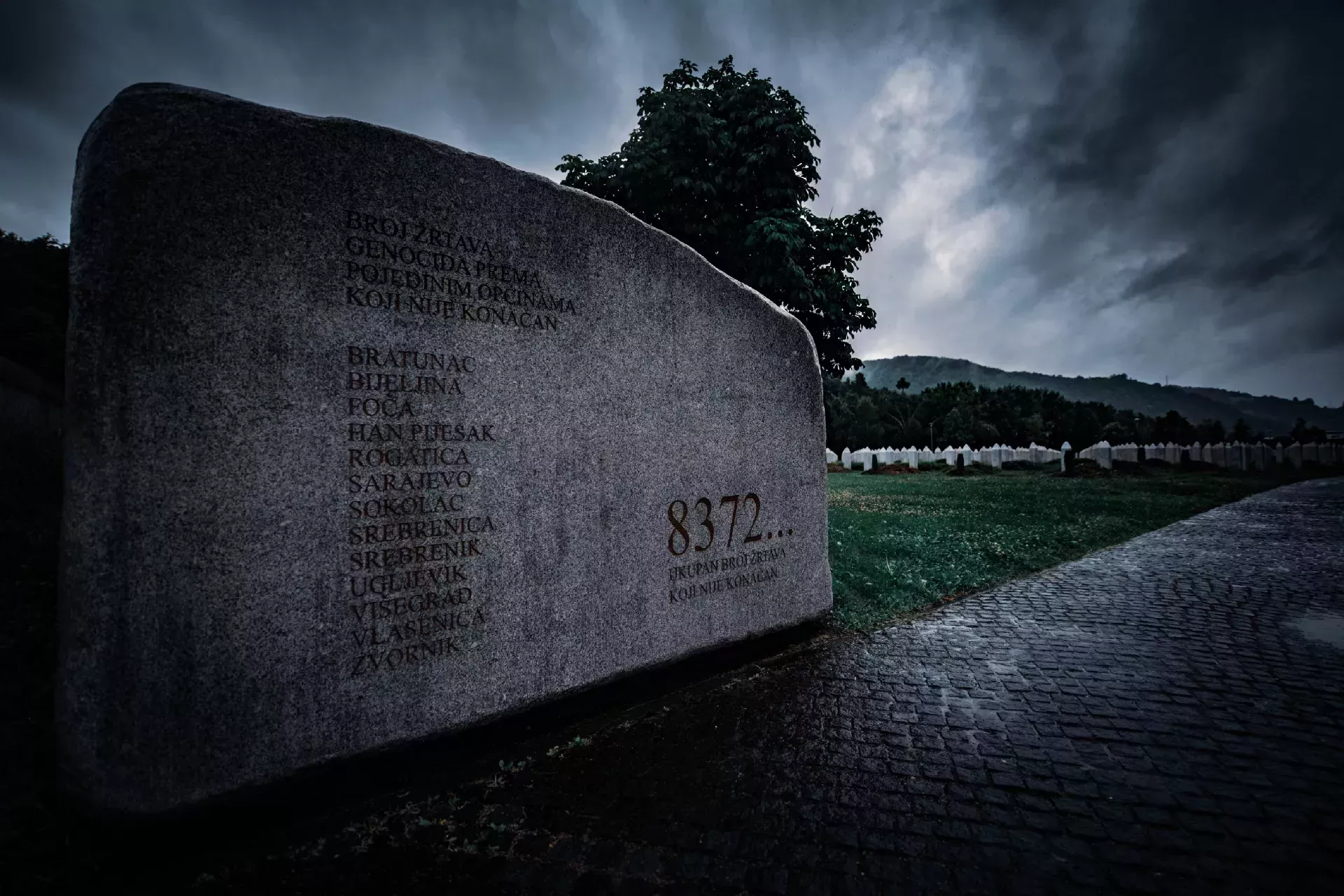
The story of yesterday's adopted Resolution at the UN General Assembly "International Day of Reflection and Commemoration of the 1995 Genocide in Srebrenica" began much earlier than the diplomatic and political representatives of Bosnia and Herzegovina think or know. Therefore, any attempt to present the successful adoption of the Resolution as a victory for diplomats and politicians is irrelevant.
The initiative for the Resolution started in March 2019 in New York, at a meeting of representatives of the Association of Victims and Witnesses of Genocide and the Movement "Mothers of the Srebrenica and Žepa Enclaves" Murat Tahirović and Munira Subašić with UN Secretary-General António Guterres. They sought and agreed not only on the Resolution, but also on a monument to the victims of the Srebrenica genocide in front of the UN building, and the right for the genocide victims to one day have a seat in the UN General Assembly.
Activities continued in June 2023, when representatives of the victims and Guterres again discussed this issue. However, unlike the barking mazlums we in BiH call politicians, the victims' representatives worked in silence. After that, Western countries began the process of launching the Resolution and seeking as many co-sponsors as possible.
Therefore, yesterday's success in adopting the Resolution is primarily and mostly the merit of Tahirović and Subašić, and others can be lined up after several places. Although that is also questionable given the poorly executed lobbying.
The fact that in an ever-divided world and boiling geopolitical relations, a Resolution on remembering the genocide in a small Bosnia and Herzegovina was adopted speaks volumes about how big this actually is and how unnecessary it is to bother with the number of those for, against, or abstaining. Numbers should also be ignored in this context. Because many voted against or abstained solely due to which side of the Earth's hemisphere the proposal came from.
If we are to evaluate the work of Bosnian-Herzegovinian diplomacy on this example, then everything we saw and heard is enough for a failing grade. BiH's Ambassador to the UN, Zlatko Lagumdžija, in the darkness of his own ego, tried harder to show the public in the country that he was lobbying something than to genuinely convince states and explain the reasons and need for adopting the resolution. Most of the state representatives he met did not even have a dilemma on how to vote. Because of this, an image was created in BiH that the majority of UN member states would vote for the Resolution. Lagumdžija, for example, did not go to Argentina, which did not vote for the Resolution, and more than anyone else from that group, it emphasizes the recognition of the genocide.
The Presidency of Bosnia and Herzegovina, judging by reports, worked with similar intensity and direction as Lagumdžija, i.e., lobbying in the wrong places, where it was already clear or had long been lobbied. Azerbaijan is a surprise to many, as it did not even vote, and it is obvious that the Presidency, like Lagumdžija, believed that traditionally good relations automatically mean support. We saw how often the Chairman of the Presidency, Denis Bećirović, flew to New York, but viewed through the prism of the outcome, it seems he spent a lot of time for little gain. Although the Organisation of Islamic Cooperation adopted a declaration supporting the Resolution, no one went there to seek help in lobbying those who were undecided or against. Lagumdžija went where it was already finished.
And where was the head of BiH diplomacy, Elmedin Konaković, while the fight for every vote in the UN was ongoing? He was at work, defending arrested cartel members and, along the way, attacking journalists at press conferences and on social media.
How much knowledge of diplomacy and lobbying he possesses was shown by Hungary, which, after his visit, more clearly than ever stated it was against. Not abstaining, but against. Therefore, a story circulates on social media: "How Dino scared the Hungarians so much that they were not even abstaining, but against. Nice fear."
In a desire to compensate for his inaction with propaganda, Konaković rushed into the public space and said: "Look which countries voted 'against'! Of the 19 countries that were 'against', I didn't even know they existed!" And then he gets angry when we say he is ignorant! Let him ask Marko Đurić, Ivica Dačić, and Aleksandar Vučić. They know about each one, so let them explain to Konaković how important it was for Serbia and how much they invested in lobbying the countries that Konaković didn't even know existed.
What we do know is that Konaković knows the United Arab Emirates very well. He abolished visas so he could go there more easily and "lobbied" the UAE government to be abstaining. It might be ugly to say, but I believe that the Tito cartel could have secured us greater support.
In summary, the West, with its unequivocal support for the Resolution, partly cleansed its own conscience for the failure to prevent the genocide in Srebrenica. From yesterday, the world will hear every July 11 that genocide was committed in the BiH town of Srebrenica and pay tribute to the victims. And that is good, both for the message that it should not be repeated, and for the fact that the effects of denying the genocide by Serbian politics will increasingly fade.
However, we must be honest with ourselves and with the world. Had it not been for the great efforts of Germany, Great Britain, the USA, and other Western countries, the Resolution would not have been adopted. But, at the same time, we must be aware and finally learn from the Resolution that we have absolutely wrong settings for diplomacy and action in the world. Because, whatever the causes of poor performance, BiH diplomacy missed a sure thing for proving itself and a visible victory at the international level.
And finally, a word or two about the politics that tirelessly fought until the last second to bring down the Resolution. In that fight, Serbian diplomacy was effectively much more visible and stronger. And the reason is not exclusively poor BiH diplomacy, but also the fact that Serbian President Aleksandar Vučić realized that this is the end of playing both sides. He turned completely to Russia and China, because he got a hint that the West that created him and made him a powerful ruler of Serbia is preparing to pull the chair out from under him. According to information from serious sources, Vučić's fall begins soon, because Western powers have started the process of his overthrow, and the landing will be painful.
For us in Bosnia and Herzegovina, it remains to implement the Resolution, hopefully much better than we implemented the Tribunal's verdicts, but also to improve diplomacy so that in the time of some post-Vučić Serbia, we can seek an opportunity for reconciliation and better relations with our eastern neighbor.
Finally, thank you to Murat and Munira, for once again leading the fight for the truth about the genocide in Bosnia and Herzegovina on behalf of the victims, their families, and Bosnia and Herzegovina.
Komentari (0)
Prijavite se za komentiranje
PrijavaJos nema komentara. Budite prvi!
Minuta
Sve →Iz drugih kategorija

High Representative Not Elected: Germans, French and British Against Americans, New Attempt at End of June

ČOVIĆ WITHOUT MERCY: How Those Who Brought Ademović to Office Created a Political Hell for Him



Sunny Saturday, quite warm



Tragedy in Albanian resort: Two minors drown












