
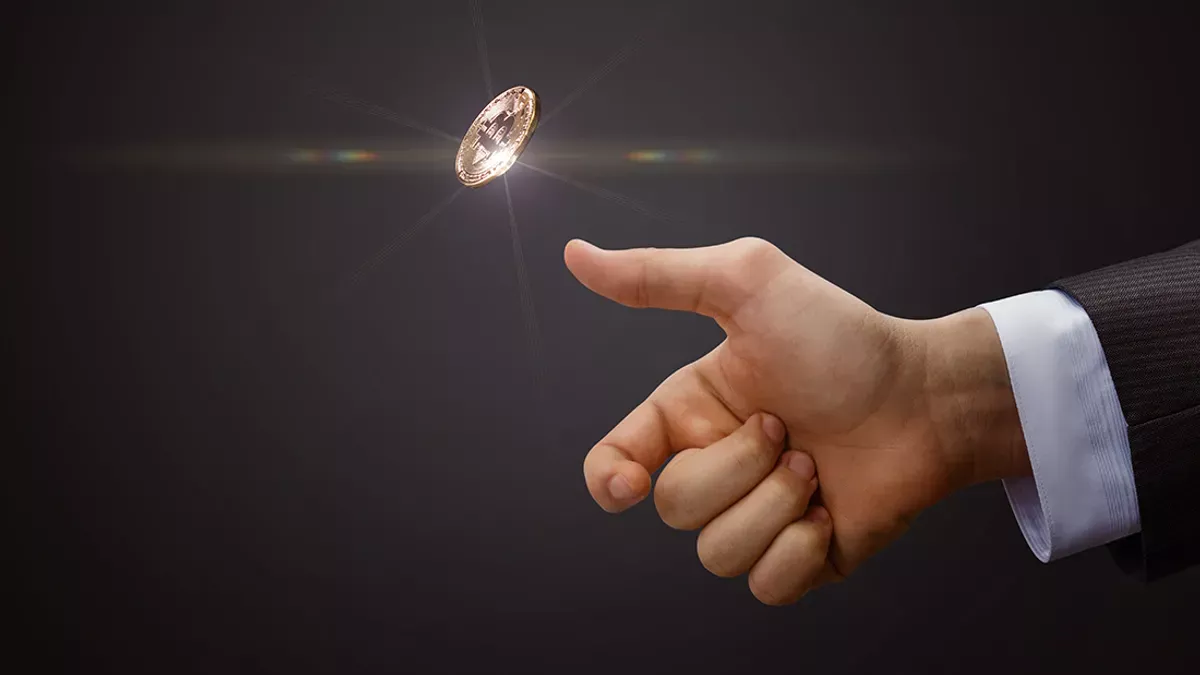
(Patria) - People have relied on coin flips for quick and impartial decision-making since ancient times. The latest study investigated whether coin flips are truly 50:50.
Your chances of stumbling upon a lucky four-leaf clover are approximately one in 5,076.
In contrast, your chances of correctly calling a coin flip are exactly 50:50. Or so we've always believed.
Despite this, sports fans have questioned the fairness of coin flips for years. As have scientists, for that matter.
Is there any real evidence that coin flipping – the act of spinning a coin in the air with your thumb and catching it in your hand – gives one side an advantage over the other? Or is coin flipping 50:50?
A new study from the University of Amsterdam says there might be some biases you should be aware of before you rely on this decision-making tool.
One side of the coin is, in fact, more likely to appear than the other, according to a team of scientists led by University of Amsterdam doctoral candidate František Bartoš.
But that side is neither heads nor tails. Instead, it's whichever side was facing up before the coin was flipped.
Their study, which is still undergoing peer review, collected and analyzed the results of 350,075 verifiable coin flips across 46 different currencies and recorded that coins landed on the same side they started on 51% of the time.
This research was conducted in an effort to prove a hypothesis put forth in earlier studies by Stanford University statistics professor Persi Diaconis and his team.
According to that theory, vigorously flipped coins tend to rotate in the same way they started – this bias is called the same-side bias.
How can a coin flip be biased?
According to Diaconis's team, when people flip a standard coin, they introduce a small degree of "precession," or wobble, which means a change in the direction of the axis of rotation through the coin's path.
Due to precession, the coin tends to spend more time in the air with the starting side facing up.
And because of that, it has a greater chance of landing on the same side it started on – i.e., the same-side bias, which is why coin flips aren't quite 50:50.
In 2007, Diaconis's team estimated the odds for a "same-side outcome" at approximately 51%. Almost a decade and a half later, Bartoš and his team have arrived at this result.
They published a preliminary report stating: "Our data strongly support this precise prediction: coins landed on the same side more often than not."
Moreover, this held true for both sides of the coin and for all different coins flipped, including lucky coins, Jutarnji.hr reports.
As Diaconis stated back in 1986: "The more you think about randomness, the less random things seem. But sometimes you can exploit a lack of randomness."
Komentari (0)
Prijavite se za komentiranje
PrijavaJos nema komentara. Budite prvi!
Minuta
Sve →Iz drugih kategorija

High Representative Not Elected: Germans, French and British Against Americans, New Attempt at End of June

ČOVIĆ WITHOUT MERCY: How Those Who Brought Ademović to Office Created a Political Hell for Him



Sunny Saturday, quite warm



Tragedy in Albanian resort: Two minors drown












