By Armin Sijamić
Former Yugoslavia is considered a rare example of a country whose diplomatic influence in the world was much greater than its economic or military standing. Although the world has changed significantly since the breakup of Yugoslavia, South Africa's current policies are reminiscent of different times, with all major powers, as well as Israel and Palestine, now showing interest in this country.
Since the beginning of Russia's aggression against Ukraine, the eyes of the West, which has significant influence in South Africa, have been fixed on the country's leadership. The United States has tried to persuade President Cyril Ramaphosa to support Kyiv and distance himself from Russia, a BRICS partner.
U.S. Secretary of State Antony Blinken, speaking about South Africa's relationship with the West in the context of Ukraine, admitted that his country is at a disadvantage compared to Russia due to the legacy of apartheid (which Washington supported). Ramaphosa has been trying for two years to maintain relations with both Moscow and the West, and does not want to anger Kyiv. He has succeeded in this.
The West is not asking anything from South Africa that it has not already received – Russia will not use the BRICS forum for the war in Ukraine, and Russian President Vladimir Putin did not attend the summit in the African country for fear of being arrested on charges from The Hague.
However, Ramaphosa and South Africa angered Washington when they decided to accuse Israel of genocide before the International Court of Justice for the war in the Gaza Strip, while simultaneously pressuring various countries. This diplomatic, legal, and political confrontation is ongoing and is already a major blow to Israel and its allies.
May Elections
Almost everything in South Africa for the past thirty years has been marked by Nelson Mandela and the consequences of apartheid. His party, the African National Congress (ANC), has governed South Africa independently for thirty years, meaning it has received absolute support in elections. The party's downfall began with the previous president, Jacob Zuma (2009-2018), and Ramaphosa has, largely unsuccessfully, tried to improve the country's situation.
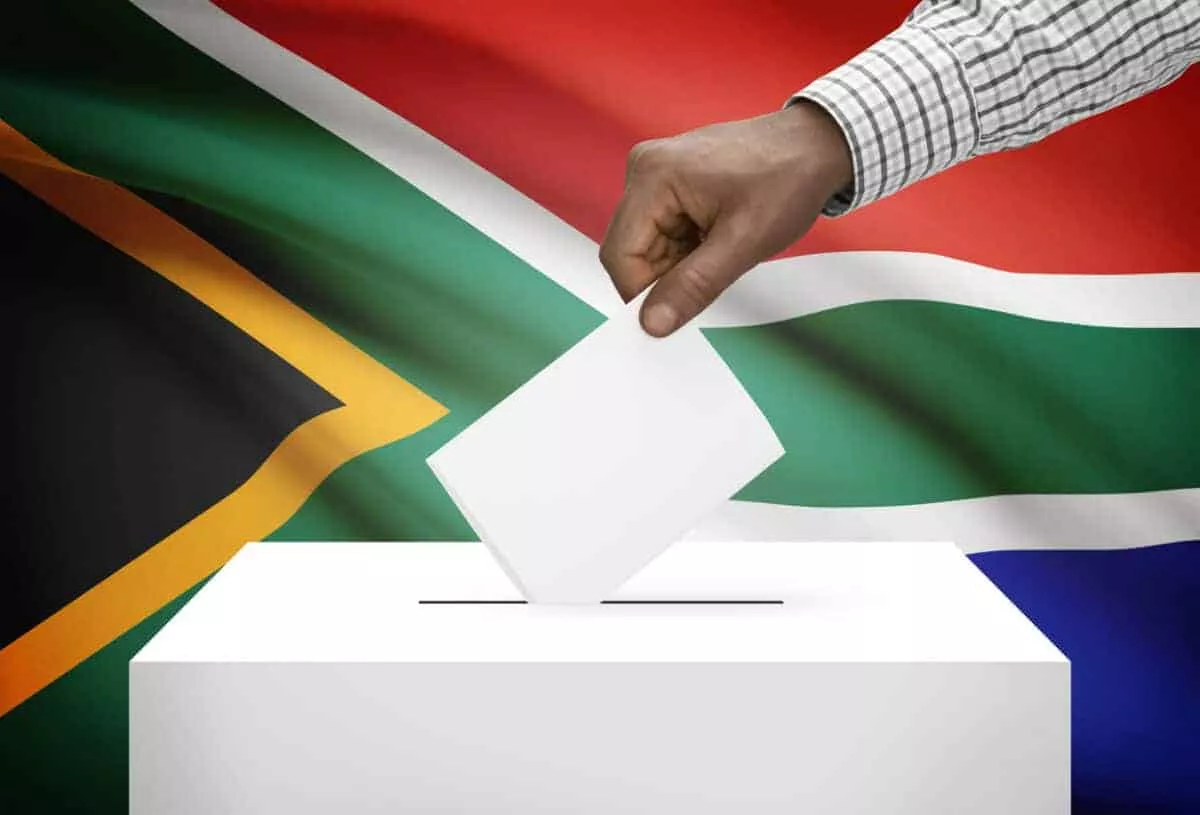
This week, Ramaphosa announced parliamentary elections for May 29, and according to polls, the ANC will need a coalition partner to form a government. The poor economic situation, power outages, rising crime, and record unemployment (as high as thirty percent, and almost sixty percent among young people aged 15 to 24) are some of the factors that have led to a decline in popularity.
Some polls indicate that the ANC could win less than forty percent of the vote, which would be a disastrous result for them. In the 2021 local elections, the ANC fell below fifty percent support.
The decline in the ANC's popularity means that Ramaphosa would need the support of other parties for a new and final term as president, as South Africa does not elect its president through direct elections, but in parliament, which has 400 seats. This is precisely the main point of interest for the West, Russia, China, Brazil, as well as Israel and Palestine in the South African elections.
Substantive Opposition
Polls show that the two other most popular parties are the Democratic Alliance (DA), the largest opposition force, led by the white John Steenhuisen, and the left-wing Economic Freedom Fighters (EFF), led by Julius Malema, who is more radical than the current government in some foreign policy stances, especially concerning Western interests. In addition to them, smaller parties will also appear in the elections, some of which are led by former members of the aforementioned major parties.
Steenhuisen has stated that this is a "countdown to a historic moment when South Africa has the opportunity to save itself from thirty years of ANC failure, corruption, and state capture," and the EFF stated that this is an "opportunity for all South Africans to put an end to the misery we have endured as a nation under the incompetent, corrupt, and misguided governance of the ruling party." The DA won just over twenty percent of the votes in the last elections, a figure that roughly corresponds to the proportion of non-African residents in the country.
Steenhuisen must also gain the support of the majority population, so he promises to improve the economy and supply electricity from renewable sources, pointing to examples from communities governed by his party.
The EFF is a party whose popularity is growing, having won ten percent of the votes in 2019, and some polls suggest they could overtake the DA. Malema is an energetic leader who appears with a red beret and was previously expelled from the ANC, where he led the party's youth wing.
Malema promises the nationalization of banks and mines, expropriation of land owned by white people, fighting crime by strengthening the police and army, arresting the corrupt, stable electricity supply, building social housing and roads, creating jobs, and providing income for the unemployed. This makes him popular among young people in South Africa, as well as in other African countries, as he is seen as a politician similar to those Africa had during the struggle for decolonization.
Foreign Influence
The ANC falling below fifty percent of the vote raises various questions in South Africa, primarily how to form a government. This is precisely the main concern of all interested parties regarding the South African elections. Such an ANC does not please the West, nor the BRICS members, especially considering that Malema would move to confront the West. Malema is a greater critic of Israel than the ruling party, using the Palestinian cause as fuel for confrontation with rivals and equating the struggle against apartheid with the struggle of the Palestinians, claiming that Hamas has done nothing wrong and that "struggle is the only option" when you are "oppressed." Malema accused Ramaphosa of coming to power with the help of money from Israel.
Ultimately, Malema is calling for an end to all political and economic ties with Israel. On the other hand, Steenhuisen is much closer to the West in terms of foreign policy, which is reflected in his stance on the Palestinian issue, as it is currently an important issue on the South African political scene after the country has borne a burden that many Arab and Muslim countries were unwilling to carry.
Steenhuisen's advocacy for a "two-state solution," which Israeli officials are currently rejecting, and his condemnation of Hamas as a "terrorist organization" sound to his critics like Western policy towards Israel and Palestine for the past seventy years.
The election campaign in this important African country has begun. Africa's third-largest economy has come under the scrutiny of major powers who want to use the upcoming elections for their own goals, counting on South Africa's position in international relations, i.e., its ties with the West, Russia, China...
These elections could change South Africa's policy and bring a significant victory to one side in the south of the continent, where the average age of the population is only eighteen years. Given the huge stakes, any events or twists should not surprise us.
Komentari (0)
Prijavite se za komentiranje
PrijavaJos nema komentara. Budite prvi!
Minuta
Sve →Iz drugih kategorija
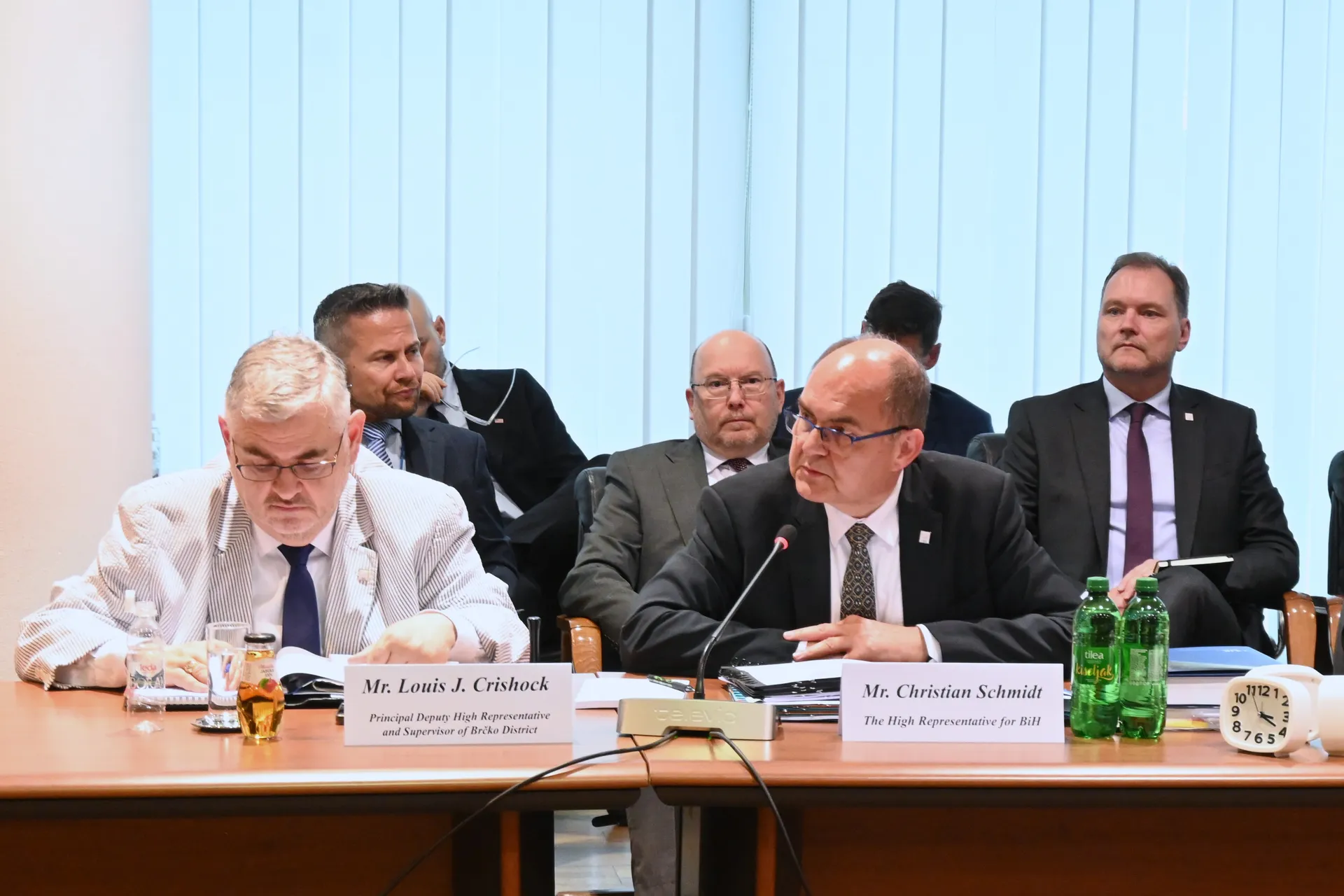
High Representative Not Elected: Germans, French and British Sabotaged Americans, New Attempt at End of June
ČOVIĆ WITHOUT MERCY: How Those Who Brought Ademović to Office Created a Political Hell for Him

Sunny Saturday, quite warm
Tragedy in Albanian resort: Two minors drown