
By Armin Sijamić
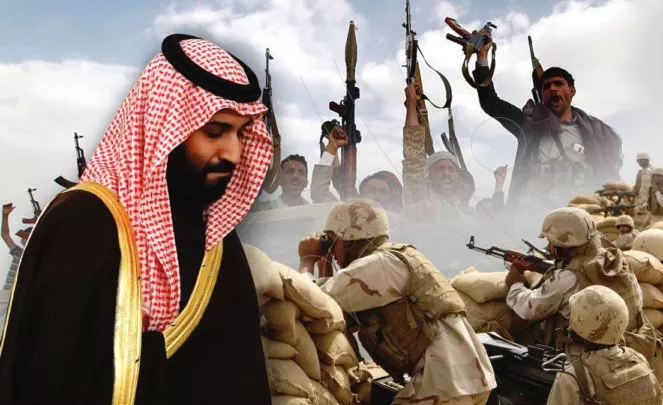
According to reports from Saudi and numerous world media outlets, a delegation of Yemeni Houthis has arrived in Saudi Arabia for talks on establishing lasting peace. The current ceasefire and improved relations with Iran are an opportunity that Riyadh does not want to miss. The war is costly, the Houthis have not been defeated, and the vision of a new Saudi Arabia, as envisioned by Crown Prince Mohammad bin Salman, does not need a war against the poorest country in the Arab world.
Sources close to the authorities in Riyadh have confirmed that the Houthi delegation has arrived in Saudi Arabia and that talks will be held on ending the war. The arrival of the Houthis in Saudi Arabia was welcomed by the United States, which also thanked Oman for its mediating role.
Thus, negotiations are underway, Oman is the mediator (as it has been many times before in various Middle Eastern conflicts), and Riyadh and Tehran are once again showing that they want to improve relations. The last visit of a Houthi delegation, who call their movement Ansar Allah, to Saudi Arabia was in 2014, which shows how important this new visit is.
In April, delegations from Oman and Saudi Arabia visited Sana'a, where they negotiated with the Houthis. The visit came parallel to the warming of relations between Riyadh and Tehran, which was a signal that the ceasefire that has been in place in Yemen since October, although officially limited to six months, could turn into peace. In addition, they also negotiated in Geneva with the mediation of the United Nations, and prisoner exchanges were agreed upon at that time.
The Yemeni war began almost a decade ago, and at one point involved several armies on the ground and dozens of countries supporting one side or the other. In most world media, the Yemeni war has been simplistically presented as a clash between Shiites, supported by Iran, and the central government supported by Saudi Arabia, which actively fought against the Houthis.
However, things are much more complicated than the premise that the Houthis simply fought against the central government and eventually overthrew it, occupying the capital Sana'a. ISIS and Al-Qaeda operate in Yemen, which the United States attacks from the air. The United Arab Emirates had favorites who fought against the Houthis, but not for the option supported by Riyadh and its allies. Then, parts of the army, Sunnis, supported the Houthis, and mercenaries from various countries appeared on the ground, with whom they mostly fought against the Houthis.
A War Riyadh Couldn't Win
During the war, information emerged that Washington was persuading Riyadh to end the war in Yemen, as it could not win there. American assessments were accurate, and their deal with the Taliban in Afghanistan shows that even the world's greatest power cannot win these types of wars. The Saudi army lacks combat experience, while the Houthis have proven to be good warriors who, likely with Iran's help, have been making drones and modifying Scud ballistic missiles, targeting Saudi Arabia, including military bases, the capital, airports, and oil facilities.
Furthermore, Riyadh bears the stigma of waging war against a country where millions of people are dying of hunger. According to estimates, about 16 million people in Yemen suffer from hunger and malnutrition, including 2.3 million children. About 370,000 people have been killed in the war.
Riyadh's reputation is also tarnished by its inability to defeat the Houthis, despite having access to the most modern weapons and financial resources. Almost a decade of war has put the parties on the ground in a stalemate, where the Houthis cannot defeat their opponents, but their opponents are also unable to push them back to the north of the country where they have their strongest strongholds.
Bin Salman and Iran
Although Mohammad Bin Salman, or MBS as some media call him, is the Crown Prince and not yet the King, his rise to power has marked a turning point for Saudi Arabia. The Prince has been trying to reform Saudi Arabia for years and has been quite successful so far.
In addition to showing an independent stance towards Washington and implementing reforms in Saudi Arabia, MBS has also changed foreign policy. The agreement to normalize relations with Iran, mediated by China, shows that the young leader prioritizes cooperation and is willing to negotiate with anyone if it brings benefits to the country he governs.
The end of the war in Yemen would certainly bring numerous benefits to Saudi Arabia, regardless of some criticisms that this would hand the country over to Iran. Simply put, that is not true, because the Houthis would not gain anything more on the ground through peace than what they already had. The beneficiaries could be pro-Saudi forces who could potentially return to the capital, which is controlled by pro-Iranian forces.
The fact that Iran controls another Arab capital (previously it had control over three others - Beirut, Damascus, and Baghdad) has resonated strongly in Saudi Arabia and other Arab countries. With an agreement with the Houthis, MBS could regain some influence in Sana'a, and later increase that influence. This is clear to Iran and to the war-torn Houthis, who desperately need peace.
Terms of the Agreement and Chance for Peace
Furthermore, according to sources familiar with the negotiations between the Houthis and Riyadh, any agreement would lead to the opening of the international airport in Sana'a, then the seaports controlled by the Houthis, which are crucial for the delivery of humanitarian and other aid, the payment of salaries to civil servants, assistance in the reconstruction of the devastated country, and revenues from the sale of oil and gas.
Finally, negotiations are underway for all armed formations to leave the country. Let's recall that the UAE, as Riyadh's regional rival, has its own forces on the ground, and they are fighting against the Houthis. This particularly pleases Riyadh, and in addition to alleged Iranian instructors, members of terrorist groups (Al-Qaeda and ISIS), who are a constant threat to any government, would also have to leave the country.
However, what is most important for Riyadh is peace and the convergence of views with its regional rival. Their divided views on regional issues are the source of constant crises, which only benefit those who would like to subjugate both Saudi Arabia and Iran.
MBS's "Vision 2030" will not be possible if wars rage on Saudi Arabia's borders and if crises drain Riyadh's energy and money. Record energy prices have filled Riyadh's coffers, and that money can be spent more wisely.
The decision by Saudi Arabia and Iran to normalize relations has been met with optimism in almost the entire region and the Islamic world, which is tired of conflicts and crises. This particularly applies to Lebanon, Syria, Iraq, and Yemen, where the two regional powers are on opposite sides. Syria's return to the Arab League is MBS's achievement and an act of goodwill towards an isolated Iranian ally, demonstrating Riyadh's desire for an agreement.
One should not be deluded into thinking that Riyadh and Tehran will succeed in resolving all regional crises, but the absence of war is better than endless destruction. The demographic potential of the two regional powers is enormous and should be utilized. Over sixty percent of the population in both countries is under 30 years old. MBS, who is in his late thirties, may better understand the tens of millions of young people who want a different Middle East. And the devastated Yemen urgently needs peace.
Komentari (0)
Prijavite se za komentiranje
PrijavaJos nema komentara. Budite prvi!
Minuta
Sve →Iz drugih kategorija

High Representative Not Elected: Germans, French and British Against Americans, New Attempt at End of June

ČOVIĆ WITHOUT MERCY: How Those Who Brought Ademović to Office Created a Political Hell for Him



Sunny Saturday, quite warm



Tragedy in Albanian resort: Two minors drown












