
By Armin Sijamić
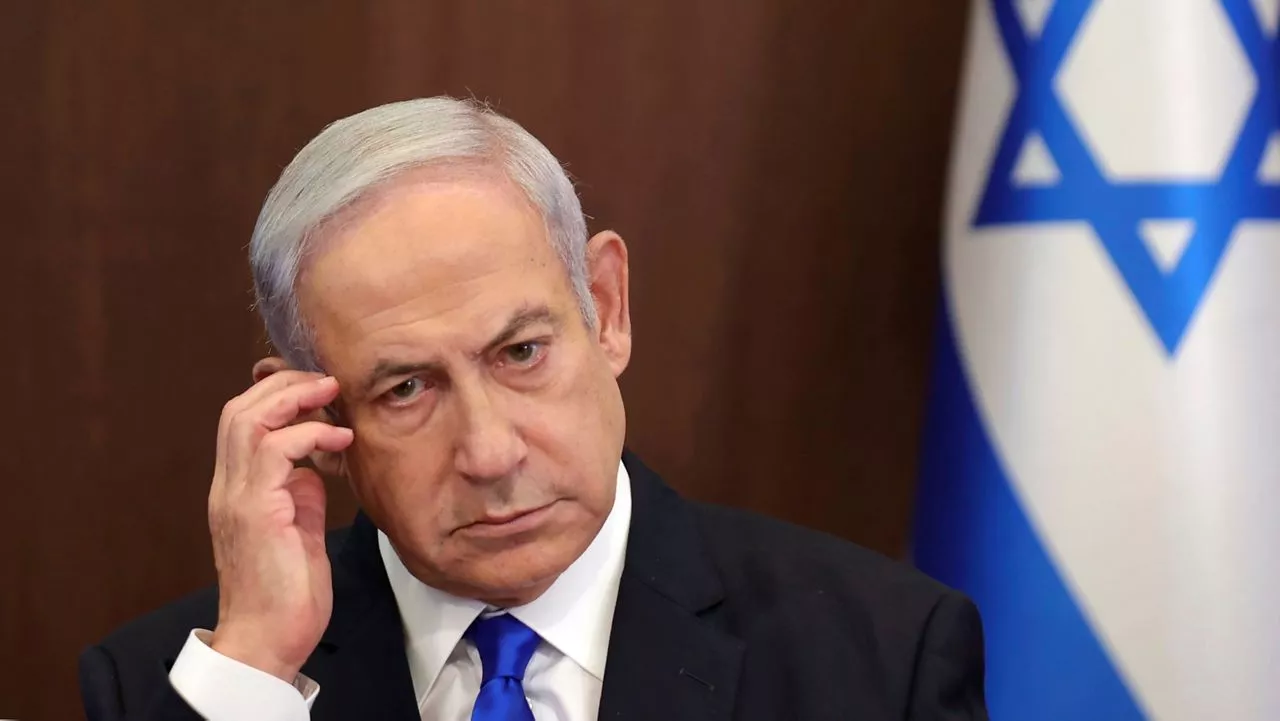
Earlier this week, the International Criminal Court (ICC) shocked the public. Chief Prosecutor Karim Khan wants Israeli Prime Minister Benjamin Netanyahu, Defense Minister Yoav Gallant, Hamas leaders Yahya Sinwar, Mohammed Diab Ibrahim Al-Masri, and Ismail Haniyeh to be put on trial. Thus, the story about the future of international courts has been opened.
Hamas's attack on Israel on October 7th marked the beginning of a new dynamic of relations in the Middle East. Where this dynamic is heading is not yet clear, and part of the answer to that question will be the war crimes case for which the chief prosecutor is charging Hamas leaders, the Israeli prime minister, and the defense minister.
Briton Khan accuses Hamas leaders of committing numerous crimes, including crimes against humanity, extermination, murder, hostage-taking, rape and sexual violence, torture, and other crimes, by forces under their command during the attack on southern Israel.
Khan accuses Netanyahu and Gallant of committing multiple crimes by Israeli forces in the Gaza Strip, starting from October 8th, including crimes against humanity, extermination, starvation of civilians as a method of warfare, displacement, directing attacks against civilians, deprivation of life, and other acts.
Khan has requested the court to issue arrest warrants for the aforementioned individuals, despite the opposition of Israel and the United States, particularly from some Republicans who are threatening that Washington will take measures against the ICC and its employees if the Israeli leadership is indicted.
Justice for all or double standards?
Khan has not backed down and has defended his decision in several places, citing international law, which, according to him, should apply equally to everyone and that no one is above the law. The very question of whether international laws protect all people is one of the questions Khan has raised by seeking arrest warrants, and another question is who and under what conditions the ICC can prosecute.
When the ICC indicted Russian President Vladimir Putin last year for crimes in Ukraine, Western governments celebrated international law. U.S. President Joseph Biden ordered the government to provide the ICC with information they had about crimes in Ukraine.
Less than a year later, Biden has a different stance. At the end of April, the White House announced that "the ICC does not have jurisdiction in this situation," referring to the possibility of indictments for crimes in the Gaza Strip. Earlier this week, Biden continued in the same vein, calling the intention to arrest Netanyahu and Gallant "unprecedented." Biden stated that "what is happening in Gaza is not genocide," and Secretary of State Antony Blinken said they "fundamentally reject" Khan's order.
Hamas leaders are also not enthusiastic about Khan's move. Besides rejecting their leadership's guilt for crimes in southern Israel, they asked the ICC why it is late with indictments against Israeli leaders and why the list of those they are charging is not longer. They told the ICC that it "equates the victim with the executioner."
Netanyahu was the harshest critic of Khan's decision, stating what could have been expected. He said he rejected with disgust that "democratic Israel" was compared to "mass murderers," referring to Hamas. That comparison is a "distortion of reality," Netanyahu said, and accused Khan of "brazenly pouring gasoline on the fire of antisemitism raging around the world."
How does the ICC work and can it arrest the accused?
Shortly after requesting an arrest warrant for Putin, it was issued. From that moment on, Putin can be arrested in any country that is a member of the ICC, of which there are 124. Some countries are not members, such as the United States, Israel, or Russia and China. Thus, fearing arrest, Putin missed the BRICS summit in South Africa and India, but recently visited China.
The ICC states that it has jurisdiction over the Gaza Strip, East Jerusalem, and the West Bank after the Palestinian leadership formally agreed to the court's founding principles in 2015. That move by the Palestinian Authority was made precisely with the intention of protecting civilians from Israeli actions in territories where Palestinians live, and even then, Israel and its allies were against such a decision.
However, at this moment, Netanyahu, Gallant, and Hamas leaders are one step below Putin in ICC cases. Namely, Khan has requested arrest warrants, and a pre-trial chamber consisting of Presiding Judge Iulia Motoc from Romania, Mexican Judge Maria del Socorro Flores Liera, and Judge Reine Alapini-Gansou from Benin will discuss this.
The chamber has no deadline to decide whether to issue arrest warrants, and in previous cases, decisions have been made within one to several months. If the judges agree that there are "reasonable grounds" to believe that war crimes or crimes against humanity have been committed, an arrest warrant will be issued, which must state the name of the person, the criminal offenses for which the arrest is sought, and the facts alleged to prove those offenses. The chamber may amend the arrest warrant or approve only part of what the prosecutor requests. Charges can be amended and updated later.
Politics and law
South Africa initiated a case against Israel before the International Court of Justice (ICJ) in late December last year, accusing it of genocide in the Gaza Strip, which was a major blow to Tel Aviv and its allies. Washington stated at the time that the case was moving Israel and Hamas away from a ceasefire and achieving peace in that part of the world. Khan's move before the ICC was welcomed by South Africa.
Washington was shocked by French President Emmanuel Macron, who yesterday said he supports the work of the ICC, and Norwegian Foreign Minister Barth Eide unequivocally stated that his country will arrest all indicted individuals if the court issues arrest warrants and if they come to its territory, adding that this is Oslo's obligation under international law.
In the coming days, the list of those who will comment on this case will likely grow, while the decision of the three aforementioned judges is awaited, who will likely be under great pressure. As expected, the United States and Israel, who want to prevent the prosecution of Israeli officials, and American and other officials in some other cases, will play the biggest role in this.
A group of Republican senators led by Tom Cotton warned the ICC in a letter on April 24 not to issue indictments and threatened court employees and their families. In the letter, they condemned the ICC for not issuing arrest warrants for Iranian Ayatollah Ali Khamenei, Syrian President Bashar al-Assad, Hamas leader Ismail Haniyeh, or Chinese leader Xi Jinping.
"Target Israel and we will target you. If you proceed with the measures outlined in the report, we will move to cut off all U.S. support for the ICC, sanction your employees and associates, and ban you and your families from entering the United States," they wrote. In addition to Cotton, signatories include Senate Republican leader Mitch McConnell, as well as Ted Cruz, Mark Rubio, Kevin Cramer, Tim Scott, and others.
Such behavior by Republicans particularly worries Democrats as it comes in an election year. Biden, who is trailing Donald Trump in the polls, therefore sometimes has to be more extreme than the opposition, and his behavior could be crucial if indictments are issued.
Namely, if a country does not arrest those sought by the ICC, the case goes to the assembly of the court's member states, and then they send the case to the United Nations Security Council to decide on measures against the country that has ignored the court's request. There, for who knows what time, Washington could protect Israel, or states that have refused the court. Also, Palestine and Israel could request a postponement of the prosecution of the accused if they commit to trying them in their domestic courts under the same charges.
But for Biden, the biggest concern is political if arrest warrants are issued for Netanyahu and Gallant. In addition to them being close allies and the entire policy of Tel Aviv potentially being brought into question in the international political arena, an arrest warrant could further undermine American authority and influence, which Netanyahu has seriously shaken since October 7.
Netanyahu's policy in the Gaza Strip and towards Palestinians in general has become a burden for the West, and this was evident in the first weeks of the war. The war in the Gaza Strip was not in the West's interest while the war in Ukraine was ongoing and at a time when the US was trying to contain China. The moment it became clear that Biden could not stop Netanyahu, a avalanche of events was set in motion that no one can control or direct anymore. Khan's indictment is part of that, and international courts could gain a new role, or lose their existing one.
Komentari (0)
Prijavite se za komentiranje
PrijavaJos nema komentara. Budite prvi!
Minuta
Sve →Iz drugih kategorija

High Representative Not Elected: Germans, French and British Sabotaged Americans, New Attempt at End of June

ČOVIĆ WITHOUT MERCY: How Those Who Brought Ademović to Office Created a Political Hell for Him



Sunny Saturday, quite warm



Tragedy in Albanian resort: Two minors drown












