
By Armin Sijamić
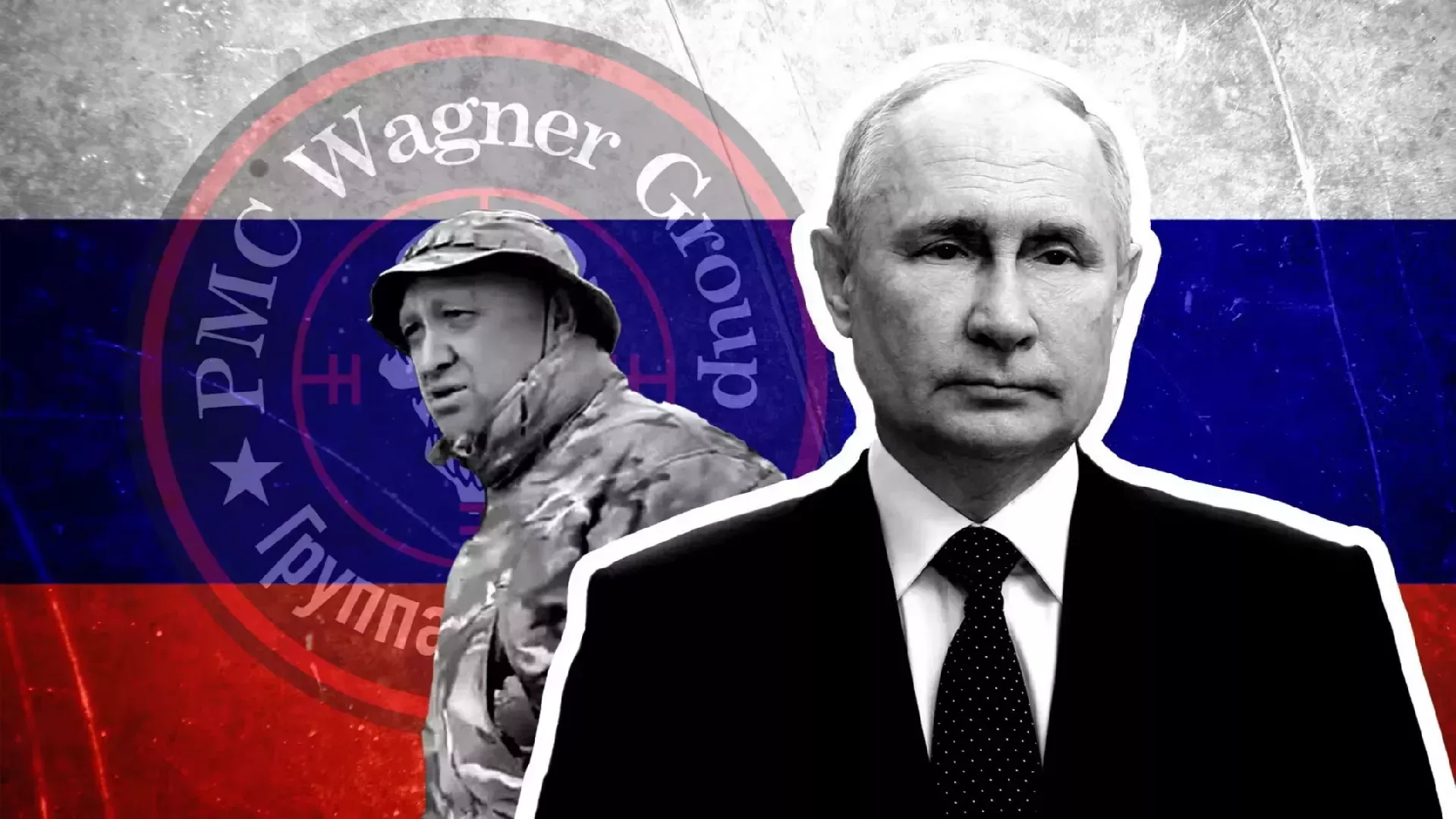
Since the beginning of the battle for Bakhmut, which was the bloodiest episode of the Ukrainian war, the international public has been focused on the Wagner group, its founders, and commanders. When on June 23rd, parts of Wagner marched towards Moscow, many wondered if Russia was heading towards civil war.
When the plane carrying Wagner leaders crashed on August 23rd, many asked if this was a continuation of the power struggle within the Russian elite, reminiscent of the assassination of Anna Politkovskaya on Vladimir Putin's birthday. Now, the West is wondering if Wagner will survive as a group. Although Western media have described Wagner as a fanatical group of fighters who fight to the death for Russia and Putin, the reality is different. Wagner is formally a private military formation, of which there are dozens worldwide. The Russians founded Wagner, modeled after mercenary groups from the West.
But essentially, the Wagner mercenary group is an extended arm of the Kremlin. Although the intentions of those who formed Wagner were clear, the military circles in Russia had objections from the very beginning. The Western trend of privatizing the security sector, reflected in the increasing number of security companies and private military units, angered military circles who want a monopoly on force in Russia, which is particularly important in the context of the power struggles within the elites governing that state.
Mercenaries vs. Army
By forming the Wagner group, the Kremlin wanted an armed formation that could be deployed worldwide, with the official authorities having no connection to it. Wagner experienced the status of mercenary formations in armed conflicts firsthand in Syria in 2018 when dozens of mercenaries were killed in a US attack, described as a "mistake." There was no significant reaction from the Kremlin.
The Kremlin's plan was for Russia to have a "private company" that would carry out tasks the army did not want to, or could not, do. The Russian army has almost no experience in expeditionary warfare, meaning warfare far from its borders. This land force has little experience fighting in other parts of the world, unlike the Americans, British, or French.
Expeditionary warfare requires mobile forces, aircraft carriers, and strong air power. Russia lacks these. The extent to which the navy was used in the aggression against neighboring Ukraine speaks to its capabilities, and the only aircraft carrier they possess, upon arriving off the coast of Syria at the invitation of the government of Bashar al-Assad, had problems with planes falling off the runway into the sea during landing.
Therefore, the formation of Wagner is the most effective solution available to Moscow, specifically the FSB intelligence service (formerly KGB), with which both Putin and the nominal leader of Wagner, Yevgeny Prigozhin, are closely associated. Due to his friendship with the president, Prigozhin received a catering contract in the Kremlin and later the nickname "Putin's Chef." It should be noted that Wagner is not the only mercenary formation in Russia. Let us mention two here that are directly or indirectly related to Wagner: Vega – which, according to some claims, is intended to take over some of Wagner's personnel, and Patriot – close to the army and the military intelligence service GRU.
Since Russia's involvement in the war in Syria, there have been calls for the formation of mercenary units as a way to employ former soldiers. With the collapse of the USSR and the wars in Chechnya and Georgia, a large number of soldiers were left jobless, and joining mercenary groups was offered as a solution.
It should be noted that thousands of mercenaries arrived during the aggression against Bosnia and Herzegovina.
Numerous crimes are attributed to them, as well as the deception that they were "volunteers." Most of them came to our country for money. In his 2014 book "Russian and Greek Mercenaries in the War in Bosnia and Herzegovina," author Aziz Tafro states that some of them receive disability benefits and pensions from the budget of the smaller Bosnian entity.
Dissolution or Regrouping
Prigozhin's rebellion against the Ministry of Defense and the army, but not against Putin, ended with Wagner members going to Belarus and meeting with Putin. Although Wagner shot down several planes and helicopters and killed dozens of Russian soldiers, Prigozhin did not go to prison.
At the end of June, Putin spoke with Wagner leaders. He offered them continued service, which Prigozhin refused. Putin had previously stated that Wagner "legally does not exist," only to later say that the group was financed from the state budget. Putin was implying that, according to the law, such companies cannot operate in Russia but can operate outside the country. Media reported that Wagner had opened "subsidiary companies" in Africa, and in Belarus, according to the BBC, it is registered as a company for providing education and real estate trading.
The army offered Wagner members the opportunity to serve in the Russian army, but it is not known if there was a mass transfer. What is known is that a significant portion of the command staff, including Dmitry Utkin, believed to be the actual military commander of Wagner, died in the aforementioned plane crash. Prigozhin, a former petty criminal and restaurateur, was the one who exposed himself publicly, and speaking of him, Putin said he was a good "businessman."
The death of Prigozhin and Utkin does not seem to mean the end of Wagner, which Putin stated "legally does not exist" but de facto exists as a group. The various operations they conducted in Syria, Libya, Mali, Sudan, the Central African Republic, the Democratic Republic of Congo... are continuing, especially as parts of Africa have rebelled against France, which is partly thanks to Wagner and Russia. Wagner is present militarily, politically, or economically in numerous countries, and some states have accused them of various crimes.
Due to these operations, which have been successful for Russia, and the large sums of money Wagner has earned by providing security and training services across Africa, experts believe the group will survive, likely under a different name, or under different names if they decide to break it down into smaller groups.
As we mentioned, there is information that some mercenaries will transfer to the Vega group, and others will likely join the National Guard (Rosgvardiya), which Putin established in 2016 and is commanded by Viktor Zolotov, an officer close to former President Boris Yeltsin who helped him stay in power during the 1991 coup attempt. Rosgvardiya, with over 350,000 members, will receive tanks and heavy weaponry after Wagner's rebellion, which Zolotov was supposed to suppress near Moscow in the absence of the army.
Some mercenaries will remain in Belarus, at least according to President Alexander Lukashenko. Close to the Kremlin, Lukashenko is certainly aware of all of Wagner's operations and it would not be surprising if he engages them. Some of them will likely return to their countries of origin, as it is known that Wagner has been recruiting foreign nationals since the beginning of its operation in Syria.
There is no public data on the number of Wagner members, but it is estimated that this mercenary (terrorist) group had several tens of thousands of soldiers under its command in Ukraine. Also, there is information that in 2014 and 2015, there were only a few hundred. At that time, they operated in Ukraine as an extended arm of the Kremlin, which had not formally engaged in the war.
The number of Wagner members killed in Ukraine is also unknown. Ukrainian authorities have announced that Wagner is no longer fighting in that country, so many countries are concerned about the behavior of the surviving members, or those who will continue to operate within mercenary groups.
Poland, which has a strong army and the presence of the US military, fears their activities in neighboring Belarus. Lukashenko has stated that Wagner members told him they want to go to Warsaw. The threat is serious, as evidenced by the fact that Wagner has been declared a terrorist organization by France, Estonia, Lithuania, and Ukraine, the United Kingdom has announced such a decision, and some US lawmakers are calling for it.
The OSCE Parliamentary Assembly designated Wagner as a terrorist organization in July. Washington has imposed sanctions on Wagner, Prigozhin, and Utkin. The European Union, UK, Spain, New Zealand, Japan, Switzerland, Canada, and Australia have also imposed sanctions on Wagner.
All of this suggests that the story of Wagner is not over and will continue in various forms for a long time. Many countries are trying to respond to the activities of mercenaries trained for almost all types of warfare. The rebellion against the Russian state, army, and Minister of Defense Sergei Shoigu shows that Wagner mercenaries are ready for various actions, even turning against those who pay them.
Komentari (0)
Prijavite se za komentiranje
PrijavaJos nema komentara. Budite prvi!
Minuta
Sve →Iz drugih kategorija

High Representative Not Elected: Germans, French and British Sabotaged Americans, New Attempt at End of June

ČOVIĆ WITHOUT MERCY: How Those Who Brought Ademović to Office Created a Political Hell for Him



Sunny Saturday, quite warm



Tragedy in Albanian resort: Two minors drown












