
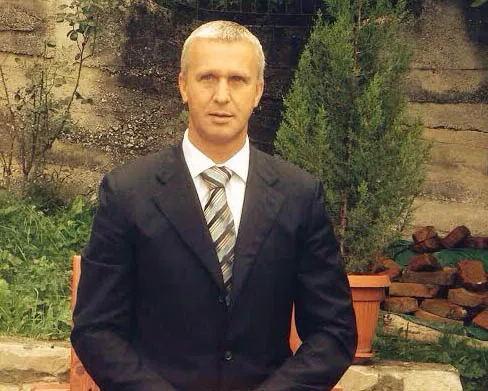
Mirsad Vilić is one of the few Bosnian police officers who, organized by the State Department, graduated from the prestigious FBI National Academy.
He has extensive experience in police positions from the lowest to the highest rank. Before taking the position of the head of the Directorate for Coordination of Police Bodies of BiH, he was the commander of the SIPA Special Support Unit since its establishment.
In an interview with the PATRIA agency, Vilić speaks, among other things, about the numerous responsibilities of the Directorate he leads, the challenges ahead, and the security of the upcoming October elections.
PATRIA: How many employees does the Directorate have and how many facilities do your employees secure? Is the Directorate's capacity in terms of personnel sufficiently filled given the large number of facilities you are responsible for?
VILIĆ: The Directorate for Coordination of Police Bodies of BiH carries out the protection of facilities and VIPs based on the law, international obligations, and relevant regulations adopted by the Council of Ministers of BiH. The Directorate secures 168 facilities, including state buildings, VIP residences, diplomatic and consular missions, and residences. Currently, the Directorate has 810 employees, which is 63.9 percent of the total systematization.
Despite insufficient staffing, the Directorate makes maximum efforts to ensure a satisfactory level of security for persons and facilities, with exceptional efforts from employees, especially police officers. We compensate for the lack of employees through continuous equipping and training, and we are forced to engage our police officers on an extraordinary basis. In order to strengthen human resources, the Directorate is training 49 cadets for the initial rank of police officer at the Agency for Education and Professional Training of Personnel. These police officers will assume duty at the beginning of May 2015. Also, the Directorate will continue to hire new personnel in the coming period in accordance with approved budget funds.
PATRIA: What are the competencies of the Directorate?
VILIĆ: The tasks within the Directorate's competence are numerous and extensive, and I will mention only some of them so that citizens understand that our job is not just physical security of buildings or individuals. This Directorate is one of the key institutions in the security field. Domestic authorities and the international community should help us obtain an appropriate status within the existing police structure at the state level. Some of our competencies are communication, cooperation, and coordination between police bodies in BiH, then communication, cooperation, and coordination between police bodies in BiH with relevant bodies in BiH regarding matters of police affairs of an international character or international importance, or regarding matters within the jurisdiction of the Court of BiH, communication and cooperation with relevant foreign and international bodies regarding matters of police affairs of international importance or common interest... daily consolidation of security information relevant to Bosnia and Herzegovina, as well as relevant to the performance of tasks within the competence of police bodies in BiH, daily monitoring of the security situation and informing competent police and other bodies in BiH, collecting, monitoring, analyzing, and using data relevant to the security of Bosnia and Herzegovina...
From the above-mentioned tasks within the competence, it is evident that the Directorate represents a new quality in the police structure of BiH. Its primary mission is to serve other police agencies in BiH so that they can more efficiently perform tasks within their competencies through continuous improvement of communication, coordination, and cooperation domestically and internationally, which will result in more effective counteraction to organized crime, corruption, terrorism, and other security challenges faced by BiH.
PATRIA: How much has your job been facilitated thanks to the signed agreement with EUROPOL, which also includes a very important segment, namely data exchange?
VILIĆ: Bosnia and Herzegovina currently has a signed strategic agreement with EUROPOL, which entails the exchange of strategic and technical information. As for the exchange of criminal intelligence data, i.e., personal data, as well as the use of analytical work files and other EUROPOL databases, Bosnia and Herzegovina will be able to use and exchange them only after signing the Operational Agreement with EUROPOL. BiH will soon begin negotiations with EUROPOL for signing the Operational Agreement. In this regard, EUROPOL experts conducted an evaluation of personal data protection in BiH and assessed that personal data protection in BiH is satisfactory. This essentially represents one of the basic prerequisites for starting negotiations for signing the Operational Agreement.
PATRIA: How do you assess cooperation with other state police agencies, entity and cantonal Ministries of Interior?
VILIĆ: As we have already stated, the Directorate was established, in a sense, as a need and response to the decentralized and complex concept of functioning of the police structure in BiH. We have a clear vision when it comes to communication, cooperation, and coordination among all those who need our support, and we follow that path. It is a path of mutual respect and partnership in the common task of combating crime within legal competencies, with the aim of creating a safer environment for all citizens of BiH. I must emphasize that we have already taken a big step, both for the Directorate and for all police institutions, namely the signing of the Mutual Assistance and Cooperation Agreement (MAA) by five law enforcement agencies - the Directorate for Coordination of Police Bodies of BiH, the State Investigation and Protection Agency (SIPA), the Border Police of BiH, the Federal Police Administration, and the Ministry of Interior of Sarajevo Canton. I hope that this type of cooperation will be extended to all police agencies in BiH. Generally, I must say that cooperation between police agencies in BiH is constantly improving; however, there are a number of challenges and room for continuous improvement and raising this cooperation to a higher level.
PATRIA: The workshop being held tomorrow (Tuesday, September 9) concerns the amendment of the Criminal Code of BiH regarding the departure of BiH citizens to foreign battlefields. What is the role of the Directorate in this?
VILIĆ: The Directorate for Coordination of Police Bodies of BiH, together with the Prosecutor's Office of BiH, initiated and organized a workshop aimed at the effective implementation of Article 162b of the Criminal Code of BiH, which criminalizes the participation of our citizens in military, paramilitary, and parapolice formations on foreign battlefields. Representatives of police and other security bodies in BiH, the Prosecutor's Office of BiH, the Court of BiH, certain international organizations, and the like have confirmed their participation in the workshop. We expect about 40 participants in this workshop. Anyone who wishes to share their experiences in the field of security with us will find the doors of the Directorate wide open.
Certainly, the experiences and best practices from countries that have already faced such security challenges, especially in terms of detecting and prosecuting perpetrators of such criminal acts, are of crucial importance for police, security, and judicial bodies in BiH. I expect that this workshop will provide answers to some questions that will enable police forces in BiH to more effectively detect and investigate perpetrators of these criminal acts. If there is a need for additional content such as training and the like, the Directorate will organize them with its partners domestically and abroad.
PATRIA: Does anyone in BiH, meaning the competent agencies, possess data on how many BiH citizens are on foreign battlefields, how many organizers are in BiH? How to generally deal with this complex issue facing the entire world?
VILIĆ: We currently do not have such data, but it is evident that police agencies, within their competencies, are working on this issue, as shown by the recent operations we have had the opportunity to see. We believe that it is necessary to continuously improve the coordination of work of police agencies in BiH in this area as well, for joint action and more effective counteraction to this security challenge. The Directorate has its representatives in the Strike and Operational Group for the fight against terrorism, whose work is led by the Prosecutor's Office of BiH.
More or less, no security challenge, i.e., form of crime, and especially not terrorism or crime based on ideology, can be prevented or effectively countered solely by repression without the involvement of the so-called "wider social community." This includes all institutions of a country, especially the family and the education system, the academic community, and religious and moral authorities in a country.
PATRIA: After the demonstrations on February 7, it turned out that the key problem was the lack of a procedure for joint action in crisis situations. Has anything been done on this issue?
VILIĆ: The Directorate, SIPA, the Border Police of BiH, FMUP, FUP, and the Ministry of Interior of Sarajevo Canton signed an Agreement on Mutual Assistance and Operational Cooperation of Law Enforcement Agencies on June 10, 2014. It is now precisely known who does what and at what moment, and of course, most importantly, mutual assistance. This agreement, I must note, applies only to buildings in Sarajevo that are under security. We are working intensively to have such an agreement signed with other agencies, i.e., Ministries of Interior, so that February 7 does not repeat itself not only in Sarajevo but in all cities of BiH.
PATRIA: Are you ready to monitor the security of the elections on October 12?
VILIĆ: Yes. The Directorate is at the head of the Operational Headquarters and, in cooperation with other police agencies, will prepare an operational plan based on which everyone will have a task to monitor the security of the elections.
Komentari (0)
Prijavite se za komentiranje
PrijavaJos nema komentara. Budite prvi!
Minuta
Sve →Iz drugih kategorija

High Representative Not Elected: Germans, French and British Sabotaged Americans, New Attempt at End of June

ČOVIĆ WITHOUT MERCY: How Those Who Brought Ademović to Office Created a Political Hell for Him



Sunny Saturday, quite warm



Tragedy in Albanian resort: Two minors drown












