
Written by: doc.dr.sc. Nermin Alihodžić
Very often lately, the terms energy transition, sustainable development, and clean energy are mentioned in public. The state of Bosnia and Herzegovina signed a document called the Green Agenda for the Western Balkans, which is an integral part of the Sofia Declaration, on November 10, 2020, at the Western Balkans Summit within the Berlin Process initiative.
The declaration also outlines the main guidelines for implementing the Green Agenda, grouped into various areas, one of which is energy. It states that the signatories commit to working together with the European Union to achieve the goal of carbon neutrality of the continent by 2050, through the introduction of climate policy and reform of the energy and transport sectors.
Furthermore, it states that during this period, the transition time, the signatory states should use to reduce energy imports, develop renewable energy sources, strengthen regional energy security, accelerate economic growth, and address air pollution and health problems caused by this pollution. Since the Green Agenda directly builds on the European Green Agenda, which the European Union adopted in 2019 and which should make Europe the first "climate-neutral" continent by 2050, the signatory states must work on introducing clean energy to drive all economic processes!
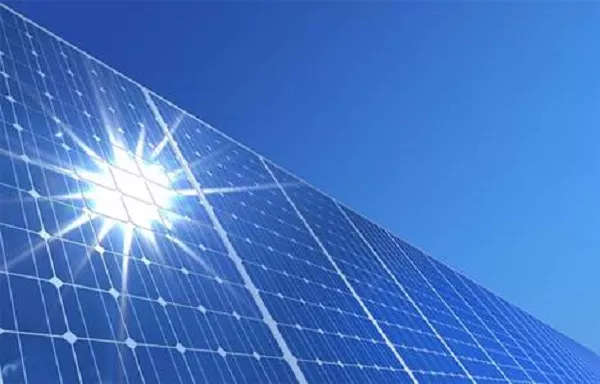
Now we come to the real question: how much are our authorities, primarily meaning the local administration, actually working on the above-mentioned goals and assumed obligations? Because the energy transition is implemented at the local level, while goals and guidelines are prescribed at the state level. Investors who have started building solar power plants will best answer this question. Most of them shake their heads, complain, saying that if they had known, they would never have gotten into something like this, because they are simply stopped at some point in the construction of the solar power plant, so now they can neither exit the process due to the money already invested in equipment and documentation, nor can they put the solar power plant into operation, i.e., connect it to the energy system. And then you have examples where certain solar power plants are not even in trial operation three years after being built. Of course, investors are in the worst position here, and the financial damage is enormous.
There are plenty of absurd examples from practice, but some definitely stand out. For instance, there is the case of an investor from Visoko who complained about the Conclusion of the Zenica Electricity Distribution Company, which rejected the Request for issuing an energy permit for connecting a built solar power plant due to, as stated, "prematurity." Namely, this investor waited for this response for more than four months, despite already having received the Preliminary Energy Permit and immediately settling the financial and other obligations that the Zenica Electricity Distribution Company had sent him on this basis. The reason for the prematurity of the request was stated as "the lack of a line of about ten meters, the construction of which requires as much as two years," more precisely 720 days, as stated in the official document delivered to the investor.
Or also the example of an investor from Visoko who, after obtaining the Preliminary Energy Permit and the Construction Permit for the solar power plant and fulfilling the necessary conditions, had his request for issuing an energy permit rejected because he did not have a signed Agreement on regulating mutual relations and financing the construction of energy facilities in a special zone, and that standard agreement is obliged to be prepared and submitted for signature by the competent distribution system operator. Incidentally, this investor waited seven months for the Preliminary Energy Permit.
And there are countless such and similar examples, so it is realistic to expect that due to the obvious violation of legal provisions and causing significant material damage to investors, JP EPBiH d.d. Sarajevo will be flooded with lawsuits and court proceedings in the future. This attitude is even more surprising given the significant reduction in electricity production in their thermal power plants, and consequently the millions in losses incurred on this basis.
Such inertia, laziness, sluggishness, and ignorance of local authorities and administration in the case of the energy transition should not surprise us. Nor should the recent increase in electricity prices surprise us, and further increases are announced. We have witnessed the recently concluded elections in which we elected local government. Which of the political options came before the citizens and offered them a program that includes the energy transition, explained its concept, importance, ways to accelerate it, and how to implement it?
And energy is everything. Energy is a vital issue. It determines the quality of our lives, the social map of citizens. It directly affects the price level of any product or service in our economy. Energy determines the conduct of a country's economic policy. And then it is not surprising when the director of JP Elektroprivreda BiH tells us to turn off the lights in the corridors in the 21st century. Ignorance and incompetence are the greatest enemies of our society, and the fish stinks from the head always.
Komentari (0)
Prijavite se za komentiranje
PrijavaJos nema komentara. Budite prvi!
Minuta
Sve →Iz drugih kategorija

High Representative Not Elected: Germans, French and British Against Americans, New Attempt at End of June

ČOVIĆ WITHOUT MERCY: How Those Who Brought Ademović to Office Created a Political Hell for Him



Sunny Saturday, quite warm



Tragedy in Albanian resort: Two minors drown












