
By Armin Sijamić
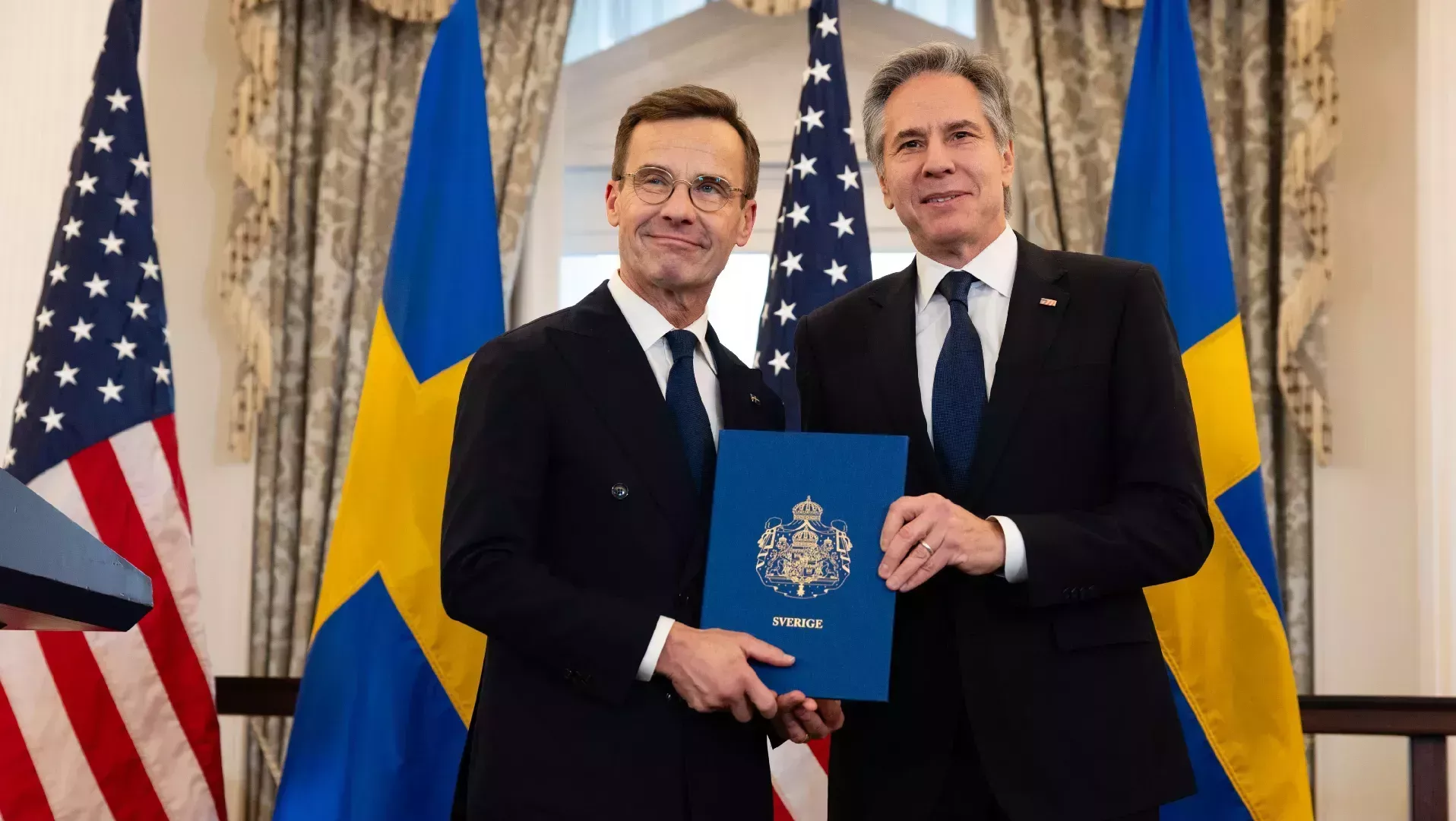
Yesterday, Sweden officially became the 32nd member of NATO, following the example of neighboring Finland. This great triumph of American policy in Northern Europe will surely be reflected in the rest of the continent that remained outside the world's strongest military alliance. Thus, the process of NATO expansion and strengthening has now become the biggest foreign policy success of the Biden administration.
When the Russian army was at the gates of Kyiv two years ago, fear of further Russian penetration into Central Europe gripped part of the public. Propagandists close to the Kremlin, as well as their affiliates and victims of media manipulation, referred to old plans from the USSR according to which the Red Army could reach the shores of Portugal in a few weeks.
Although propagandists presented this as inevitable due to the renewed strength of the Russian army, strategists in the Kremlin were counting on something else – disunity in the West, i.e., the de facto collapse of NATO. Of course, no one serious in Moscow was counting on a war with dozens of European countries, some of which are nuclear powers; rather, they were counting on these countries, driven by their own interests, strengths, and weaknesses, to turn against each other and thus undermine Western unity.
The administration of Joseph Biden, since coming to power, has counted on Western unity, so one of Washington's main points was the strengthening of NATO, which simultaneously ensures American presence in Europe and creates an obstacle for Russia on its path to the west of the continent. The negotiations that Biden held with Russian President Vladimir Putin in Switzerland in June 2021 presupposed the strengthening of NATO led by Washington, regardless of the relationship with Moscow.
Miscalculation or division of spheres of interest?
Russia's "special military operation," as official Moscow calls the invasion of a neighboring country with the intention of preventing it from joining the West, has cost the Kremlin dearly. Losses on the military field, economic difficulties, and diplomatic isolation in a large part of the world will be corrected sooner than the fact that NATO has come within about 160 kilometers of St. Petersburg, Putin's hometown.
Putin's dramatic tone in stating that it is a "mortal danger" for Russia if NATO reaches Ukraine cannot be conveyed in the case of his hometown, where Finland's membership in that military alliance has given him a 1,340-kilometer border with the adversary he fears so much.
Sweden's entry into NATO yesterday, after months of blocking by Turkey and Hungary, has worsened Russia's position, as the Baltic Sea has now become a NATO sea, and Americans and allies can begin planning a new major confrontation with Moscow – the fight for the Arctic.
Ankara's consent for Sweden, and previously Finland, to become a member of NATO is a great victory for the new administration. The United States has been the mediator and the biggest lobbyist for this to happen, improving relations with Turkey. In recent months, better communication between Washington and Ankara has been observed; Turkey's economy and politics are partly led by cadres respected by the West, and the Turkish army will regain the right to acquire necessary weapons from the United States, as well as from Finland and Sweden.
The Biden administration has thus achieved something almost unimaginable just a few years ago, as Sweden and Finland, after many years, have ended their policy of non-alignment and moved closer to the West in every sense of the word. This shift by Sweden was also supported by the right-wing there, which in recent months has been questioning some policies agreed upon within the European Union.
The Biden administration has effectively continued what the Donald Trump administration started by telling Europeans to arm themselves, i.e., to fulfill their NATO membership obligations, which include allocating at least two percent of their GDP to defense. European countries have been allocating record amounts for this purpose in recent years, primarily purchasing from the US. NATO Secretary General Jens Stoltenberg has said that the allocation of two percent of GDP for defense should now be considered a minimum.
The Balkans – the missing piece of the puzzle
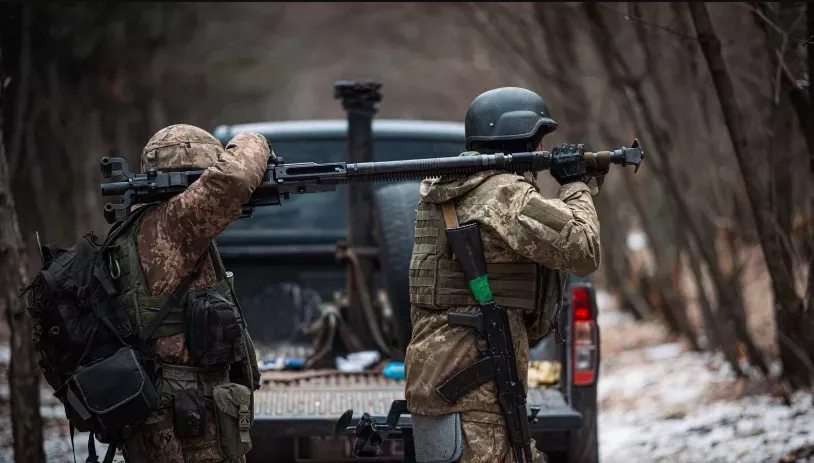
After Sweden's accession to NATO, the European map looks different. Remaining outside the alliance are Ireland, two Alpine countries (Switzerland and Austria), and three Balkan countries (Bosnia and Herzegovina, Serbia, and Kosovo), as well as Ukraine and Moldova in the east, where Russian troops are located.
The neutrality of Ireland, Switzerland, and Austria is well-known, as is the fact that all three countries are involved in the Western bloc in other ways. Ireland and Austria have long been in the European Union, and Switzerland has not given the slightest indication that it is considering moving away from the West, locked in the center of the continent.
NATO can now shift its focus to the Balkans, especially to Bosnia and Herzegovina and Kosovo, where it has an obligation under international agreements to establish order by force, and to Serbia, which is the main reason why resistance to this military alliance exists in its surroundings. In addition, laws and agreements are in force in Bosnia and Herzegovina that lead Sarajevo towards NATO.
The fact that such a scenario was feared by some was hinted at two years ago, after the statement by Croatian President Zoran Milanović that anyone who votes for Sweden and Finland to join NATO is a "traitor," demanding that Zagreb condition its support for their accession to the alliance on American pressure on Bosnian parties to deliver the election law according to his design to Dragan Čović's HDZ.
Conditioning Washington, at least publicly, by Andrej Plenković's government did not happen, because the Croatian Prime Minister correctly assessed that such a move could be fatal for Croatian interests.
The Biden administration, quite filled with people who were involved in the breakup of Yugoslavia, has been given a new opportunity to deal with the Balkans according to its own rules. Those who pursue less radical policies, like Plenković, have the opportunity in these circumstances to fight for their interests in line with the geopolitical shifts determined by the great powers, while those who refuse to approach the West are left with the hope that someone on the other side of the world will make a turn that works in their favor. Almost everything else now is a matter of interest and the West's will to act in its own backyard.
Komentari (0)
Prijavite se za komentiranje
PrijavaJos nema komentara. Budite prvi!
Minuta
Sve →Iz drugih kategorija

High Representative Not Elected: Germans, French and British Sabotaged Americans, New Attempt at End of June

ČOVIĆ WITHOUT MERCY: How Those Who Brought Ademović to Office Created a Political Hell for Him



Sunny Saturday, quite warm



Tragedy in Albanian resort: Two minors drown












