
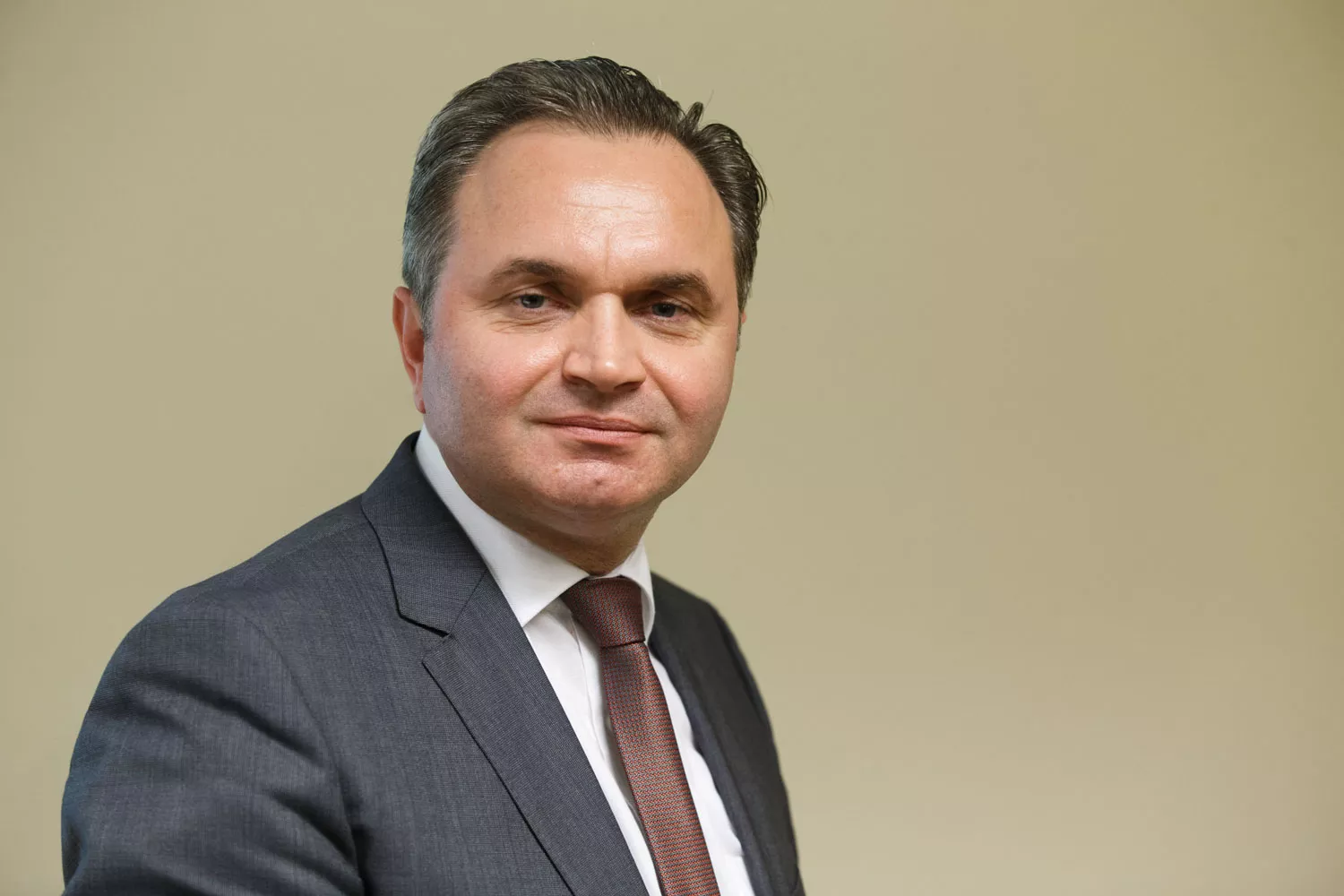
The International Institute for Middle Eastern and Balkan Studies (IFIMES) from Ljubljana, Slovenia, regularly analyzes events in the Middle East and the Balkans.
In an interview with the Patria News Agency, the director of the institute, doc. dr. Zijad Bećirović, talks about the fate of the Western Balkans, what he expects from the summit in Sofia in mid-May this year, and why he believes that if the EU and NATO do not admit the remaining countries of Southeast Europe into their membership as soon as possible, it may be too late for both the region and the EU.
NAP: The European Union will have a Summit in Sofia on May 18. Bulgaria holds the presidency, and the so-called Juncker's agenda for the Balkans will be adopted during its term. Are the details of this agenda known, or can they be assumed? What does the "best-case scenario" mean for the EU to adhere to this deadline for the Balkans by 2025?
BEĆIROVIĆ: First, the EU does not have an agenda for its future. They will admit that even in Brussels. In the current global movements and upheavals, the EU is not navigating well. I think it is difficult to talk about dates at this moment. The entry of countries is individual and depends individually on the candidate countries, the situation within the EU and member states, but also on global trends. When we look at the EU's policy, or rather its enlargement policy, we can notice that the EU is "acting out" against countries that can become potential members of the EU. We all know well how Bulgaria and Romania were admitted to the EU; there weren't exactly many criteria. Even during the big enlargement in 2004, things were overlooked. At that time, 9.5 countries were admitted to the EU because half of Cyprus was admitted. Croatia was also given a pass. And now, they are acting out against the rest of the region. The EU and NATO should admit the remaining countries into their membership and not hesitate, because I fear that this area, due to such behavior, will increasingly fall into the hands of Russia, but also Turkey. There is a very real danger that the rest of the countries in the region may even change their geopolitical orientation, and that is perhaps the greatest danger for the region, and this is happening while the highest representatives of the EU are talking empty words, and before their eyes, this area is falling into someone else's hands. The Bulgarian presidency of the EU should awaken the EU structures and warn them of the dangers I have spoken about and ensure that the summit in Sofia in May 2018 is well prepared and that a concrete message is finally sent from Sofia to the candidates for membership, just as a message about the European perspective of the Balkan countries was sent from the Thessaloniki summit in 2003, and the document "The Thessaloniki Agenda for the Western Balkans: Moving Towards European Integration" was adopted, but that document was never fully realized.
NAP: It has been announced that strong political will for EU accession, implementation of reforms, and lasting solutions with neighbors will be sought. The first condition is that countries must resolve border and other disputes, and that the EU will not import bilateral conflicts. Does this mean that there will have to be internal consensus in BiH? Or will Bosnian Serbs and Croats rush to the EU after Serbia and Croatia?
BEĆIROVIĆ: Fundamentally, there must be consensus for everything, because without it, it is difficult to ensure general progress. However, one should not exaggerate, and in the case of BiH and the region, there is exaggeration. In my previous answer, I said that half of Cyprus was admitted to the EU in 2004. I think that says it all. The architecture of state borders in the region is complete; that is clear even to illusionists.
NAP: Greece will resolve its issues with Macedonia within a month at the most. There is a push for an urgent resolution of Turkey's and Greece's problems. Croatia is in the European Union but interferes in the internal affairs of BiH, while at the same time being in NATO, and military threats to Slovenia and BiH can be heard, along with constant artificial provocation of tensions with Serbia. How is it possible that the European Union and NATO are not reacting to these outbursts?
BEĆIROVIĆ: The agreement, or rather the resolution of the name dispute between Greece and Macedonia, can be a strong impetus for the much-needed progress of the Southeast European region. The Greek Prime Minister Alexis Tsipras and the Macedonian Prime Minister Zoran Zaev have taken great responsibility for this. If they emerge victorious from all this, and everything indicates that this is the direction, we can expect a more certain future for the region. As long as we have a dormant administration in Brussels, as well as sluggish NATO structures, we can expect all of this to backfire on these organizations, which are clearly not responding in line with the challenges of time and space. The EU was founded as a great peace project, and NATO is a consequence of the Cold War. However, the EU and NATO must become something completely different from what they were founded for. Whether they will be ready to meet these challenges remains to be seen.
Komentari (0)
Prijavite se za komentiranje
PrijavaJos nema komentara. Budite prvi!
Minuta
Sve →Iz drugih kategorija

High Representative Not Elected: Germans, French and British Against Americans, New Attempt at End of June

ČOVIĆ WITHOUT MERCY: How Those Who Brought Ademović to Office Created a Political Hell for Him



Sunny Saturday, quite warm



Tragedy in Albanian resort: Two minors drown












