
By Armin Sijamić
Yesterday, news came from Nagorno-Karabakh once again about renewed clashes between the central government in Baku and Armenian separatists. Both sides accused the other of initiating the conflict. Who started the conflict this time is less important than the fact that Azerbaijan is being given a chance to exploit the situation in Armenia and the Caucasus and achieve a final victory.
The history of the conflict between Azerbaijan and Armenia is long. Decades of warfare, millions of displaced people, and tens of thousands killed are just part of what the two countries have endured in the struggle for Nagorno-Karabakh, which is located in Azerbaijan and inhabited by Armenians who do not recognize Baku's authority.
Numerous negotiations between the two sides have, for the most part, served to verify military positions, and subsequently to resolve humanitarian and other issues. This has been possible since the collapse of the USSR because the two sides had a military balance, even though oil- and gas-rich Azerbaijan is much more developed than Armenia, and especially than Nagorno-Karabakh, which is home to just over a hundred thousand people.
The balance was possible for several reasons. First, both countries predominantly used Russian weapons. Second, Russia, since the collapse of the USSR, has continued to play a leading role in the Caucasus, and the influence of Turkey and other powers has been significantly less than in recent years. And third, the Armenian side in Nagorno-Karabakh had developed a system of fortifications that withstood Azerbaijani attacks.
A Turn in Favor of Azerbaijan
This situation lasted for a long time and suited Russia, which has a military presence in Armenia and excellent ties with Azerbaijan. Official Baku understood that in this setup, its internationally recognized territory of Nagorno-Karabakh was becoming increasingly distant, so it did not remain idle and worked on modernizing its army, as well as strengthening its diplomatic positions around the world.
Turkey, traditionally close to Azerbaijan, had been strengthening militarily for decades, but its policy was conditioned by its ties to the West. When Recep Tayyip Erdogan began to pursue a more independent policy, often on the verge of conflict with the West or Russia, it became clear that the Caucasus would change. It was clear that this would shake Russia's positions in the Caucasus and Central Asia.
Namely, since the collapse of the USSR, Moscow has been asking Iran to counter the spread of Turkish influence in that part of the world, which Tehran has used to strengthen its positions without major confrontation with Turkey. The two countries have different views, but Russia is paying the price, losing influence in the Caucasus, even though it has divided Georgia by separating Abkhazia and South Ossetia.
The beginning of serious Russian problems was the rise to power of Nikol Pashinyan. The former journalist came to power in 2018 on the wave of protests against the pro-Russian government. Some consider it to have been one of the "color revolutions" supported by the West. Pashinyan counted on the distant European Union and the United States, the path to which led through Turkey, which does not want Russian influence in the region to be replaced by Western influence.
The 2020 War
When the war in Nagorno-Karabakh began in 2020, Pashinyan's miscalculation was evident. Russia did not defend Nagorno-Karabakh, the West was too far away, and Pashinyan did not send regular Armenian troops to the neighboring country.
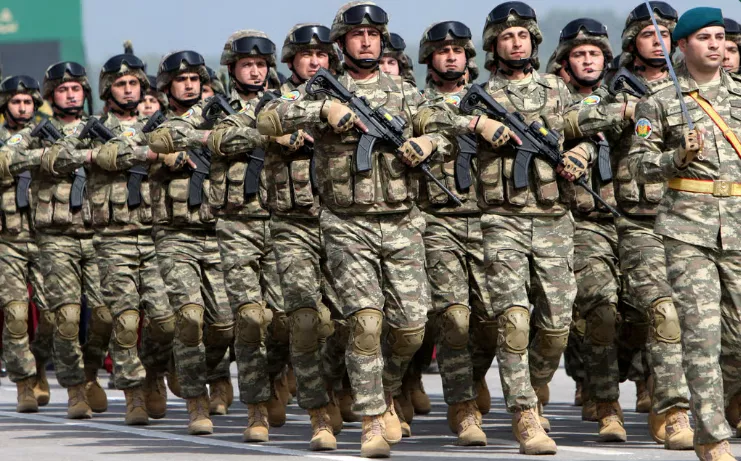
In six weeks of war, Azerbaijan crushed the rebels. Investments in the army and diplomatic ties paid off – Azerbaijan, with the help of Turkish and Israeli drones, destroyed the aforementioned fortifications, which in some cases became traps from which soldiers could not escape. After reconnaissance and drone strikes, Azerbaijani artillery hit almost everything.
The Armenian side was forced to admit defeat and lost about a third of the territory it controlled. Pashinyan faced domestic unrest that at one point threatened to overthrow the government. Part of the public asked why the army did not (more) help its brothers in Azerbaijan.
Pashinyan's stance, once the war began, could be viewed in two ways. The first is that he did not want to escalate the conflict and wanted to achieve lasting peace with Azerbaijan, which he repeatedly stated. The second, which Azerbaijan counted on, is that Russian weapons are powerless to stop Turkish and Israeli drones. Previously, Turkish drones had dealt with Russian air defense in Syria and Libya.
Furthermore, Pashinyan could not count on full Russian support, as he decided to turn his back on Moscow. The Kremlin thus conveyed that the defeat was a result of turning its back on Russia. To the member of the Collective Security Treaty Organization (CSTO), Russia stated that an attack on Nagorno-Karabakh was not an attack on Armenia.
But despite this, Russia intervened, in agreement with Turkey, and sent peacekeeping forces to Nagorno-Karabakh, especially along the Lachin corridor – the only road connection of the rebellious region with Armenia. Russia stopped Azerbaijan from finishing the job, and brought Pashinyan new worries – the address for negotiations was again Moscow. Three years later, that mistake became more apparent, as Russia is at war with Ukraine and its resources (military and diplomatic) are diminishing so rapidly that it raises the question of rebellions across Russia's interest zones.
A New Reality
With yesterday's "anti-terrorist operation," as Baku called it, Azerbaijan showed confidence that it could achieve a complete victory. Baku demands the surrender of Nagorno-Karabakh, or it will continue the operation. Whether surrender will occur is unknown for now. What is certain is that Azerbaijan is stronger than three years ago, while Armenian forces are weaker, and Pashinyan is again not reacting as expected, which is confirmed by yesterday's demonstrations in Yerevan with the same questions as three years ago, with shouts of "betrayal".
The West has expressed concern and called for an end to the conflict. The loudest in condemning Azerbaijan was France, where there is a strong Armenian lobby. In November 2020, some in the French Senate called for Nagorno-Karabakh to be recognized as an independent state. However, France is far from the Caucasus, and Turkey, Iran, and Russia do not want its presence there.
Even without France, things in the Caucasus are becoming more complicated, and the outcome of the new conflict in Nagorno-Karabakh could be decided elsewhere, far from the battlefield and public view.
Pashinyan's rise to power also brought Russia's greatest fear – the arrival of NATO in the Caucasus. It is not just about strengthening Turkish positions, but about military exercises that began in Armenia on September 11 and end today. Americans are practicing coordination with the hosts "in international peacekeeping missions." The arrival of American troops in Armenia angered the Russians. The Russian Foreign Ministry described the exercises as a "hostile act" by Yerevan.
The arrival of American troops in Armenia does not please neighboring Iran either, and Tehran had previously warned Baku that it would not tolerate the presence of Israeli troops in Azerbaijan. Some claim that Azerbaijan will cede territory to Israel to act against Iran, in which, according to various sources, twice as many Azeris live as in Azerbaijan.
During the 2020 war, Iranian General Abu Fadl Shikaraji said that Iran supports the return of "occupied" territory to Azerbaijan and that it would be best done through dialogue. He warned Baku that Iran would not allow Israeli bases near its borders, nor the "presence of terrorists," alluding to claims that Baku had brought in militants from Syria against whom Iran had fought.
Everyone in New York
The renewed conflicts in Nagorno-Karabakh coincide with the session of the United Nations General Assembly. Delegations from Armenia and Azerbaijan are also there. France and Armenia are calling for a UN Security Council session and condemnation of the Azerbaijani operation, while Turkey has expressed support, saying that Baku was "forced to act on its sovereign territory."
Azerbaijan has a military advantage on the ground that it wants to exploit. One of the goals is also the withdrawal of Russian soldiers from Azerbaijani territory who were deployed there three years ago to monitor the established peace, which is bad for Baku in the long run. If the separatists are crushed or if a new agreement is reached, then the Russian army will not be needed there.
This suggests that the issue of the Caucasus is important and that any significant shift on the ground could have huge geopolitical implications for Europe and Asia. Past experience with Pashinyan at the head of Armenia suggests that any outcome and turn of events is possible, especially now that he has the support of parts of the West. Just a few days ago, he stated that it is possible to achieve lasting peace between Armenia and Azerbaijan by the end of this year, but did not explain how.
Komentari (0)
Prijavite se za komentiranje
PrijavaJos nema komentara. Budite prvi!
Minuta
Sve →Iz drugih kategorija

High Representative Not Elected: Germans, French and British Against Americans, New Attempt at End of June

ČOVIĆ WITHOUT MERCY: How Those Who Brought Ademović to Office Created a Political Hell for Him



Sunny Saturday, quite warm



Tragedy in Albanian resort: Two minors drown












