
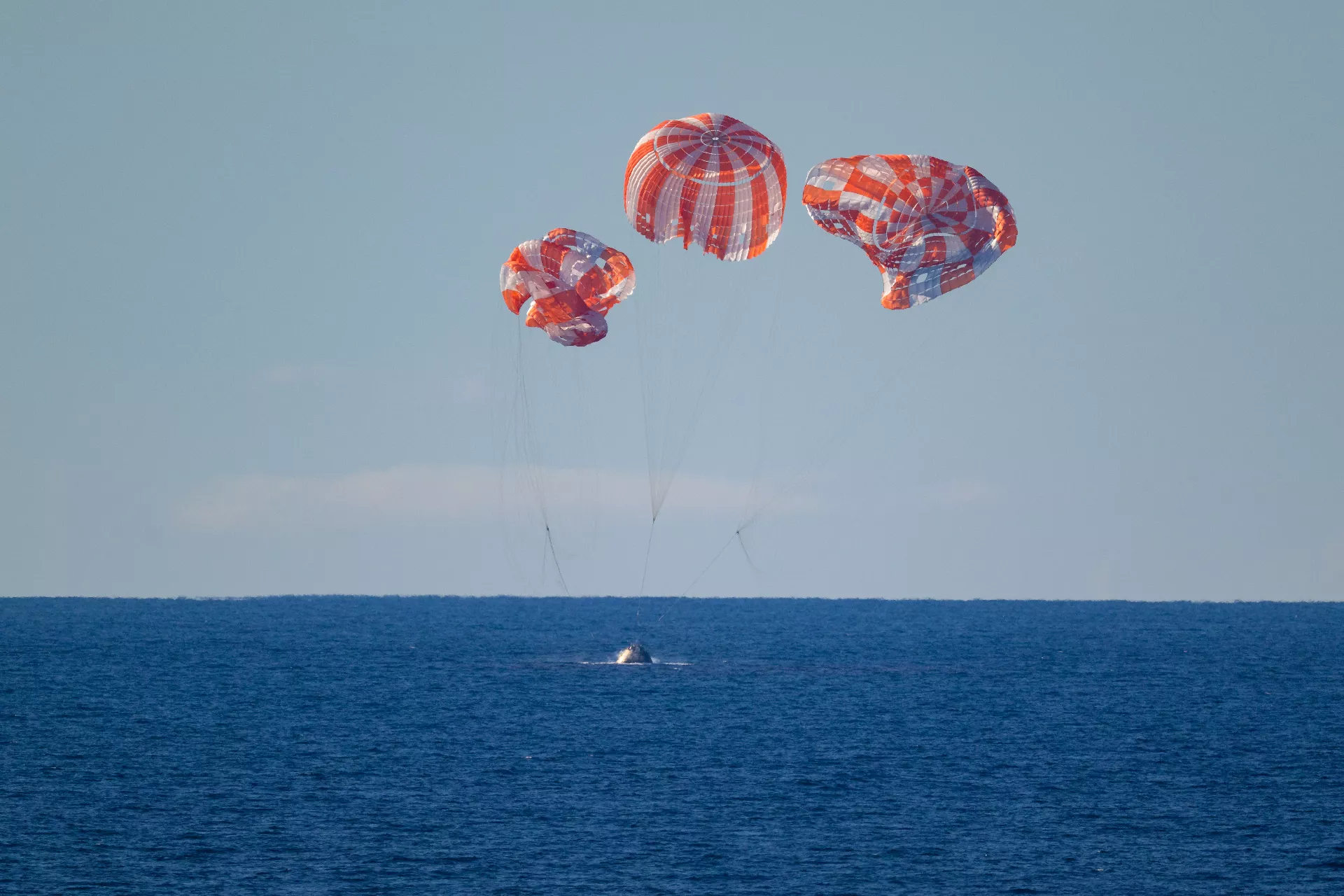
(Patria) - The Artemis 2 mission capsule with a four-member crew passed through Earth's atmosphere and safely landed in the Pacific Ocean after almost ten days in space, concluding the first human journey near the Moon in over half a century.
NASA's Orion capsule gently descended into the ocean near the California coast shortly after 5 PM local time, thus concluding a mission in which four astronauts traveled deeper into space than anyone before them, reports Index.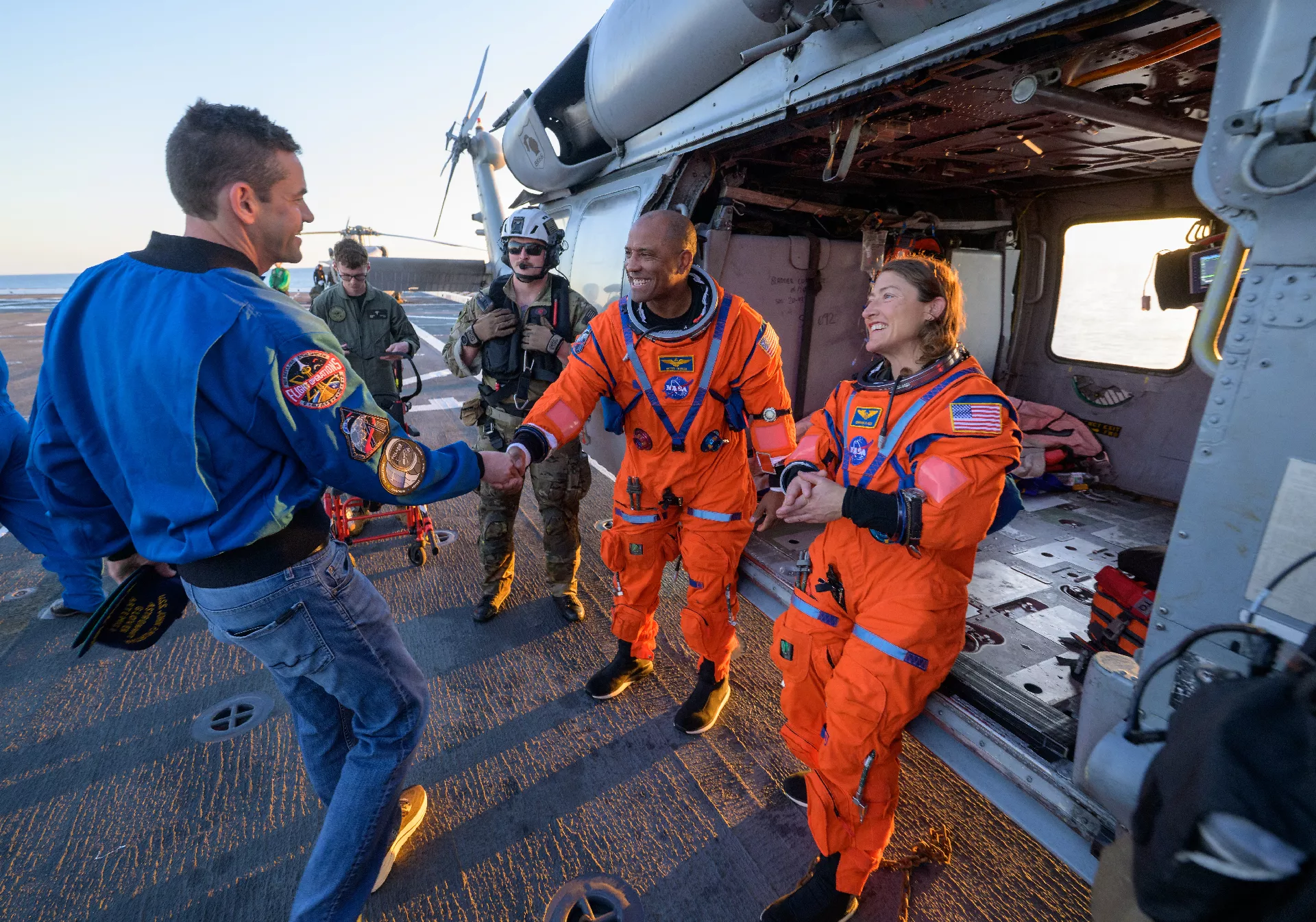
During their ten-day journey, the crew orbited the Earth twice, and then circled the far side of the Moon, covering a total distance of 1,117,515 kilometers.
This is the first crewed test flight in a series of Artemis program missions aimed at returning astronauts to the lunar surface by 2028.
NASA broadcast the landing of Orion and its four-member crew live on its website.
LIVE: They are coming home.
Watch as the Artemis II crew returns to Earth, splashing down at around 8:07pm ET (0007 UTC April 11). https://t.co/n3vZE2rcFv— NASA (@NASA) April 10, 2026
Rescue teams met the capsule in the Pacific Ocean to extract the crew: American astronauts Reid Wiseman, Victor Glover, and Christina Koch, and Canadian astronaut Jeremy Hansen.
The return journey proved that Orion can withstand extreme forces upon re-entry into Earth's atmosphere after a lunar mission.
The capsule reached the Pacific Ocean after a tense 13-minute descent through Earth's atmosphere, with thermal friction heating the exterior of the spacecraft to a scorching 2,760 degrees Celsius.
At the peak of atmospheric entry, intense heat and air compression formed a burning sheath of gas, or plasma, around the capsule, as scientists expected, interrupting radio communication with the crew for several minutes.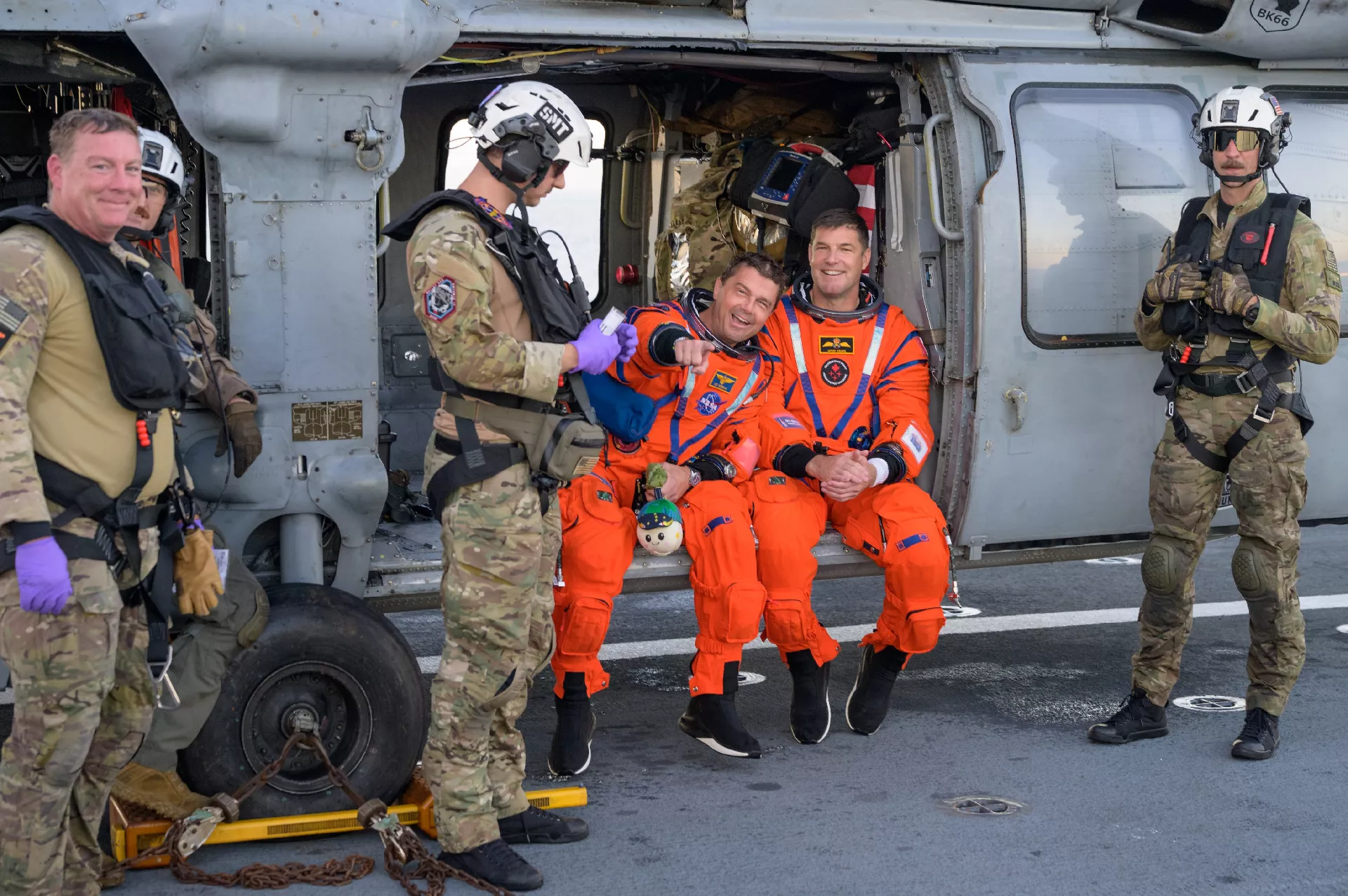
Once contact with the crew was re-established, two sets of parachutes deployed from the front of the capsule, slowing its descent to about 25 kilometers per hour, allowing for a gentle and safe splashdown in the ocean.
It took NASA and U.S. Navy teams about an hour to secure the floating capsule, help the astronauts exit the spacecraft, and transport them to a nearby ship where they underwent their first medical examinations.
The four astronauts launched from Cape Canaveral, Florida, on April 1. They were sent into orbit around Earth by NASA's giant Space Launch System (SLS) rocket, after which they began their journey around the far side of the Moon.
They thus became the first astronauts to fly near the Moon since the Apollo program in the 1960s and 1970s. Glover, Koch, and Hansen also made history as the first Black astronaut, the first woman, and the first non-American citizen to participate in a lunar mission.
At the peak of their flight, the Artemis mission astronauts reached a point 406,771 kilometers from Earth, surpassing the previous record of approximately 400,000 kilometers set by the Apollo 13 crew.
The Artemis 2 mission, which followed the uncrewed Artemis test flight in 2022, is a crucial dress rehearsal for the planned attempt to land astronauts on the lunar surface by the end of this decade, for the first time since the Apollo 17 mission in 1972.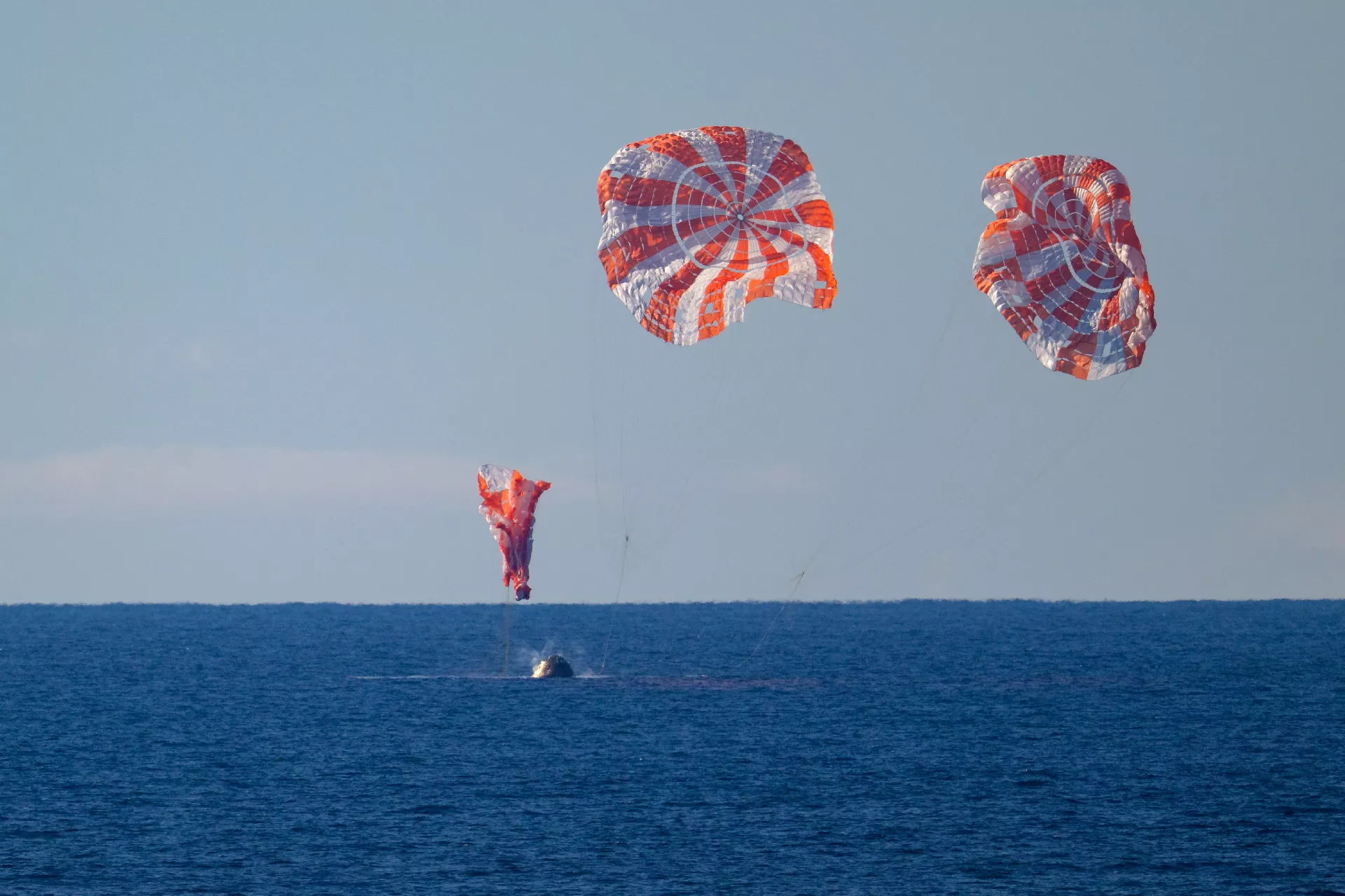
The ultimate goal of the Artemis program is a long-term human presence on Earth's satellite, which is intended to serve as a stepping stone for future Mars exploration.
In a historical parallel with the Cold War-era Apollo program, the Artemis 2 mission unfolds amidst political and social turmoil, including a U.S. war on the other side of the world that lacks widespread support among Americans.
Unlike the Apollo missions, when the U.S. raced the Soviet Union to land astronauts on the Moon, the goal of the Artemis program is to get ahead of the Chinese.
Public opinion polls show that citizens approve of the mission's goals, Reuters notes, indicating that for many captivated observers worldwide, Artemis represents a triumph of science and technology at a time of growing distrust, and even fear, of large technology companies.
Welcome home Reid, Victor, Christina, and Jeremy! 🫶
The Artemis II astronauts have splashed down at 8:07pm ET (0007 UTC April 11), bringing their historic 10-day mission around the Moon to an end. pic.twitter.com/1yjAgHEOYl— NASA (@NASA) April 11, 2026
The return to Earth subjected the Orion spacecraft to a crucial test of its heat shield, which experienced an unexpected level of damage during atmospheric re-entry on the 2022 test flight.
Due to this damage, NASA engineers modified the descent trajectory for Artemis 2, aiming to reduce heat accumulation and the risk of capsule burnout.
Last week's successful launch is an important milestone for the SLS rocket, providing its prime contractors, Boeing and Northrop Grumman, with the long-awaited confirmation that the launch system they have been developing for over a decade is ready for safely launching humans into space.
Komentari (0)
Prijavite se za komentiranje
PrijavaJos nema komentara. Budite prvi!
Minuta
Sve →Iz drugih kategorija

High Representative Not Elected: Germans, French and British Against Americans, New Attempt at End of June

ČOVIĆ WITHOUT MERCY: How Those Who Brought Ademović to Office Created a Political Hell for Him



Sunny Saturday, quite warm



Tragedy in Albanian resort: Two minors drown












