
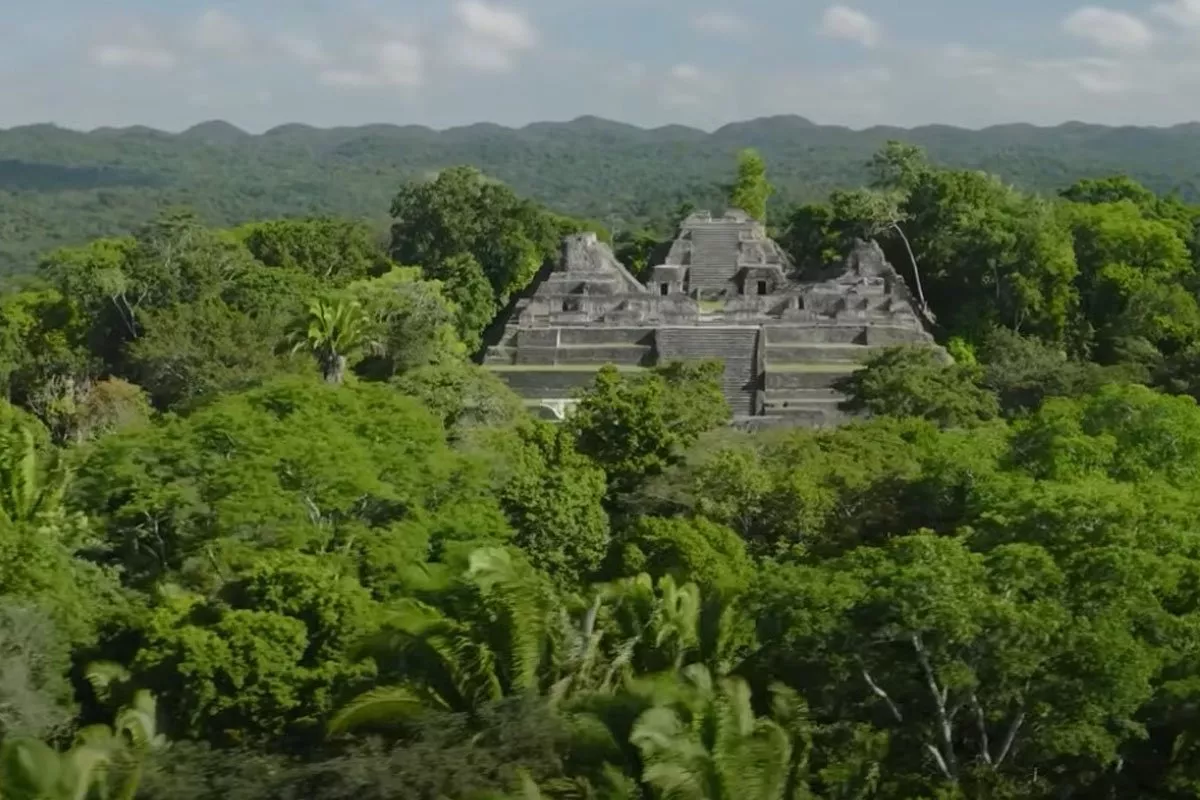
(Patria) - During archaeological excavations in the ruins of the ancient Maya city of Caracol, in the area of present-day Belize, a team of researchers from the University of Houston discovered the tomb of Teʼ Kʼab Chaaha, the first ruler of this once powerful city and founder of its royal dynasty.
Caracol, which is now an archaeological site, was once an influential metropolis and a significant political center of the ancient Maya civilization, which controlled the southern part of the Yucatán between 560 and 680 AD, and was abandoned before 900 AD.
This is the first discovery of a ruler's tomb in Caracol in over 40 years of archaeological research, the scientific portal Phys.org reported.
According to the archaeologists' findings, Teʼ Kʼab Chaah ascended the throne in 331 AD and was buried at the foot of the royal family's temple. Along with his body, 11 ceramic vessels, carved bones, jade jewelry, jade mosaics, Pacific shells, and other valuables were found.
Among the ceramic items, vessels were found depicting the Maya ruler receiving gifts and holding a spear, as well as a vessel depicting Ekʼ Chuah, the god of trade in Maya culture, surrounded by gifts. Four vessels depict figures of bound captives, while two have lids with handles shaped like the heads of coatis, raccoon-like animals.
Research in Caracol has been led for decades by the married couple and research associates Arlen F. Chase and Diane Z. Chase, who estimate that Teʼ Kʼab Chaah was advanced in age and about 170 centimeters tall at the time of his death, and archaeological findings show that he had no remaining teeth.
According to data from excavations at the Northeast Acropolis in Caracol, his tomb was the first of three large tombs built around 350 AD, during a period when the first contacts with Teotihuacan, then a powerful city in central Mexico, began to spread throughout the Mesoamerican region.
As reported by Telegraf, Diane Z. Chase, who in addition to archaeological research also serves as Vice President and Vice President for Academic Affairs at the University of Houston, points out that there has been a debate among experts since the 1960s about whether the inhabitants of Teotihuacan truly established political power among the Maya or if the Maya themselves adopted and used their symbols and customs.
"It is still unclear whether the events of 378 AD, known as the entrada, marked the arrival of the Teotihuacanos in the Maya region or just the appropriation of their political and cultural symbols. Archaeological findings from Caracol indicate that the political scene at the time was significantly more complex than previously assumed," Chase stated.
Research in Caracol, which has been ongoing for more than four decades, continues to provide more and more data about the complex political and cultural connections that shaped the history of the ancient Maya and their relationships with other great Mesoamerican civilizations.
Komentari (0)
Prijavite se za komentiranje
PrijavaJos nema komentara. Budite prvi!
Minuta
Sve →Iz drugih kategorija

High Representative Not Elected: Germans, French and British Against Americans, New Attempt at End of June

ČOVIĆ WITHOUT MERCY: How Those Who Brought Ademović to Office Created a Political Hell for Him



Sunny Saturday, quite warm



Tragedy in Albanian resort: Two minors drown












