
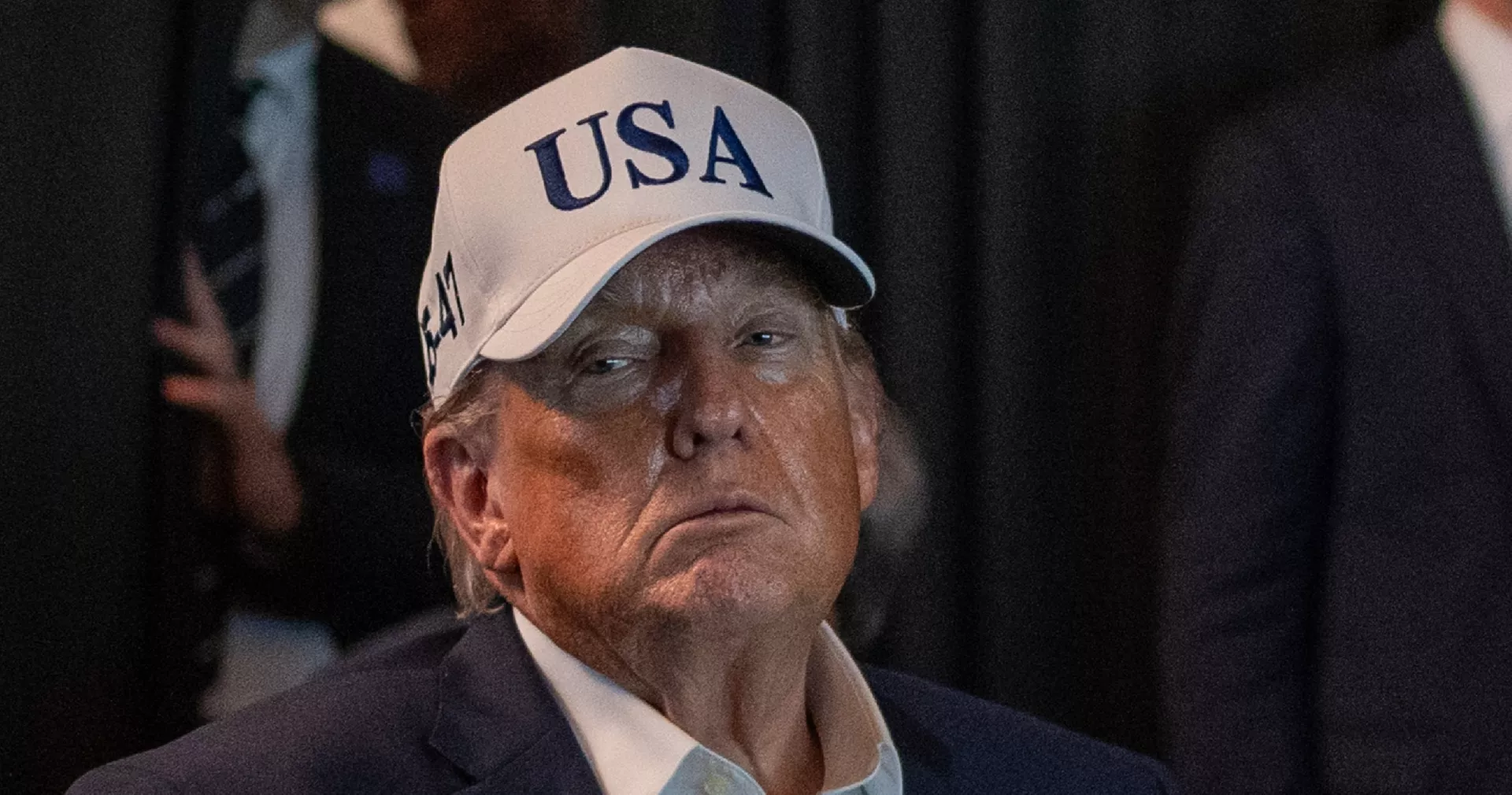
(Patria) - With a large-scale attack on Iran, US President Donald Trump has shown a willingness to use raw US military force, but at the same time, he is taking the biggest foreign policy risk of his term, full of dangers and unknowns, Reuters writes in an analysis.
Trump joined Israel on Saturday in entering a war with Iran, offering the American public meager explanations for an operation that could become the largest US military campaign since the wars in Afghanistan and Iraq.
Trump has turned away from preferring quick, limited operations like last month's lightning raid in Venezuela towards what experts warn could be a longer-term conflict with Iran that carries the risk of escalating into a regional conflagration that would engulf the oil-rich Middle East.
He has also set the not-so-easy goal of regime change in Tehran, promoting the idea that airstrikes can incite a popular uprising to overthrow Iran's rulers. This is an outcome that foreign air power has never directly achieved without the involvement of some kind of ground forces, and the success of which most analysts doubt this time.
- Most Americans will wake up on Saturday morning and ask themselves why we are at war with Iran, what is the goal, and why are American bases in the Middle East under attack - said Daniel Shapiro, a former senior Pentagon official and US ambassador to Israel, who is now at the Atlantic Council, a think tank in Washington.
Trump's fixation on Iran has emerged as the most striking example to date of how foreign policy, including his expanded use of military force, has overridden his agenda in the first 13 months of his second term, often overshadowing domestic issues like the high cost of living, which public opinion polls show are much higher priorities for most Americans.
His associates have been privately urging him for weeks to focus more on voters' economic concerns, highlighting the political dangers ahead of the November midterm elections, in which Trump's Republican Party risks losing one or both houses of Congress.
A short video released before dawn, which Trump posted on his Truth Social platform announcing the "Epic Wrath" operation, provided only general reasons for entering into war now with a country with which the US has been competing for decades while avoiding general conflict.
He insisted that it would end the threat of ballistic missiles from Iran, which most experts say are not a threat to the US, and give Iranians an opportunity to overthrow their rulers.
Trump said that to achieve his goals, US forces would devastate a large part of the Iranian military and deny it the ability to possess nuclear weapons.
Trump's sudden resort to force, using large US military resources deployed in the region in recent weeks, seemed to almost certainly close the door on diplomacy with Iran in the foreseeable future. The last round of nuclear talks in Geneva on Thursday failed to achieve a breakthrough.
Some of his associates had previously suggested that he might bring Tehran back to the negotiating table by bombing it to extract major concessions. Instead, Iran responded yesterday by launching missiles at US allies Israel and oil-producing Arab countries in the Gulf.
Trump's claim in his State of the Union address on Tuesday that Iran would soon have a missile capable of hitting the US is not supported by US intelligence reports, according to sources familiar with the assessments, and experts have also expressed doubts about recent claims by his associates about Tehran's ability to quickly advance its nuclear capabilities.
This is reminiscent of the claims President George W. Bush made for the 2003 war against Iraq, which were later found to be based on faulty intelligence and manipulation.
With Saturday's strikes, Trump, who initially threatened to attack Iran in January in support of street protesters facing brutal repression, has also removed any doubt that he now wants regime change in Tehran.
However, analysts question whether Trump, who has ruled out deploying US troops on the ground, has a strategy that could overthrow the long-standing clerical-led Iranian government, which has proven resilient despite crippling sanctions and occasional mass protests.
The first wave of strikes mainly targeted Iranian officials, said a source familiar with the matter. Supreme Leader Ayatollah Ali Khamenei was not in Tehran at the time of the attack and is being held in a secure location, said a source familiar with the situation.
However, several senior commanders of the Iranian Revolutionary Guard and political officials were killed, said an Iranian source close to the establishment.
Even if the strikes succeed in eliminating top leaders, it could have unintended consequences of sowing chaos across the vast nation of 93 million people, or even lead to the military taking power, which could be even more irreconcilable towards the West and more repressive towards its own people, analysts said.
- He wants to change the government. But it is difficult to change a government from the air. It is difficult to change the minds of Iranians from the air - says Jon Alterman of the Center for Strategic and International Studies (CSIS), a think tank in Washington.
Tyson Barker, a former senior US official now at the Atlantic Council, believes that Trump's call for the Iranian people to rise up is also unlikely to succeed.
- They are actually putting those poor Iranian people in danger by telling them: 'Rise up and overthrow your government. We've got your back' - Barker said.
Trump, whose appetite for military operations has grown since the beginning of his second term, had briefings before the attack on Iran in which he was told not only that US casualties could be high, but also that prospects for changes in the Middle East in favor of US interests were highlighted, a US official told Reuters.
Trump seems to have been emboldened by the US bombing of major Iranian nuclear facilities in June 2025, which he considered a great success, as well as the swift raid that captured Venezuelan President Nicolas Maduro in January, giving the US significant leverage over the large oil reserves of that OPEC member.
He may have imposed the decision on himself with frequent threats of military action while simultaneously deploying large naval forces that he cannot keep in the region indefinitely.
Analysts see Iran as a much tougher and better-armed enemy than Venezuela, although its air defense and missile capabilities have been seriously weakened by US-Israeli attacks in June 2025.
- Iran is a more powerful military force, and judging even by their current response in the Gulf, they are ready to cross lines they were not ready to cross before - said Nicole Grajewski of the Carnegie Endowment for International Peace.
However, Mark Dubowitz, executive director of the Foundation for Defense of Democracies, a non-profit research institute considered pro-Israeli and hawkish towards Iran, said that Tehran is in such a weakened state that it is worth Trump taking risks to curb its nuclear capabilities.
Regardless of whether the Iranian government falls or not, he said that a serious weakening of Iran's nuclear and missile programs could be a victory for Trump.
Komentari (0)
Prijavite se za komentiranje
PrijavaJos nema komentara. Budite prvi!
Minuta
Sve →Iz drugih kategorija

High Representative Not Elected: Germans, French and British Sabotaged Americans, New Attempt at End of June

ČOVIĆ WITHOUT MERCY: How Those Who Brought Ademović to Office Created a Political Hell for Him



Sunny Saturday, quite warm



Tragedy in Albanian resort: Two minors drown












