
By Armin Sijamić
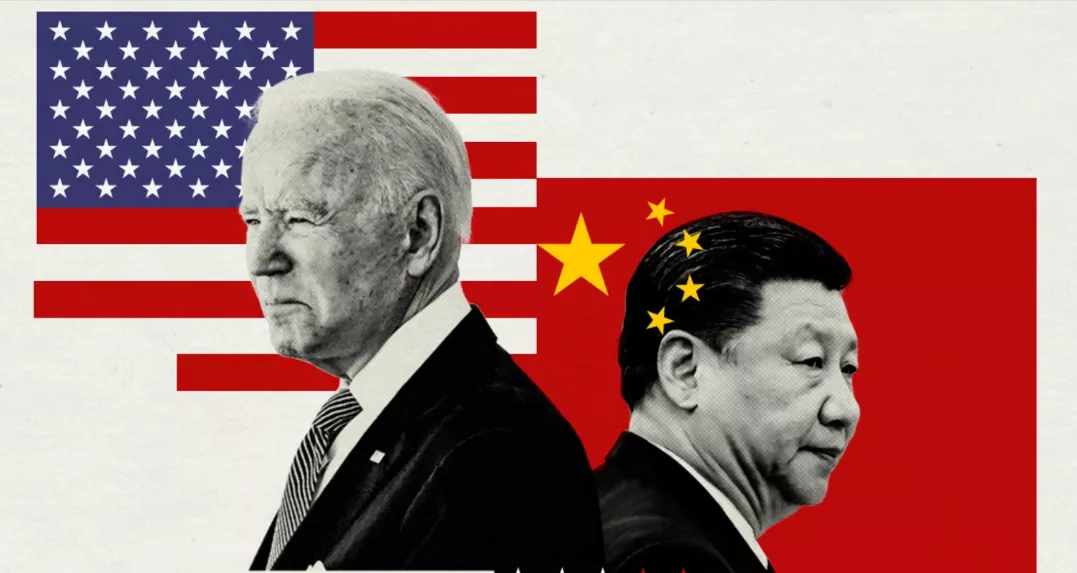
The clash between the two largest world powers is intensifying. Washington and Beijing do not hide that their goal is to defeat their rival, although they still call for cooperation. Things have gone so far that the arrival of NATO on China's shores is being discussed. In what form the North Atlantic Alliance will enter China's backyard is a question being intensely debated.
Throughout this summer, there has been more evidence of escalating confrontation between the United States and China. Washington has worked on restrictions for the Chinese economy, threatened sanctions, and gathered countries willing to oppose China. Beijing, though much less pompously than its American rivals, has worked on the "dedollarization" of the global economy, the expansion of BRICS, turning the Chinese economy towards the domestic market, and strengthening its military.
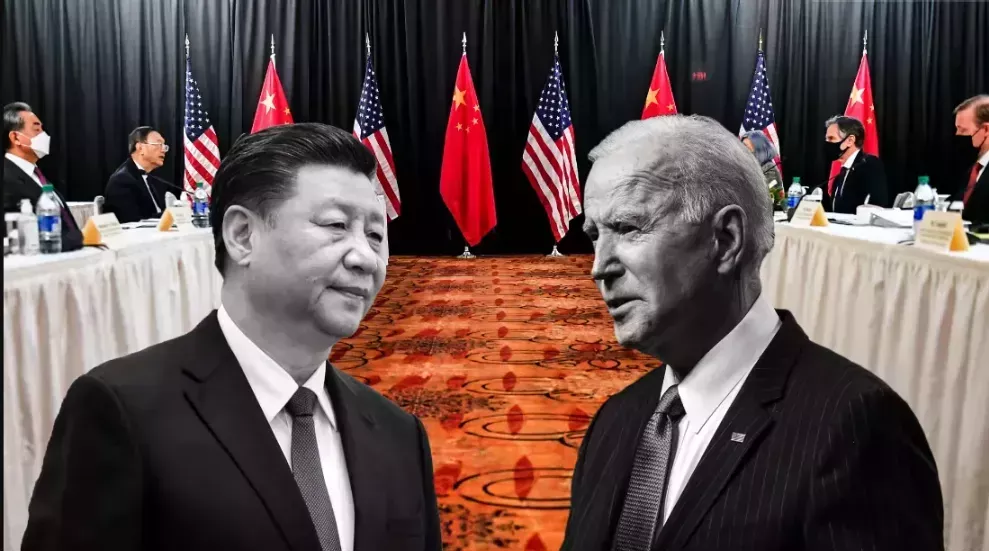
It became clear that the summer would be like this at the beginning of May when China called for "caution" as NATO expands eastward and plans to open an office in Japan. Namely, NATO planned to open an office in Japan next year to maintain ties with the host country, South Korea, Australia, and New Zealand. This step, routine for NATO in expanding cooperation with allies, was seen by China as a strategic intrusion into its backyard and along Russia's eastern borders.
At the NATO summit in July, the cards were fully revealed. China was presented as a threat to the security and values of the alliance, i.e., a threat in almost all areas of its activity on the international political scene. This formulation, where China is seen as a greater threat than Russia, has already been presented in Joseph Biden's doctrine, which designates this Asian country as the only world power that can and has the resources to counter American leadership in the world.
Australian Prime Minister Anthony Albanese, Japanese Prime Minister Fumio Kishida, New Zealand Prime Minister Chris Hipkins, and South Korean President Yoon Suk Yeol attended the NATO summit in Vilnius. They were concerned about China's desire to dominate the region and North Korea, which has been firing various missiles in recent months.
Although Kishida said before the summit that Japan has no intention of becoming a NATO member but wants cooperation, the Chinese had no doubts that the form is less important than the substance. China condemned NATO's expansion into the "Asia-Pacific region" and stated that China would respond decisively.
China's newspaper "Global Times," often a megaphone for Beijing's official policy hidden behind moderation, reacted sharply. In their editorial, they wrote that NATO is "Washington's axe, spear, and shovel" and that it is the "source of war" wherever it appears. They further write that most countries in Asia "see NATO as a terrible monster to be avoided at all costs."
How true that is, is less important than the fact that China sees NATO as an extension of the American hand and fears its presence in the region, or rather, fears what will happen in the coming period.
Hegemon in its own backyard
NATO's expansion into the Pacific is not realistic at this moment, and some members oppose it. The burden of confronting Russia is taking its toll. The majority of NATO members would not be able to provide military assistance in the Pacific. Therefore, China's fear of NATO is, in fact, a fear of Washington and its allies in the region who might start building another alliance.
Many Asian countries perceive the world differently from the West. Investment in the military there is forced because the priority is to feed hundreds of millions of people. But China's behavior as a hegemon in Asia, which is essentially pursuing a policy like the West has for centuries, is forcing many countries to seek help. The United States will not ignore these calls.
Last week, the Chinese Ministry of Natural Resources again published a map presented in the concept of the "nine-dash line," which shows that Beijing claims sovereign rights over almost the entire South China Sea, denying rights to Vietnam, Malaysia, Brunei, and the Philippines.
China's intention to claim almost the entire sea with all its resources and shipping routes for itself has not been stopped even by the ruling of the Permanent Court of Arbitration in The Hague, to which Manila appealed in 2016, claiming that the Philippines' rights in the South China Sea were violated. China rejected the ruling, and the then-President of the Philippines, Rodrigo Duterte, stated that the paper from The Hague was worthless because China had the power. Although he was not a fan of Washington's policy, Duterte had a particular problem with Donald Trump, who wanted to contain China but was unwilling to do so for some other, probably less important, country.
Decades-long allies and new agreements
With Biden's arrival, things changed. Barack Obama spoke of shifting the focus of American policy to the Pacific, and long before him, numerous American strategists and officials had stated this, leaving no doubt about Washington's ultimate intentions. Russia's aggression against Ukraine did not come at the right time for Biden, who, even before formally taking office, had sent his people to several Asian countries to discuss relations with China.
Since Biden and Kamala Harris came to power, the Vice President has visited Asia more times than any other continent. Secretary of State Antony Blinken has visited Japan five times and Indonesia four times during his tenure, and has also reached Papua New Guinea, Tonga, and Fiji, which speaks to the importance of this region for American foreign policy.
Two facts facilitate American diplomacy in this part of the world. The first is that the United States has been present in this part of the world since World War II and has military bases in some countries, and the second is the fear of China as a regional hegemon.
If we look back at the last month, we will see the main pillars of American policy. In mid-August, Biden hosted Kishida and Yoon and agreed to expand security and economic cooperation between the United States, Japan, and South Korea. Biden described the summit as "historic" because an institutional basis for joint steps in the Pacific was established. They agreed on a "duty to consult" among the three countries in the field of security, with the aim that a threat to one of them would be a threat to all, as well as annual summits and joint military exercises.
The entire summit, although Biden said it "was not about China," resembled sending messages to North Korea and China. They stated their commitment to international law, while Kishida said that "unilateral attempts to change the status quo in the East and South China Seas by force continue."
This summit confirmed that Washington is playing on its alliances and the fear of China. Namely, although South Korea and Japan are American allies, these two countries have disagreements about World War II, and the issue of Japanese occupation still hangs in the air.
After the aforementioned summit, it was announced that Biden would go to Vietnam after the G20 summit in India and would sign a "strategic agreement" there. According to reports, Biden will help Vietnam develop advanced technologies, chips, and artificial intelligence. Earlier, Biden had given the same, but to a much greater extent, to India.
Shortly thereafter, Washington agreed to increase its military presence in the Philippines.
About ten days ago, Defense Secretary Lloyd Austin hosted his counterpart from Indonesia to strengthen the military of that Asian country and condemn China's actions in the South China Sea that "are not in accordance with international law."
Washington does not only want to strengthen Indonesia. It is also doing so with Taiwan, which is receiving huge amounts of weapons, even through a program for independent states.
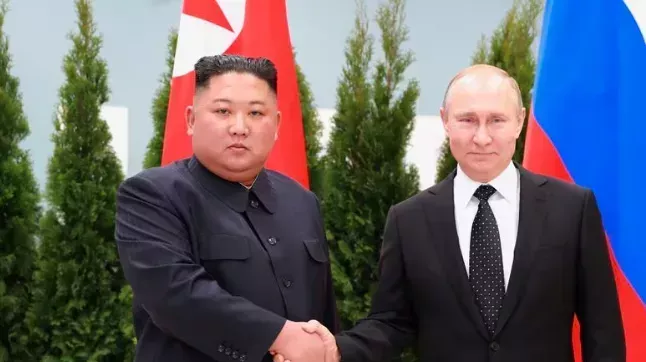
China has responded to these moves by trying to gain allies in the Pacific, but its main support remains Russia and North Korea, which could be strengthened in the coming period.
However, China's main asset is its growing military power and the current weakness of many of its neighbors. History teaches that the clash between the two largest world powers must happen sooner or later if the weaker one wants to take the leading position. Whether China has chosen the right moment to challenge the United States is another question. The alternative to conflict is agreement, but in recent months, Washington and Beijing have not been able to find common ground, while they are trying to convince other countries to side with them.
Komentari (0)
Prijavite se za komentiranje
PrijavaJos nema komentara. Budite prvi!
Minuta
Sve →Iz drugih kategorija

High Representative Not Elected: Germans, French and British Sabotaged Americans, New Attempt at End of June

ČOVIĆ WITHOUT MERCY: How Those Who Brought Ademović to Office Created a Political Hell for Him



Sunny Saturday, quite warm



Tragedy in Albanian resort: Two minors drown












