
By Armin Sijamić
These days, political and military officials directly or indirectly linked to Iran have been assassinated. The timing of the assassinations, as well as the methods and behavior of those Iran holds responsible for these acts, indicate a new phase of conflict spreading from the Gaza Strip to the Middle East.
In the first days of 2020, the world was shocked by the news that the head of Iran's Quds Force, Qasem Soleimani, along with the deputy leader of the Iraqi Shiite militia Hashd al-Shaabi, Abu Mahdi al-Muhandis, were assassinated near Baghdad airport. The attack on January 3rd was ordered by US President Donald Trump after his military offered him three options to punish the Iranian general. Trump, according to American media, chose the assassination of Soleimani.
The assassination of General Soleimani, arguably the soldier most responsible for the defeat of ISIL and Al-Qaeda in Iraq and Syria, enraged Iran, which responded by shelling American bases in Iraq. American media reported that Tehran had announced the attack to Baghdad, and they relayed the information to Washington. Iranian missiles rained down on American bases, and the number of killed or wounded American soldiers remains unknown to this day. Washington claims there were injuries, but no fatalities.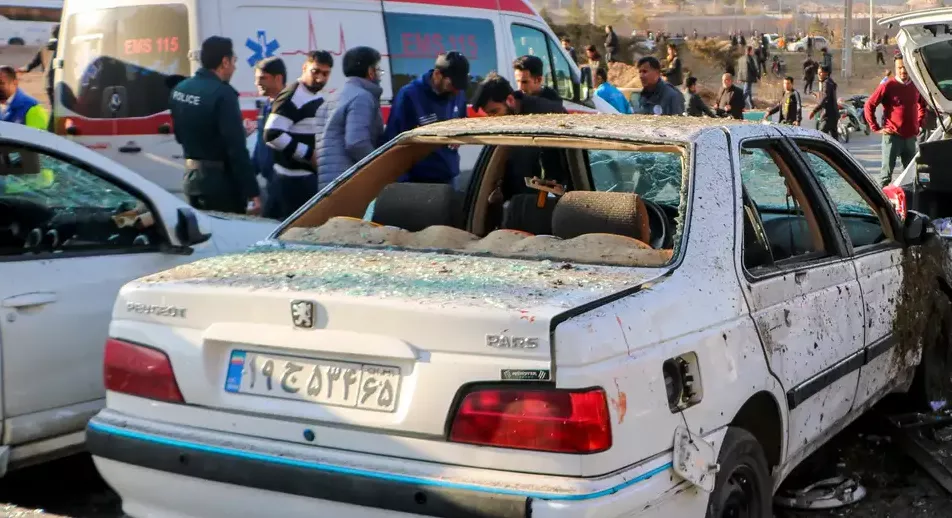
Site of the explosion in Kerman
Since then, low-intensity American-Iranian clashes have been ongoing in Iraq and Syria, where pro-Iranian groups periodically attack American bases, and the US retaliates, and vice versa. The situation has escalated to the point where voices from Baghdad are increasingly calling for the US military to leave Iraq. These clashes have not escalated into an open war between Iran and the United States because both sides do not want it. Iran's calculation is that over time, American influence in the Middle East is weakening, while America's calculation is that its presence in the region is worthwhile as long as there are no major losses for the American military and its reputation.
However, this setup could be threatened, although communication lines exist. The Wall Street Journal recently reported that Washington and Paris are (unsuccessfully) trying to secretly persuade the pro-Iranian Hezbollah to withdraw from the Israeli border and thus avoid escalating the conflict.
Disobedient Netanyahu
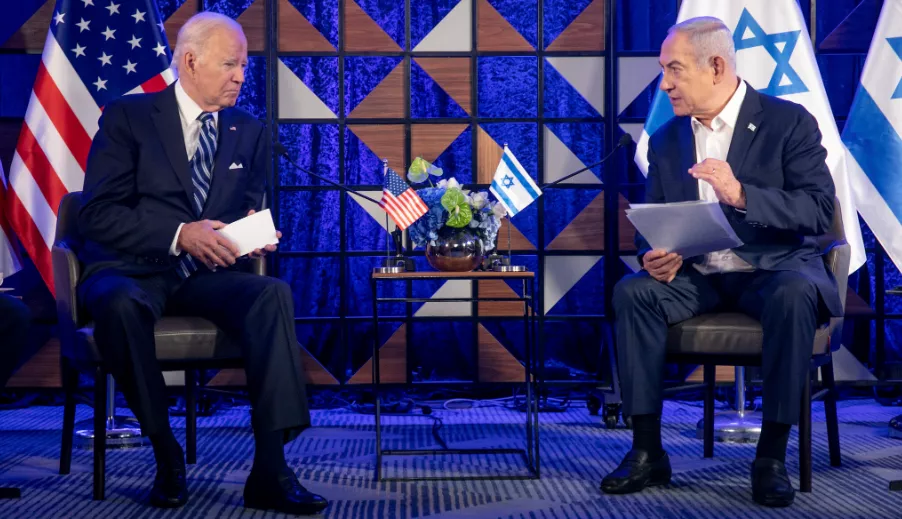
Israel's war against Hamas in the Gaza Strip is currently not in Washington's interest. However, Joseph Biden has not yet forced Israeli Prime Minister Benjamin Netanyahu to stop the destruction of the enclave, where more than twenty thousand people have died so far, the majority of whom are children and women. Moreover, Netanyahu is attacking in Syria and Lebanon.
In an Israeli missile attack on a residence south of Damascus on December 25, 2023, General Razi Mousavi, a member of the Quds Force previously led by Soleimani, was killed. Mousavi was responsible for communication between Damascus and Tehran. His importance to Iran and Syria is evident from the fact that Ayatollah Ali Khamenei attended his farewell, and his body was transported from Damascus via Aleppo and Iraqi Najaf to Tehran.
While promises of revenge for Mousavi's assassination came from Tehran, (pro)Iranian forces in the region suffered another blow, although no official from the Shiite axis was harmed. In the southern part of Beirut, controlled by Hezbollah, Saleh Arouri, deputy head of Hamas's political bureau, was assassinated in a drone attack on January 2nd. Israel has not taken responsibility for the attack, but in Lebanon, there is no doubt who carried it out. Hezbollah has promised revenge, as the assassination of the Palestinian leader occurred in the courtyard of the Shiite group, where Arouri likely met, or was supposed to meet, his hosts.
As early as January 3rd, Israel faced new accusations. Tehran accused the "Zionist regime" of a terrorist bombing attack during a commemoration for General Soleimani in Kerman. Over a hundred people were killed, and hundreds more were injured. ISIL later claimed responsibility for the attack.
A day later in Baghdad, one of the commanders of the Harakat al-Nujaba militia, Mushtaq Taleb al-Saidi, better known as Abu Taqwa, was assassinated. The drone attack was carried out by the US military, which explained it was due to his involvement and planning of attacks on American bases in Iraq.
Different Approach
Since the assassination of Soleimani, Washington has seen Iran's determination to respond to all attacks while carefully choosing targets and considering the consequences. The Biden administration is aware of this, and the current president has long been an advocate for a deal on Iran's nuclear program. However, with Netanyahu, this calculation is not possible, as the far-right Israeli government sees Iran as the greatest danger and does not want the West and Tehran to reach any agreement.
Israeli attacks on (pro)Iranian forces indicate that Netanyahu is calculating differently from Washington, using the fact that Biden has promised to defend Israel from any attacks, while his army is turning the Gaza Strip into ruins. This can also be seen in the statements of Israeli officials. After Arouri's assassination, Netanyahu's advisor Mark Regev denied Israel's responsibility for the act but made several interesting remarks. Among other things, he stated that it was not an attack on Lebanon or Hezbollah, but rather a "surgically" precise strike on Hamas leadership.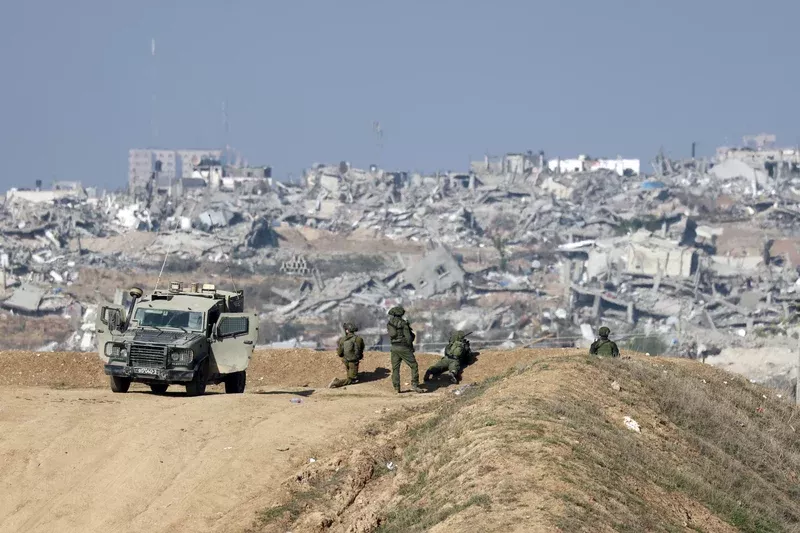
Gaza in ruins
Mark Regev's statements raise several questions, but two are particularly important. The first concerns the perpetrator, i.e., who else could carry out a "surgically" precise attack on a Hamas leader in Lebanon, and the second is why Israel does not carry out "surgically" precise attacks on Hamas members in the Gaza Strip, which has been under complete blockade and surveillance since 2006.
Furthermore, yesterday, Israeli Defense Minister Yoav Gallant told US Special Envoy for the region Amos Hochstein that there is a "short time to reach diplomatic agreements with Hezbollah," justifying this stance by the situation in northern Israel, where the Shiite group is fighting the Israeli army, causing tens of thousands of people to leave their homes.
Dangerous Game
Iran and its allies will certainly respond to these moves by the United States, and especially Israel. The public is unaware of what this response will look like, but it can be assumed that they will want to deliver a heavy blow to Israel that will not, however, force the United States to engage in a war against Iran. The operations of Tehran, Shiite militias, Houthis, and Hezbollah in recent weeks indicate that their strength is serious and that they do not hesitate to target the American or Israeli military.
The assassinations of (pro)Iranian generals will not stop Tehran, as part of their motivation is to endure sacrifice. After all, neither the assassination of the renowned scientist Mohsen Fakhrizadeh in November 2020, nor his colleagues earlier, has stopped Iran's nuclear program. Iran, according to experts and politicians, is currently closer than ever to the possibility of building a nuclear bomb. Simply put, Iran has created a system that does not depend on a single official, which was clear to the administration of Barack Obama, who negotiated with Tehran.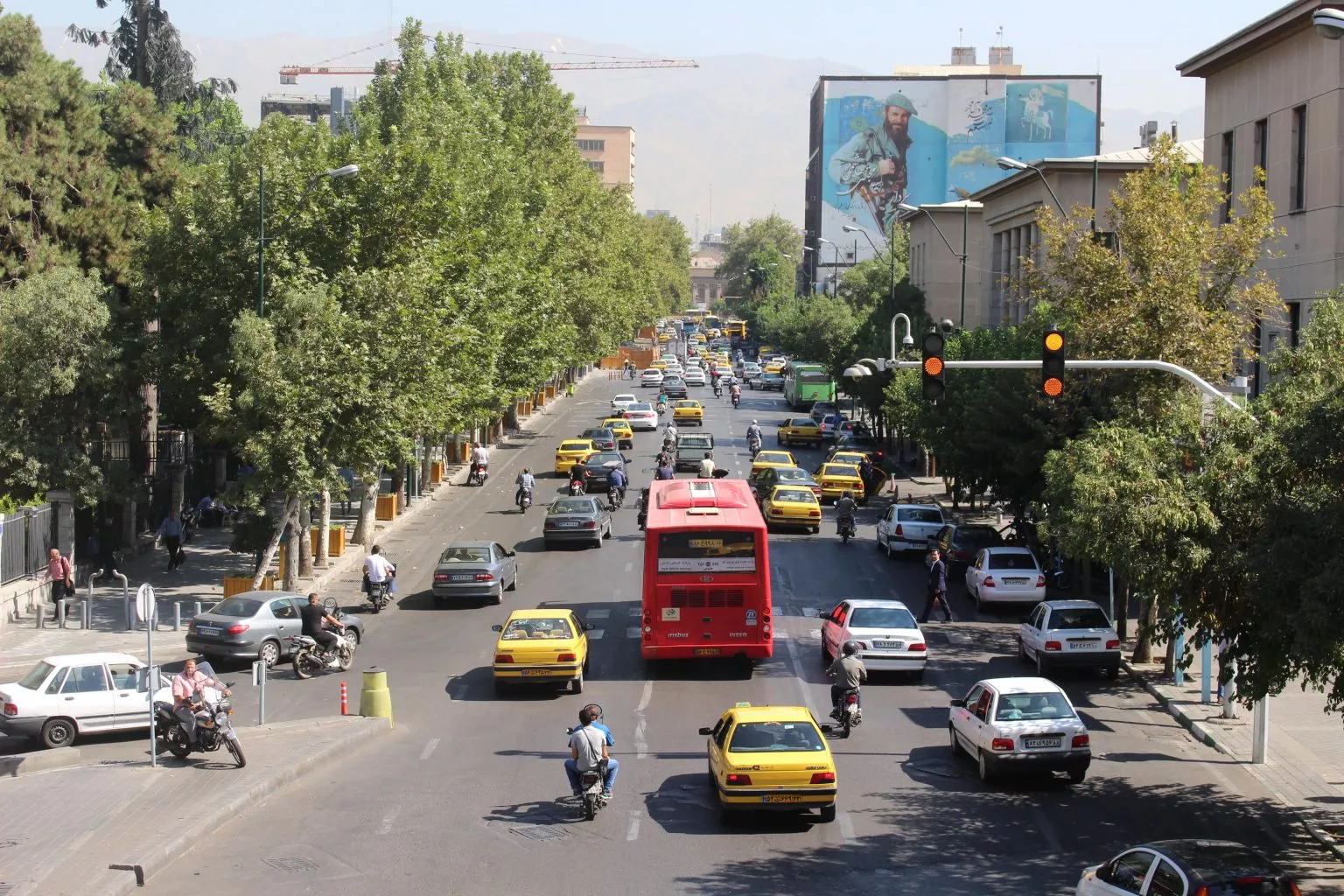
Panorama of Tehran
Therefore, the aforementioned recent assassinations will be interpreted by the leadership in Tehran as an enemy trap to make a wrong move, turning all battles into part of a long-standing conflict (conventional and unconventional) with the United States and especially Israel, which has eight times fewer inhabitants than Iran. Tehran, however strange it may sound, has never been in a better position than today, while the West is clashing with Russia and China, which just ten years ago voted for sanctions against Iran. Moscow and Beijing against Tehran in favor of the West is currently an unimaginable option.
Almost three months after Hamas's attack on Israel, it can be said that the Middle East is gaining new dynamics, and everyone is awaiting the next moves of Washington and Tehran. As Israel has announced it will wage a long-term war in the Gaza Strip, Washington and Tehran will be at increasing risk of a direct confrontation, which is not unimaginable, as shown by the Soleimani case four years ago.
Komentari (0)
Prijavite se za komentiranje
PrijavaJos nema komentara. Budite prvi!
Minuta
Sve →Iz drugih kategorija

High Representative Not Elected: Germans, French and British Against Americans, New Attempt at End of June

ČOVIĆ WITHOUT MERCY: How Those Who Brought Ademović to Office Created a Political Hell for Him



Sunny Saturday, quite warm



Tragedy in Albanian resort: Two minors drown












