
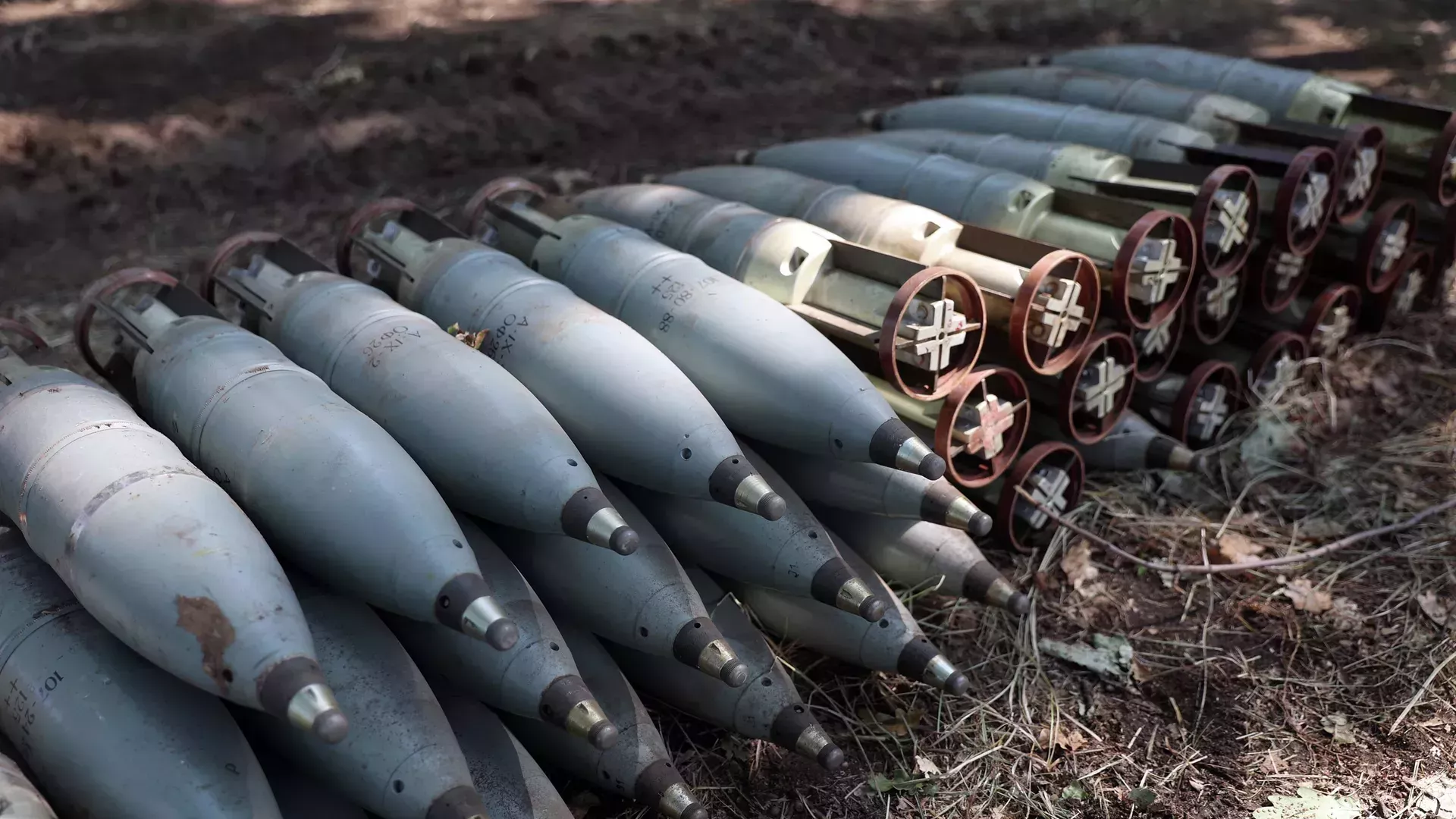
(Patria) - The Pentagon's ambitious plan to accelerate the production of the most used artillery shell in Ukraine depends on a series of almost simultaneous actions across the United States, unlike anything seen since World War II, writes Bloomberg.
The United States' goal is to produce 155mm artillery shells at a rate of 100,000 units per month, compared to the 28,000 currently produced, which is double the 14,000 per month after Russia invaded Ukraine in February last year.
Deliveries of Javelin anti-tank missiles and Stinger surface-to-air missiles, along with howitzers and ammunition, to Ukraine have depleted US stockpiles, demonstrating a lack of US resilience. That wake-up call has prompted the Pentagon, with congressional support, to invest billions of dollars in expanding US industrial capacity.
Of the $3.4 billion under contract for industrial expansion, three-quarters, or $2.5 billion, goes to increasing the production of 155mm artillery shells, said Douglas Bush, Army acquisition chief at the center of the industrial expansion, in an interview.
The US will be able to increase production from 28,000 per month to 36,000, then to 48,000, and then to 57,000 shells per month, Bush said. The industry should be able to reach "80,000 shells per month by early 2025, and then reach the goal of 100,000 by the end of that year," he said.
"A lot has to happen; there are many steps along the way," Bush said in an interview.
"Success is not guaranteed, but that's one of the reasons we've tried not to put all our eggs in one basket. It's ambitious, our plans are aggressive, but for now, the industry is delivering."
The Army's first step was to expand existing government-owned facilities operated by contractors that produce metal casings in Pennsylvania, a facility at the Holston Army Ammunition Plant in Tennessee that produces explosive filler for shells, and one at the Iowa Army Ammunition Plant that loads shells. Shifts have been increased at the facilities, and new machines have been added, Bush said.
The second step is to invest in launching new facilities for metal parts. One of them is IMT Defense in Ontario (Canada), which is expected to come online next year, Bush said.
"A bigger bet is the General Dynamics Corp. facility being built in Mesquite, Texas," he added.
About $500 million goes into installing new manufacturing technology, including robots. The last piece is the explosive filler. The Pentagon plans to significantly increase the US capacity to make IMX. For insensitive explosive munitions, which are considered a safer option for handling and storage than TNT. The Army is also seeking possible domestic TNT sources, as it is not currently produced in the US, and the Pentagon buys it from friendly countries, such as Poland.
The Pentagon will need both IMX and TNT to meet the high-volume goals, Bush said.
The Army is also trying to boost domestic sources of "modular artillery charges," essentially cylinders with a combustible casing that uses triple-base propellant, a highly specialized fuel not found on the commercial market.
Even when the Army reaches the capacity to produce 100,000 shells per month, it will still need deep pockets to afford them. Their purchase would cost $3.5 billion annually, after spending on facilities, Bush said. For the Army, that's "serious money," he said.
Komentari (0)
Prijavite se za komentiranje
PrijavaJos nema komentara. Budite prvi!
Minuta
Sve →Iz drugih kategorija

High Representative Not Elected: Germans, French and British Sabotaged Americans, New Attempt at End of June

ČOVIĆ WITHOUT MERCY: How Those Who Brought Ademović to Office Created a Political Hell for Him



Sunny Saturday, quite warm



Tragedy in Albanian resort: Two minors drown












