
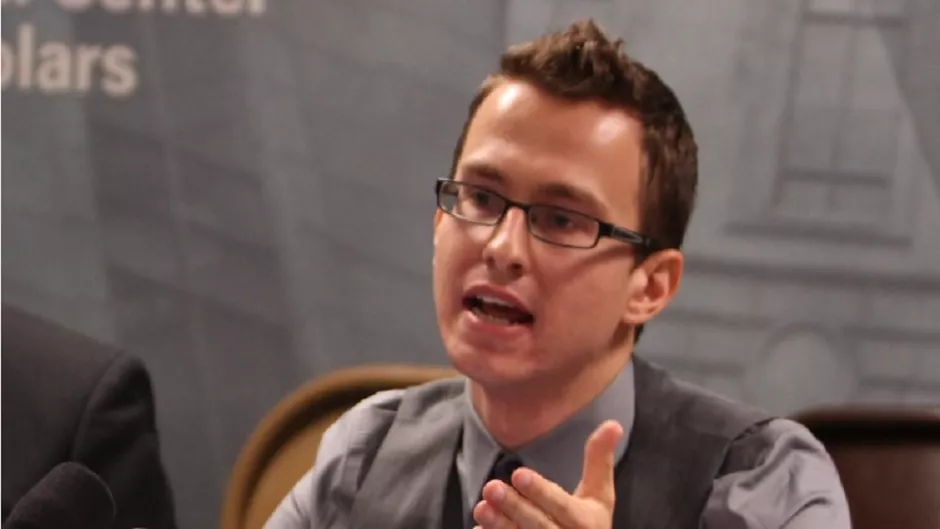
American magazine Foreign Affairs presents an analysis that addresses Russia's influence on Balkan countries, with a special focus on Bosnia and Herzegovina and Croatia, reports the Patria agency.
The author of the article, political scientist and political analyst Dr. Jasmin Mujanović, reminds that official Zagreb and Belgrade worked on the partition of Bosnia and Herzegovina during the '90s, but that almost three decades later, Milorad Dodik, the president of the ruling SNSD party in the BiH entity of Republika Srpska, still sees the leader of HDZ BiH, Dragan Čović, as an ally in undermining state institutions.
“After two years of crisis and unrest, Macedonia finally formed a new government in June, installing a center-left reformist coalition committed to kick-starting the country’s stalled EU and NATO integration. In the same month, Montenegro became NATO’s newest member, following a tumultuous accession process that lasted nearly a decade. These developments are good news for the overall stability of the Western Balkans, a region still too often plagued by sectarianism and provincialism,” writes Mujanović in the analysis, as reported by N1, and further states:
However, these developments also represent major blows to Russia’s regional aspirations, which hopes that the former Yugoslav states still outside the fold will remain “neutral” – that is, outside the EU and NATO. Moscow has actively sought to thwart the transitions in Macedonia and Montenegro, sometimes in dramatic and violent ways, and will undoubtedly continue to interfere in the affairs of both countries. But the target of Russia’s next Balkan gambit, perhaps its most important, still lies at the strategic center of the region: Bosnia and Herzegovina.
Russia’s plan for Bosnia is shaped by two main factors. The first is the Kremlin’s long-standing relationship with Milorad Dodik, the secessionist president of Republika Srpska, the Serb-dominated autonomous region of Bosnia. The second, even more alarming factor is the new connection between Moscow and Dragan Čović, the Croat member of the country’s tripartite presidency and the head of the Croatian Democratic Union of Bosnia and Herzegovina (HDZ BiH), the Bosnian branch of the Croatian Democratic Union (HDZ), the current ruling party in Zagreb.
Russia’s goal is simple: to keep Bosnia and Herzegovina out of NATO and the EU. Moscow wants to ensure that the country remains politically and ethnically divided. Accordingly, Russia seeks an alliance with Dodik and Čović, the architects of the greatest ethnic fragmentation and dysfunction in Bosnia.
Dodik a frequent guest in Moscow
Dodik is the primary and most vocal Russian proxy in the region. Even more so than Serbian President Aleksandar Vučić, a long-time Kremlin ally, Dodik is the Balkan leader who most loudly advocates for Russian interests and expresses open disdain for NATO, the EU, and particularly U.S. influence in the Balkans. Over the past three years, Dodik has also become a frequent guest in Moscow, and as the economic situation has worsened in his liberal "paschaluk," he has more openly lobbied for Russian financial support.
For example, a recent $125 million Russian debt repayment to Bosnia and Herzegovina was primarily a lifeline for Dodik, who was sanctioned by the U.S. government in January for carrying out an unconstitutional referendum in late 2016. Washington considers the referendum a deliberate violation of the Dayton Peace Accords, and an affront to repeated Constitutional Court rulings that declared the official holiday marking the entity’s founding discriminatory toward the non-Serb populations within it.
Čović a murky figure
Čović is a far murkier figure. For starters, it is difficult to disentangle him from his patrons in Zagreb. Like the nationalists in Serbia, Croatia’s ruling HDZ party has never quite abandoned its irredentist ambitions in the majority-Croat parts of Bosnia. In fact, its sister party, the HDZ BiH, often acts as a vehicle for Zagreb to voice its most extreme nationalist sentiments while simultaneously shielding Croatia from the appearance of directly interfering in Bosnia and Herzegovina’s internal politics. However, the careers of prominent HDZ BiH spokesmen, such as Božo Ljubić—a member of the Croatian Parliament, president of the Bosnian-Herzegovinian NGO Croatian National Council, and former member of the BiH Parliament—routinely illustrate the exceedingly close ties between the two HDZ wings.
Despite its irredentist tendencies, post-Yugoslav Croatia has historically been suspicious of Moscow’s presence in the Balkans. After all, Russia is the primary international patron of Croatia’s main rival, Serbia, a patronage that dates back to the era of former Serbian President Slobodan Milošević. As a result, Zagreb has traditionally gravitated toward Brussels and Washington.
However, in Bosnia, this regional dynamic has always played out differently. During the 1990s, Zagreb and Belgrade collaborated to partition their smaller neighbor, both through tacit military coordination and in the case of the failed 1992 Graz Agreement. That collaboration has survived in the form of the long-standing allies Dodik and Čović, who have become firm friends in a country known for its seemingly perpetual interethnic conflict.
For Čović, Dodik’s absolute control in Republika Srpska has served as a basis for his push to establish a “third entity” in Bosnia—a supposedly monoethnic province in Herzegovina dominated by Croats. For his part, Dodik sees Čović as an ally in his efforts to undermine the Bosnian state government’s (and its supporters in Brussels and Washington) attempts to create a more efficient and rational state administration, which today features 14 different governments for fewer than four million people.
Here, the two HDZs become important. Amid Croatia’s Agrokor crisis, on August 24, Russia’s ambassador to Bosnia and Herzegovina, Petar Ivancov, suddenly began to vociferously advocate for the so-called Croatian question. Ivancov stated that the “Croatian question is a reality that cannot be ignored and for which a solution must be found,” echoing the rhetoric of both the Croatian and Bosnian-Herzegovinian HDZs regarding the supposed need for further ethnic fragmentation in Bosnia that would “preserve” the position of the Croatian community in the country.
Instead of being a bulwark against Russian ambitions in the Balkans, in the context of Agrokor’s collapse and the growth of Russian influence over its economy as a result, Croatia will become Moscow’s next domino, quieting criticism of the Kremlin’s activities in the region (while amplifying revisionist claims popular in Moscow about the breakup of Yugoslavia, such as recent statements by Miroslav Tuđman), in exchange for favorable terms regarding the country’s financial crisis.
Russia as advocate for Croatian and Serbian nationalist policies
By explicitly speaking of the “Croatian question,” Ivancov invoked an HDZ term that is rejected not only in Sarajevo but also in Brussels. Ivancov made this statement on the same day he met with Dodik in Banja Luka, the regional capital of Republika Srpska. The ambassador pledged that Russia would support Republika Srpska’s attempts to defy a recent decision by the Constitutional Court of BiH that ruled military property belonged to the state. This issue is central to BiH’s NATO aspirations, given that the alliance has asked Sarajevo to fully register the country’s military assets before BiH’s NATO membership bid can proceed. Thus, in a single day, Russia became an advocate for both Croatian and Serbian nationalist policies in Bosnia, all in the name of preventing Sarajevo’s accession to NATO.
The idea of a NATO-oriented Bosnia and Herzegovina is anathema to Banja Luka and Moscow, and they will do everything they can to stop it on its path. In building this coalition of chaos, the Kremlin is also turning its attention to the 2018 general elections in Bosnia and Herzegovina. Specifically, Moscow is concerned by what it sees as the shape of a genuine reformist alliance that, under the right conditions, could open BiH’s Euro-Atlantic path.
Bosnia and Herzegovina’s civic and left-wing parties are moving toward forming a coalition. At the same time, opposition forces in Republika Srpska and the HDZ’s Croatian rivals are consolidating their ranks.
If a similar relative opposition victory occurs in 2018 as in 2010 or even 2014 (when Mladen Ivanić’s victory over Željka Cvijanović created an opportunity to open Bosnia and Herzegovina’s European path), then BiH, like Macedonia, will quickly renew its bid for NATO accession, an easier and more important project than EU entry. For Sarajevo, NATO membership means a guarantee of sovereignty and territorial integrity. Thus, a few strategic opposition victories in 2018 could change the entire nature of politics in Bosnia and Herzegovina.
And with fear of Russia growing in the United States and Europe, both could be of assistance in guiding BiH through an accelerated accession process. However, Russia feels it cannot afford to let Bosnia and Herzegovina slip through its fingers. Even Russia’s deep roots in Serbia will be largely useless if Moscow loses its leverage in the wounded center of the Balkans. On the other hand, if Russia’s new and old clients in BiH retain their grip on power after the 2018 elections, Russia will likely retreat into the shadows, as the goal of keeping Bosnia out of NATO and the EU will once again be secured. But if reformist forces awaken, unite, and prevail, Moscow will then be forced to respond – in whatever way necessary. One way or another, then, the next year will be a watershed moment for Russia’s plans in the region.
Komentari (0)
Prijavite se za komentiranje
PrijavaJos nema komentara. Budite prvi!
Minuta
Sve →Iz drugih kategorija

High Representative Not Elected: Germans, French and British Sabotaged Americans, New Attempt at End of June

ČOVIĆ WITHOUT MERCY: How Those Who Brought Ademović to Office Created a Political Hell for Him



Sunny Saturday, quite warm



Tragedy in Albanian resort: Two minors drown












