
Written by: Nevena Kovačević
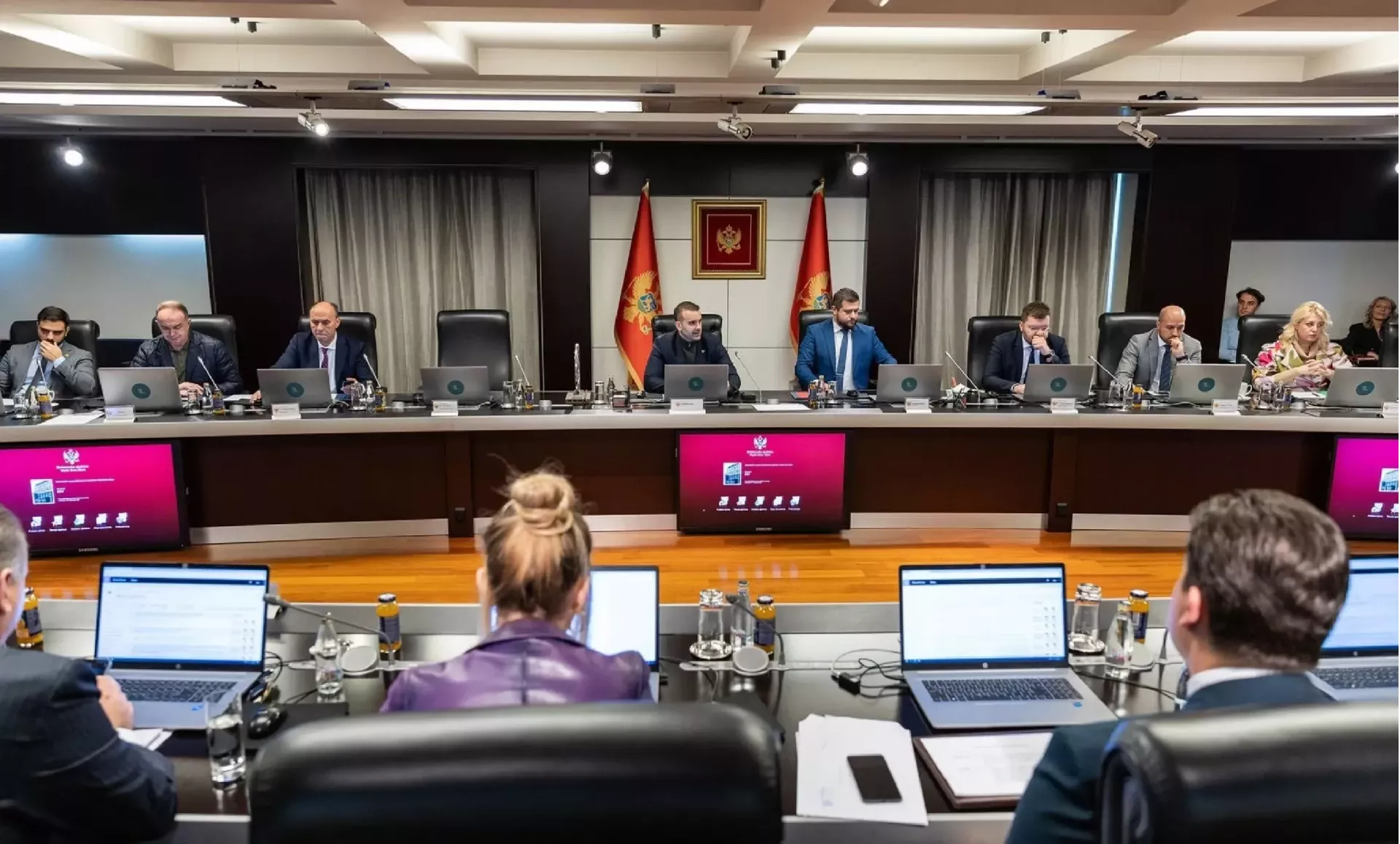
The Montenegrin government, with US mediation, will submit two amendments to the proposed text of the UN Resolution on the Srebrenica genocide with the aim of achieving better relations and calming political tensions in the region, the RTCG portal reported yesterday.
The amendments provide for the individualization of guilt for the genocide committed in Srebrenica, as well as insisting on strict compliance with the Dayton Agreement.
According to the portal of the Montenegrin public service, the amendments are as follows:
- Reiterating that guilt for the crime of genocide is individualized and cannot be attributed to any ethnic, religious or other group or community as a whole.
- Affirming the inviolability of the General Framework Agreement for Peace in Bosnia and Herzegovina in all its provisions.
The RTCG text states that the government told the portal that they believe these amendments prevent any potential manipulation to the detriment of Serbia and the Serbian people in terms of any legal and political repercussions, and prevent the intention and narrative of declaring one people genocidal.
With the second amendment, they added, the existence of the Republika Srpska within Bosnia and Herzegovina is essentially further affirmed, as guaranteed by the Dayton Agreement, given that statements directed against the RS could be heard from certain officials.
We recall that Montenegrin Prime Minister Milojko Spajić has not yet publicly announced the government's position on the UN Resolution. During Spajić's visit to Berlin last week, German expert on the Western Balkans and NATO enlargement Milan Nič stated on social network X that the Montenegrin government would support the Resolution but would not co-sponsor it.
According to him, Spajić said this after a meeting with German Chancellor Olaf Scholz.
Milorad Dodik immediately reacted, assessing that the announcement by the Montenegrin Prime Minister that he would support the Resolution on Srebrenica was morally, politically and historically catastrophic.
This was followed by a warning from the President of the Assembly and head of the current parliamentary majority, Andrija Mandić, who, demanding an urgent meeting with Spajić, said that by voting for the Resolution, Montenegro would blame the entire Serbian people.
"I do not believe the Prime Minister can accept that the entire Serbian people are genocidal because that would mean a verdict for all Serbs in Montenegro," Mandić stated on social network X.
The leader of the Democratic People's Party, Milan Knežević, said that if he were in Spajić's place, he would vote against the proposed Resolution.
The view that Montenegro should not support the Resolution on Srebrenica is also shared by Deputy Prime Minister from the ranks of the pro-Serbian Socialist People's Party, Dragoslav Šćekić, who announced that if the proposal for support appears on the agenda of a government session, he will vote against its adoption.
The initiative for Montenegro to co-sponsor the Resolution has not even been considered by the government, although it has been supported by over 100 non-governmental organizations, more than 300 public figures and intellectuals, as well as 35 members of the Montenegrin opposition. Support for the initiative was also sent by three MPs from Albanian parties that are part of the parliamentary majority.
Following the information about the submission of amendments, the lame justification by the authorities and sharp reactions from the opposition, MP of the Europe Now Movement Jelena Nedović explains that the amendments respect the victims and prevent the stigmatization of a people, repeating the Belgrade-Banja Luka narrative about collective responsibility and the genocidalization of the Serbian people.
On the other hand, Miloš Đuričković from the opposition SD believes that the government voluntarily agrees to serve the Belgrade regime as a bargaining chip. "Where Vučić and Vučević cast an eye, there the Government of Montenegro jumps," Đuričković emphasized. The DPS calls the government's procedure a cowardly policy dictated by fear, not state interest.
The proposed amendments raise a justified question – will Montenegro support the UN Resolution at all? This very question will be posed to Spajić by the leader of the Bosniak Party, Ervin Ibrahimović, during the parliamentary session dedicated to Prime Minister's Question Time scheduled for Thursday.
What is the background of the proposed amendments
After the ultimatum from the pro-Russian part of the government, and the Easter political sermon of Serbian Patriarch Porfirije Perić, the government, spinelessly, succumbed to pressure. In addition to proving loyalty to Aleksandar Vučić and Milorad Dodik, the Prime Minister and Minister of Foreign Affairs Filip Ivanović have become spokespersons for the Serbian world. Thus, if the disputed amendments are indeed proposed, the Montenegrin government will be a kind of Greater Serbian megaphone at the session of the UN General Assembly.
Instead of protecting victims, throwing them at the feet of executioners. Instead of preventing genocide, legitimizing criminal and secessionist policies. Instead of defending state sovereignty, a green light for the assimilationist intentions of autocratic regimes and the imperialist destruction of the region. Instead of condemning the perpetrators, affirming genocidal ideas, by agreeing with the narratives of those who, for political points, shamelessly manipulate their own victims.
Had they by any chance read even a word of the text to which they are directing amendments, the representatives of the morally bankrupt government would know that it is more than absurd to seek individualization of already individualized guilt. They would also know that it is pointless to protect secessionists from discrimination. But they did not read; instead, they typed out dictated amendments, according to the recipe of church-intelligence expertise.
Yet, no applause from headquarters. The head of Serbian diplomacy, Marko Đurić, told the Montenegrin pawns that their amendments resemble a washing of conscience, so that it would not appear before the Montenegrin public that they are against brotherly Serbia.
Minister Ivanović's response followed.
"Montenegro, in conducting its foreign policy, is guided exclusively by its own, not others', interests," reads, among other things, in Ivanović's reaction published on the Vijesti portal, although, certainly, not even the minister himself believes this key thesis. Commenting on Đurić's reaction with a suitable congratulation on assuming his new position, he called the information about the amendments unverified but did not deny them.
The greater the humiliation of the leaders of the Montenegrin government, the hungrier the Belgrade boss. There is no pat on the back, because the kneeling is not over. The criminal servants will not straighten up this time either. Their urge to disgrace their own state knows no bounds. Promises progressive, reality regressive.
Instead of a bright future, the creators and followers of the ideology whose practical realization wrote the darkest pages of the region's past laugh in our faces.
Komentari (0)
Prijavite se za komentiranje
PrijavaJos nema komentara. Budite prvi!
Minuta
Sve →Iz drugih kategorija

High Representative Not Elected: Germans, French and British Against Americans, New Attempt at End of June

ČOVIĆ WITHOUT MERCY: How Those Who Brought Ademović to Office Created a Political Hell for Him



Sunny Saturday, quite warm



Tragedy in Albanian resort: Two minors drown












