By Armin Sijamić
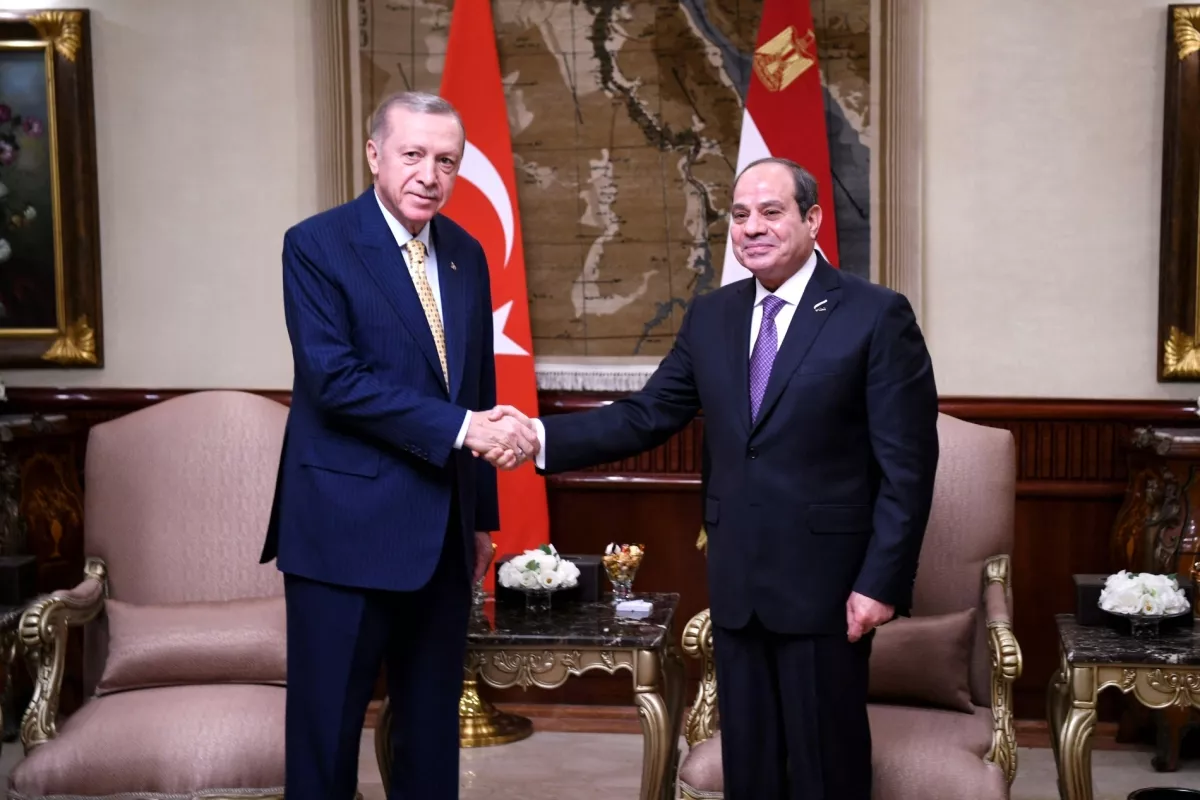
Egyptian President Abdel Fattah al-Sisi visited Turkish President Recep Tayyip Erdogan this week. Once sworn enemies, they have decided to bury the hatchet. The agreement of these two regional powers is desired by many beyond their borders, while many are concerned that their cooperation might disrupt the balance of power in Africa and the Middle East.
After ten years in power, al-Sisi visited Turkey and Erdogan. The cooperation between Erdogan and al-Sisi was hard to imagine. It began with the removal of the Muslim Brotherhood from power in Cairo and continued on many issues. On the other hand, the history of relations between Turkey and Egypt is full of opposing examples.
However, what is happening today and what will happen in the coming period, in the parts of the world where these two countries have interests, pushes historical events into the background. Probably neither side has abandoned its policies, but this is being ignored and efforts are being made to work on areas of agreement, avoiding conflict where possible. Turkey has also begun normalizing relations with Saudi Arabia and the United Arab Emirates, which, like Egypt, consider the Muslim Brotherhood a terrorist organization.
How important this is, or what the potential for cooperation is for these two countries with good relations in Washington, Beijing, and Moscow, let's give just one example: This year, the two countries will together gain 2.3 million new inhabitants, and since the presidential terms in both countries are approximately the same, it can be concluded that during one term of Erdogan and al-Sisi, about twelve million people will be born in the two countries. But the issue of natural gas and oil is even more important.
A Hand of Cooperation
"My visit to Turkey opens the way for a new phase in economic and trade relations," al-Sisi said at a joint press conference with Erdogan in Ankara. "We are witnessing increased communication between the two nations in recent years," he added. "My first visit to this friendly country is an indication that relations between the two countries will continue to develop," he said after nearly three hours of talks between the leaders and delegations.
"We are improving our relations even further with the return visit of my dear brother," Erdogan said, referring to his meeting with al-Sisi in mid-February this year in Egypt. At the meeting in Cairo, they promised a "new phase in relations," diplomatic cooperation in the Middle East, and an increase in trade to "fifteen billion dollars annually within a few years" from the current ten.
This was the culmination of rapprochement, as a Turkish delegation visited Egypt back in 2021. In July last year, ambassadors were appointed in Cairo and Ankara, and Erdogan and al-Sisi shook hands in November 2022 in Qatar at the Football World Cup. Meetings at the G20 summit followed.
From Syria, Through Libya, to the Horn of Africa
During his visit to Egypt, Erdogan stated that Palestine is "at the top of our agenda" and that it is a "priority" to establish a ceasefire. Erdogan condemned Benjamin Netanyahu for "occupation, destruction, and massacres" and said that Turkey is "ready to work with Egypt on the recovery and reconstruction of Gaza in the medium term." Al-Sisi, who is not prone to grand statements and announcements, then criticized Israel for the obstacles it is placing to the rapid entry of humanitarian aid into the Gaza Strip.
Egypt and Turkey share the view on the "necessity of reaching a ceasefire in Gaza and ending the Israeli aggression in the West Bank," al-Sisi said in Ankara. On the issue of Palestine, the two countries have their hands tied, as evidenced by past decades and the period since the meeting in Cairo.
However, there are areas where they can do much, and these, along with economic issues, are the most important topics of this week's meeting. Al-Sisi praised Turkey's efforts to mend relations with Syria "with the aim of achieving a political solution and alleviating the suffering of the Syrian people in accordance with the resolutions of the United Nations Security Council." Although Egypt is not directly involved in the war in Syria, official Cairo is closer to the secular government of Bashar al-Assad than to the rebel groups, some of which have ties to the Muslim Brotherhood. Namely, official Ankara has recently been trying to find common ground with Damascus, which demands the withdrawal of the Turkish army from Syria as a condition.
Cooperation between Turkey and Egypt is needed in Libya. While Turkey supports the internationally recognized government, Egypt supports Khalifa Haftar's rebels. The two presidents signed a declaration in Ankara confirming their commitment to increasing coordination on several regionally important issues, such as Gaza, Libya, and the Horn of Africa. Egypt and Turkey are on almost the same page regarding Gaza, but not in Libya, Somalia, Ethiopia, or Sudan. The declaration does not mean that the problems will be solved, but the talks between the two presidents open up possibilities that the two sides will discuss in the coming period.
A New Middle East
Although the above sounds like the most important part of the talks, it is probably not the case. The two countries have been trying in recent years to seize an opportunity that could change the Middle East. This concerns energy, i.e., the desire of both countries to become powers in that field, despite having few resources of that type. "We want to advance our energy cooperation with Egypt, especially in the field of natural gas and nuclear energy," Erdogan said.
Their geographical location, as well as their political and military strength, are the main factors in this plan. Both countries want to become energy hubs, connecting Asian and African natural gas exporters with Europe, overland and via the Mediterranean. This is a major geopolitical game that has been going on for decades, and it is the reason for the current relations between Turkey and Egypt in recent years and perhaps those that will follow.
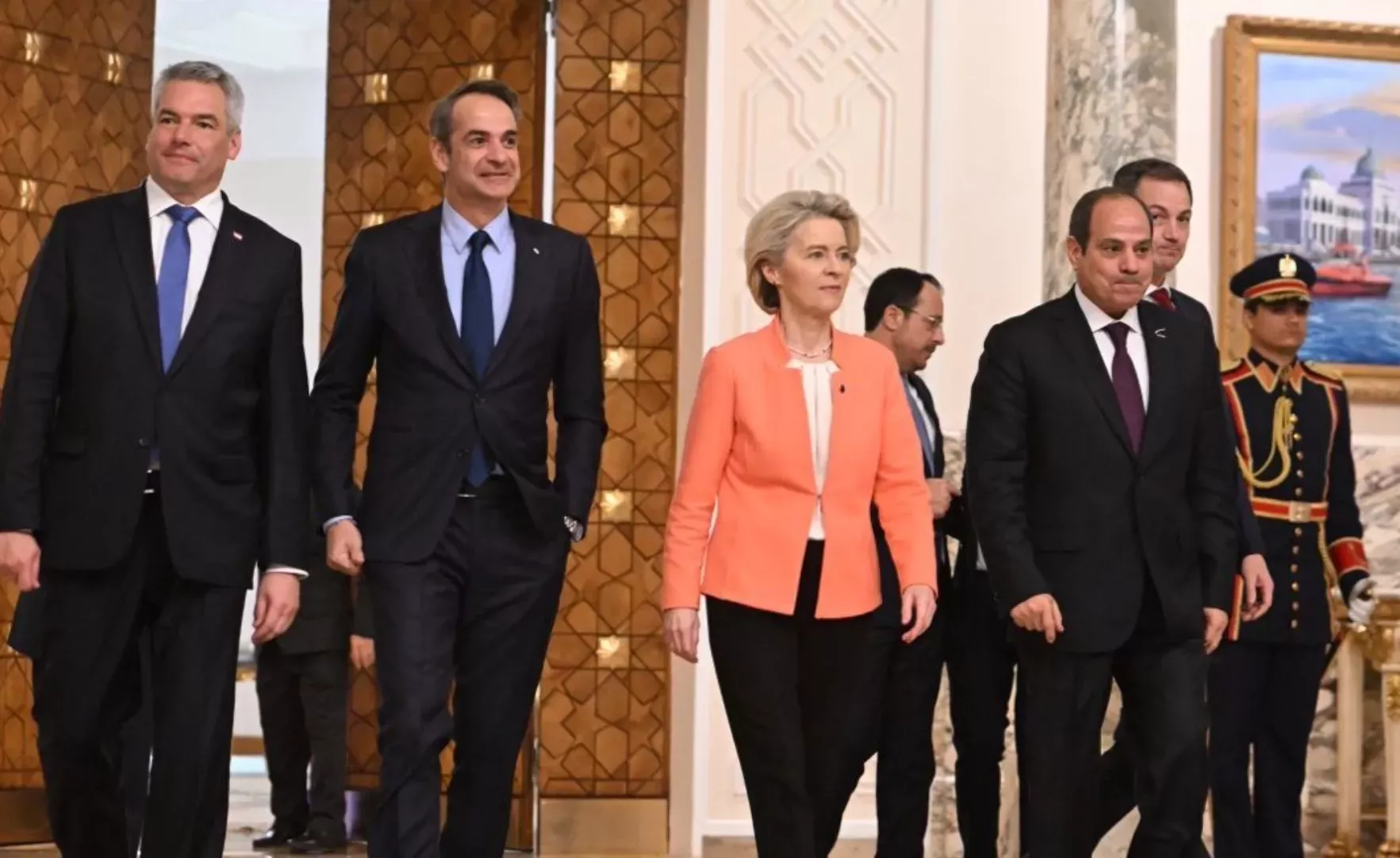
Egypt has positioned itself as a power selling its and Israel's gas to Jordan and Europe, and it wants to do the same by connecting with Cyprus and Greece, which in earlier variations bypasses Turkey. Ankara has been doing this for longer, developing projects to bring Russian and Azerbaijani gas and oil to Europe. In perspective, Turkey could be a transit country for energy from Iraq, Iran, Syria, or Qatar. Some claim that the war in Syria started precisely for these reasons. The war in Libya would then be part of that puzzle, and the struggle over who will sell Libyan energy and how continues to this day. The agreement between the Libyan and Turkish governments to establish maritime borders, preventing the same between Turkey and Cyprus, is part of the same story.
If Turkey and Egypt were to agree on these issues, the Middle East would take on different contours. Seventeen cooperation agreements were signed in Ankara. The emphasis was placed on the economy. Turkey is, according to data from the Egyptian central bank, Egypt's fifth-largest trading partner. A few months ago, Turkey decided to sell drones and other technologies to Egypt, according to Turkish Foreign Minister Hakan Fidan.
Extending a hand of cooperation to almost everyone indicates that Ankara has a plan to re-establish itself as a factor connecting everyone in the region and beyond. In a short period, Turkey has "smoothed over" disagreements with Finland, Sweden, and the United States regarding the admission of Scandinavian countries to NATO, improved relations with Iraq, Greece, the Arab monarchies of the Gulf, Russia, and Ukraine, and finally, it is trying to do so with Syria. Such a development gives optimism to Ankara and Cairo that it is possible in their case as well. If this happens and the implementation of important joint projects in the field of energy begins, then the Middle East and a large part of Africa will gain a new dynamic of relations.
Komentari (0)
Prijavite se za komentiranje
PrijavaJos nema komentara. Budite prvi!
Minuta
Sve →Iz drugih kategorija
High Representative Not Elected: Germans, French and British Sabotaged Americans, New Attempt at End of June
ČOVIĆ WITHOUT MERCY: How Those Who Brought Ademović to Office Created a Political Hell for Him


Sunny Saturday, quite warm
Tragedy in Albanian resort: Two minors drown