
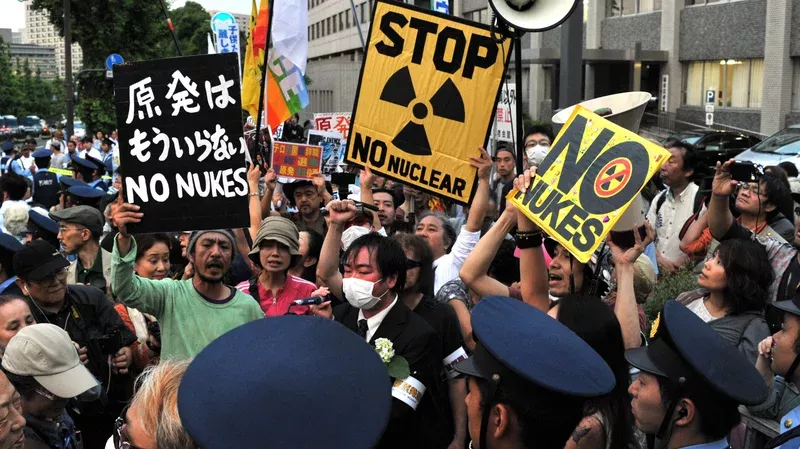
(Patria) - Hundreds of people in South Korea took to the streets of Seoul on Saturday to protest Japan's controversial plan to discharge treated nuclear wastewater into the Pacific Ocean, the BBC reported.
Tokyo will release water from the tsunami-hit Fukushima nuclear power plant later this month. The plan has been approved by the UN's nuclear watchdog, and a South Korean assessment has shown it meets international standards.
But protesters fear marine life will be destroyed and seafood contaminated. Choi Kyoungsook of the activist group Korea Radiation Watch said the radioactive substances in the water will "eventually destroy the marine ecosystem".
"The sea is not just for the Japanese government, but for all of us and for humanity," she added.
Last month, the International Atomic Energy Agency (IAEA) released a report supporting Japan's plan. A few days later, South Korea released its own assessment, which found that the water discharge "should not have any significant impact on our ocean areas," said Minister Bang Moon-kyu.
However, Japan has faced criticism at home and abroad.
Fisheries and food industry groups in Japan and the wider region have expressed concern, fearing consumers will avoid buying seafood.
Several international experts have expressed concern about the plans, including one from China who said the IAEA report was "hasty," according to China's state-run Global Times.
It is estimated that more than a million tons of purified radioactive water are stored at the facility in northern Tokyo. The water was used to cool the reactors destroyed in the devastating earthquake and tsunami in March 2011.
Japan's plan to discharge the water into the ocean was first announced in 2018, stating that the process would be carefully managed and the water would be further diluted with seawater before being released.
US President Joe Biden is expected to meet with his South Korean counterpart Yoon Suk Yeol and Japanese Prime Minister Fumio Kishida next week at a trilateral summit to discuss the controversial plan.
"The governments of South Korea, the US, and Japan should consider this an environmental disaster, not a political issue, and agree to block it for future generations," said Choi.
Komentari (0)
Prijavite se za komentiranje
PrijavaJos nema komentara. Budite prvi!
Minuta
Sve →Iz drugih kategorija

High Representative Not Elected: Germans, French and British Sabotaged Americans, New Attempt at End of June

ČOVIĆ WITHOUT MERCY: How Those Who Brought Ademović to Office Created a Political Hell for Him



Sunny Saturday, quite warm



Tragedy in Albanian resort: Two minors drown












