
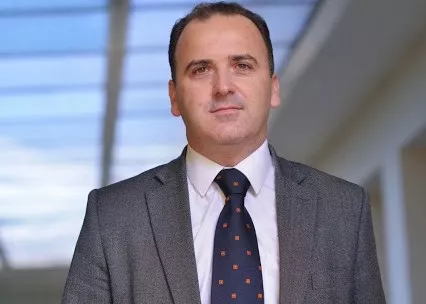
By: Dženan Đonlagić
What has this government been trying to increase for months, excise duties or road tolls? Even those proposing it don't know anymore, let alone those who support it!
The final exam in political economy, on which this government will finally fail, is called the “Amendments to the Law on Excise Duties in BiH”. They are deceiving citizens by claiming it is not a new burden on their shoulders and their lowest incomes in Europe.
Let's establish this right from the start! An excise duty is a tax, and it is not the same as a road toll. Excise duty, one of the oldest forms of taxation in the world, is a type of special, indirect tax on the turnover of high-tariff goods which, like VAT, is “passed on” at the consumption stage to the detriment of citizens. If it is not a tax, as many intentionally or out of ignorance try to present it, then what is the role of the state institution, the Indirect Taxation Authority? As the name itself suggests, what is it responsible for, indirect taxation!
Any additional taxation of the lowest wages and pensions in Europe is an economically misguided measure. If the excise duty on fuel were to be increased, who guarantees that with our miserable wages and pensions, our citizens will increase their turnover and fuel consumption with the aim of increasing public revenue from this tax source? On the contrary, a decrease may occur. Do the proposers of this have any calculations for this, and if they do, have they attached them to the text of the amendments to the Law?
Secondly, the current government is not introducing excise duties, but wants to increase them. Why? Because they signed a Letter of Intent with the IMF in which they clearly stated that they would increase excise duties. They signed an increase in excise duties on fuel, not road tolls! Why is this extremely important? Because in the Law on Excise Duties in BiH, there are two types of public revenue, excise duties and road tolls, and they are treated differently. Excise duties are charged in a fixed amount and are treated as budgetary public revenue.
This is important because it practically means that they do not have a predetermined character of a designated public revenue, i.e., one that has a clear purpose of expenditure. In “their” case, this means that excise duties enter the state budget and then (after paying the installment for external debt) go to the budgets of the Entities and Brčko District through the so-called distribution from the single account.
There is no provision anywhere that this money will be invested in the construction of highways and roads. Not to mention that the current government has not presented a report on what and on which infrastructure projects the previous funds collected from excise duties and road tolls have been spent!
The latest confusion and complete failure, the discord of the ruling orchestra, occurred at the recently held session of the Steering Board of the Indirect Taxation Authority, when a proposal was made to increase road tolls, not excise duties, by another 0.15 KM. What is this now? What a contradiction! Road tolls, like excise duties (taxes), have also been collected for years and amount to 0.25 KM per liter of fuel, of which 0.10 KM goes to the construction of highways and 0.15 KM to the construction of roads. With this “latest” proposal to increase by 0.15 KM, it would ultimately mean 0.20 KM (+0.10 KM) for highways, and 0.20 KM (+0.05 KM) for roads. What was finally adopted at that session, birds know?
If the current government wanted and intended to build, they should have reached for an alternative source of financing for infrastructure construction, which would not mean an increase in taxes. So that the ruling party does not say that we are only criticizing without offering any solutions, here is a proposal, which will not further “reach into the pockets of citizens” by raising taxes.
There are two such alternative sources of financing: First, the strongest long-term economic source for financing infrastructure construction (new investments in highways, expressways, bridges, energy sector through renewable energy sources) is to put the NON-MONETARY STATE TREASURE into operation and convert it into money for new investments in the country as a whole. This is one of the most powerful alternative sources of financing for infrastructure construction, and it does not go “over the backs” of the citizens! BiH's assets from succession and the so-called passive asset balances of BiH, the Federation of BiH and RS, are the answer to those who claim that an increase in excise duties is a long-term economic measure for infrastructure construction in BiH.
The inheritance proceedings of SFRY (succession) provided the state of BiH with sufficient property opportunities, so that regardless of the wartime and privatization-criminal devastation of this property, it can provide the state with a new financial source for a completely new investment cycle in the country through good managerial and professional management of these resources. In addition, this would stop the further internal and external public borrowing of all levels of government.
The second, monetary source is to incorporate a separate criterion for financing the construction of highways and roads throughout the country within the criteria and so-called coefficients before the distribution of money that goes from the single treasury account at the state level to the Entities and Brčko District.
If it is possible to immediately allocate funds for servicing and repaying external debt, do the same for construction and thus prove that you care about investment and talking about the economy, all without increasing existing taxes, because this society needs tax relief, not an increase in taxes.
At the end of months-long embarrassment, primarily of the Council of Ministers of BiH and the Steering Board of the Indirect Taxation Authority, this government has lost all credibility and therefore should not and must not obtain additional money by, for the umpteenth time, “reaching into the pockets of citizens” and “squandering” it to patch up pre-election budgets and “buy” new elections in 2018.
The author of the text is Dr. Dženan Đonlagić, full professor of public finance at the Faculty of Economics of the University of Sarajevo and head of the Caucus of the Democratic Front in the House of Representatives of the Parliament of the Federation of BiH.
Komentari (0)
Prijavite se za komentiranje
PrijavaJos nema komentara. Budite prvi!
Minuta
Sve →Iz drugih kategorija

High Representative Not Elected: Germans, French and British Against Americans, New Attempt at End of June

ČOVIĆ WITHOUT MERCY: How Those Who Brought Ademović to Office Created a Political Hell for Him



Sunny Saturday, quite warm



Tragedy in Albanian resort: Two minors drown












