
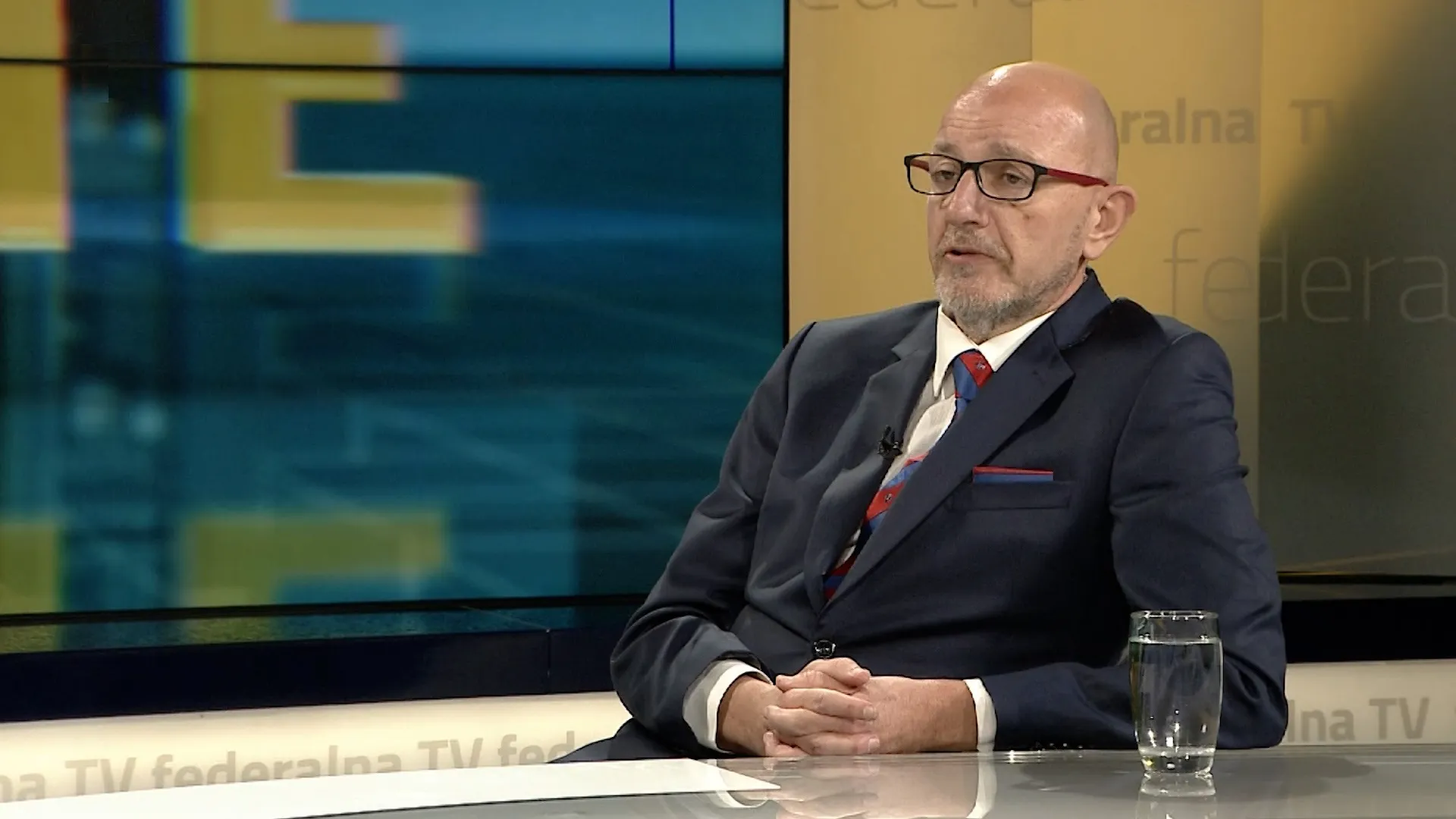
By NAP: Dr. Zlatko Hadžidedić, Professor of International Relations
Although the debate about the future of the Office of the High Representative (OHR) is often conducted as a political contest, there is a less known, but equally important argument – a strictly legal one. As long as the Dayton Peace Agreement remains the foundational treaty for Bosnia and Herzegovina, the OHR cannot simply be "closed" in the usual way. A careful reading of the agreement reveals that the High Representative is not a temporary feature, but a permanent pillar of the state's constitutional architecture, the removal of which would require renegotiating peace itself and a new peace agreement.
The Legal Architecture of Annex 10
The authority of the High Representative does not stem from a UN mandate or an informal agreement, but is directly embedded in the Dayton Peace Agreement. Article I of Annex 10 formally contains the parties' request for the appointment of a High Representative, laying the groundwork for a permanent mechanism of international supervision. His specific powers, including "final authority on the ground regarding the interpretation of this Agreement on the civilian implementation of the peace settlement," are codified in Article V of Annex 10. This makes the OHR an inseparable component of Bosnia and Herzegovina's constitutional order, as the country's Constitution itself is an integral part of the Dayton Peace Agreement (Annex 4). Legally speaking, removing the High Representative would be akin to unilaterally amending a binding international treaty – an act that cannot be performed by any single party or external body, including the UN Security Council, without the consent of all signatories.
Why Closing the OHR Remains a Distant Prospect
Despite occasional efforts to curtail the "Bonn Powers," which expanded the High Representative's authority beyond the original text of Annex 10, the institution of the High Representative itself is legally inviolable as long as the Dayton Agreement remains in force. Although the UN Security Council has discussed proposals to end the mandate of the High Representative, it has never adopted a resolution to that effect. Consequently, the most concrete plan for closure remains the Peace Implementation Council's (PIC) "5+2 Agenda."
The 5+2 Conditions for Closing the OHR
In 2008, the PIC Steering Board formally established the following list of requirements that the authorities of Bosnia and Herzegovina must meet before the OHR can be closed. The full implementation of this agenda is the only internationally recognized path to ending the mandate of the High Representative.
Five Objectives:
1. An acceptable and sustainable solution to the issue of state property allocation between the state and other levels of government – a legally binding agreement on which state property belongs to the state, cantons, or entities.
2. An acceptable and sustainable solution for defense property – a resolution of ownership of all military real and movable property, requiring a signed and legally registered transfer agreement between all levels of government.
3. Completion of the final decision for Brčko – adoption of legal acts regulating the status of the Brčko District, ensuring its adequate legal protection in relation to both the state and the entities.
4. Fiscal sustainability – promoted through a permanent revenue allocation methodology (ITA coefficient) and the legal establishment of a National Fiscal Council.
5. Strengthening the rule of law – demonstrated through the adoption of the State Strategy for War Crimes, the Law on Foreigners and Asylum, and the State Strategy for Judicial Reform.
Two Conditions:
1. Signing of the Stabilization and Association Agreement (SAA) with the European Union.
2. A positive assessment of the situation in BiH by the PIC Steering Board, based on full respect for the Dayton Peace Agreement.
Why the First Condition (Property Demarcation) is Crucial – and Often Misunderstood
The first of the five objectives is not a technical note. It concerns the very definition of the state of Bosnia and Herzegovina. According to the Dayton Constitution, property does not automatically belong to the entities. State property – including military facilities, forests, water resources, roads, and land beneath strategic infrastructure – belongs to Bosnia and Herzegovina as a sovereign state. The condition on property demarcation requires negotiations and a legally binding agreement between the state, entities, and the Brčko District on how this property will be divided or shared.
What Cannot Be Done: The obligation to negotiate cannot be circumvented by unilaterally transferring state property to entities through indirect methods. For example, building two separate gas networks – one in the Federation and one in Republika Srpska – cannot legally resolve the issue of ownership of the land beneath these networks. If an entity simply lays its pipelines and then claims that the ground beneath them becomes entity property, that is not an agreed-upon division. It is a de facto division of state territory. The same logic applies to electricity grids, telecommunications infrastructure, railway lines, and water management systems. According to Dayton, this is state property. Their division can only be legally resolved through a consensual, transparent, and internationally supervised agreement – not through unilateral acts of physical occupation or parallel construction.
This condition, therefore, acts as a barrier against the gradual dismantling of the state of Bosnia and Herzegovina. Without its fulfillment, any discussion about closing the OHR is impossible, as the very material foundation of the state would remain disputed. To date, no such comprehensive property agreement exists. And until such an agreement is adopted, the first of the five conditions remains unfulfilled, blocking any legal closure of the Office of the High Representative.
The Unspoken Consequence: Renegotiating Dayton Means Renegotiating the Entities
Here lies the most politically explosive point: any formal amendment to the Dayton Peace Agreement, or any negotiated succession to it, would necessarily reopen the entire constitutional framework of Bosnia and Herzegovina. That framework does not only concern the High Representative. It also concerns the two entities – Republika Srpska and the Federation of Bosnia and Herzegovina – whose existence and powers are embedded in Annex 4 (the Constitution).
There is no legal mechanism to "surgically remove" Annex 10 while leaving the rest of Dayton untouched. The agreement is a single, indivisible package. Therefore, as soon as the parties sit down to renegotiate the status of the OHR, they open the door to renegotiating everything else: entity structures, divisions of competencies, the presidency, parliamentary assemblies, and even the Constitutional Court. For the political leadership of Republika Srpska, which has long claimed that its entity is a war achievement that cannot be negotiated, this is a matter of survival. For those politicians seeking a more centralized state, it is an opportunity. For the Federation – which is itself a fragile entity composed of ten cantons – it brings the risk of internal collapse or further fragmentation.
In short, closing the OHR through amending the Dayton Agreement would not simply remove an international official. It would open a fundamental question: does Bosnia and Herzegovina remain a state of two entities or not? For this reason, despite frequent political statements about the need to overcome Dayton, no serious international actor has ever put forward a formal proposal to amend Dayton. The cost of reopening the agreement is considered potentially catastrophic.
Political Realities and International Debate
The gap between the legal permanence of the OHR and its political future continues to fuel fierce international debate, with differing views reflecting the fundamental tensions of the original peace agreement.
‣ Voices for immediate closure: Officials from countries like Russia and some domestic leaders in Republika Srpska argue that the OHR has outlived its purpose, describing it as a "colonial instrument." However, they also reject any renegotiation of the entity structure. This creates a logical contradiction: they want Annex 10 to disappear, yet consider Annex 4 sacred. Legally, this is impossible.
‣ Calls for an updated mandate: Other experts and political leaders believe that while the OHR must remain, its powers should be urgently reformed, advocating for the abolition of the so-called "Bonn Powers" to return the institution to its original mandate from Annex 10. This approach completely avoids amending the agreement, leaving the entities intact.
‣ Argument for retention in its current form: High Representative Christian Schmidt has warned that premature closure "would call into question the existence of the Dayton Peace Agreement and EUFOR," emphasizing the institution's role with its existing powers as a guarantor of stability and a deterrent against secessionist moves.
The Way Forward
The legal reality is clear: the Office of the High Representative cannot be unilaterally abolished. As a creation of a binding international treaty, its fate is inseparable from the Dayton Peace Agreement. The only legitimate way to resolve the status of the OHR is through new, inclusive, internationally supported political negotiations among all parties and guarantor states to amend or succeed the Dayton framework itself.
However, that path is not just a path to closing an office. It is a path to the potential abolition of the entities – Republika Srpska and the Federation – and with them, the entire post-war constitutional order. These are negotiations that no one is currently prepared for. And that, more than any legal detail, is why the Office of the High Representative remains open today.
Komentari (0)
Prijavite se za komentiranje
PrijavaJos nema komentara. Budite prvi!
Minuta
Sve →Iz drugih kategorija

High Representative Not Elected: Germans, French and British Against Americans, New Attempt at End of June

ČOVIĆ WITHOUT MERCY: How Those Who Brought Ademović to Office Created a Political Hell for Him



Sunny Saturday, quite warm



Tragedy in Albanian resort: Two minors drown












