
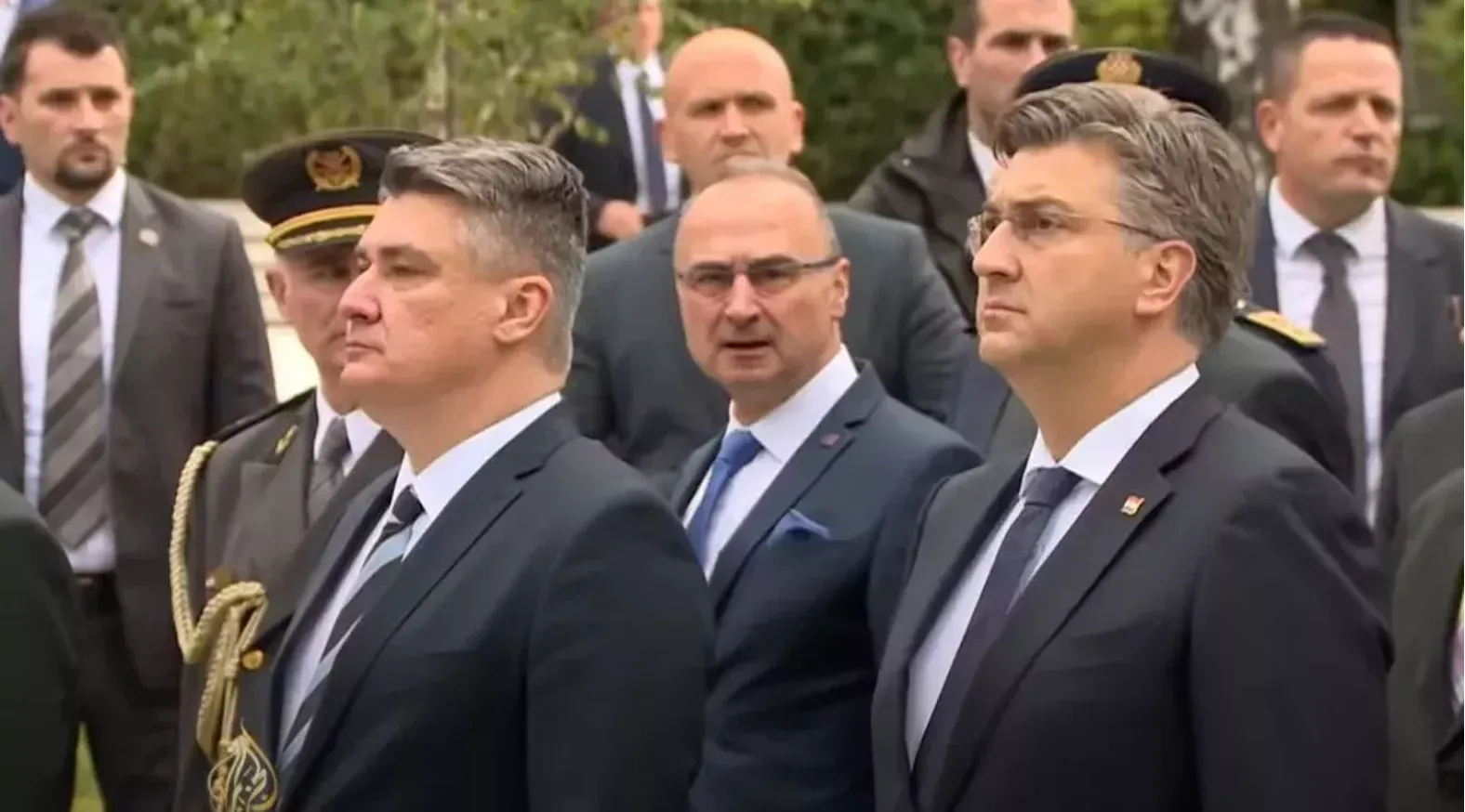
(Patria) - Bosnia and Herzegovina's membership in the European Union (EU) is a Croatian national interest. This is nonsense that the head of Croatian diplomacy, Gordan Grlić Radman, stated aloud yesterday.
There are indeed countless absurdities, but also insults, that the leaders of the country with which we share a land border of over a thousand kilometers have uttered and directed at us in recent years.
Irredentist Policy Towards BiH
And they do not cease, even today, to meddle in the internal affairs of Bosnia and Herzegovina. Whenever they can, and they strive to do so on an almost daily basis, Croatian politicians try in every possible way to influence the political situation in their neighbor's country.
International relations professor Jahjo Muhasilović is no longer surprised by this, as Croatian interference in the internal affairs of our country is no longer news, but rather a constant since the independence of both countries.
- Ever since both countries gained their independence, we have seen that Croatia has territorial claims towards Bosnia and Herzegovina, and that it uses Bosnian Croats as agents for this.
However, due to a combination of other circumstances and the international scene, Croatia has never managed to implement this on the ground, although the Dayton arrangement of Bosnia and Herzegovina opened up space for both it and Serbia to interfere more intensely in our internal affairs - says Muhasilović in an interview with the Patria News Agency.
He emphasizes that Croatia, through HDZ BiH, as well as through other smaller parties, but most importantly through Dragan Čović's HDZ BiH, has continued to pursue its irredentist policy towards Bosnia and Herzegovina.
Muhasilović believes that this will remain a constant as long as the internal organization of Bosnia and Herzegovina remains as it is, and as long as it does not become a civic state in the full sense of the word.
- As long as we have this constituent system where there are certain Croatian parties and certain Croatian cantons, Zagreb will continue to interfere in the internal affairs of Bosnia and Herzegovina - assesses Muhasilović.
According to him, one of the reasons why Zagreb is actually doing this, besides the human capital it has in Bosnian Croats, is the territorial aspect, i.e., the very fact that Croatia has problems with water shortages, electricity...
- Especially Dalmatia is very difficult to defend in a geostrategic sense if it does not have a hinterland, i.e., strategic depth, and Bosnian Croats essentially serve as that strategic depth for Zagreb in a way.
And for that reason, they will always have claims towards Bosnia and Herzegovina, and how much they can be implemented on the ground will depend exclusively on the internal organization of Bosnia and Herzegovina itself - Muhasilović tells us.
He stresses that Croatia absolutely still has territorial claims towards Bosnia and Herzegovina, and adds that they will intensify more in the medium-term future.
- Zagreb, through the international community, i.e., the Office of the High Representative (OHR), has managed to achieve certain goals in Bosnia and Herzegovina. Unfortunately, these goals have weakened our country, which has definitely opened up additional space for Zagreb, as well as Belgrade, to pursue their policies in Bosnia and Herzegovina.
Croatia has seen that through full membership in the EU and NATO, it can use these two platforms to lobby the international community for certain policies towards Bosnia and Herzegovina that exclusively suit Zagreb and a part of Bosnian Croats, especially those living in Herzegovina - states Muhasilović.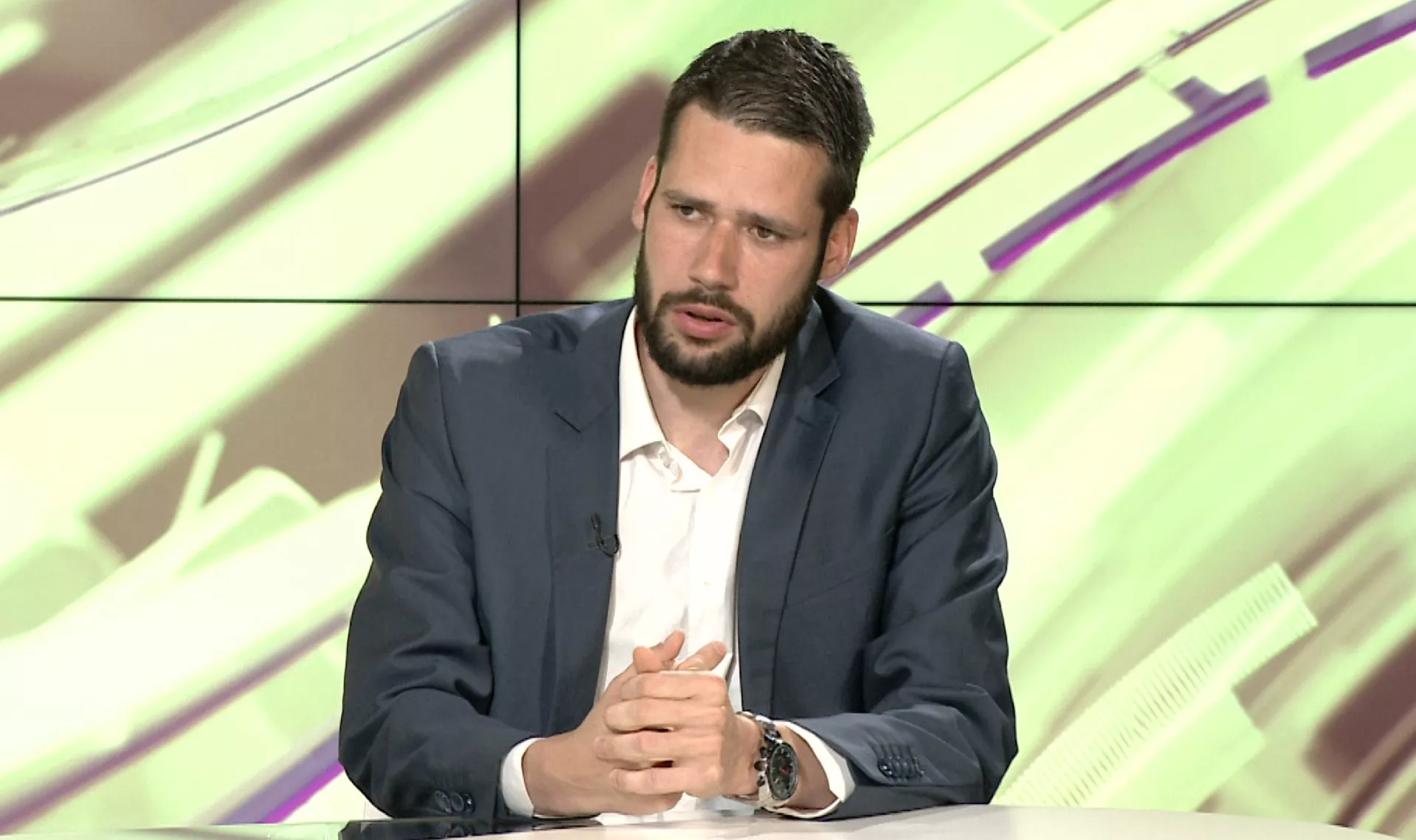
Muhasilović: Serbia and Croatia fear a civic Bosnia and Herzegovina
Zagreb Will Become More Aggressive
He emphasizes that after the recent interventions of the High Representative Christian Schmidt with amendments to the BiH Election Law, i.e., the subsequent suspension of the Constitution of the Federation of BiH, both Belgrade and Zagreb have definitely seen their appetites for Bosnia and Herzegovina grow, as they realized they could implement their policies in Bosnia and Herzegovina with the help of the international community.
Our interlocutor believes that in the coming period, we will see a more aggressive Zagreb, and one of the reasons for this is the demographic decline of Croats. This, Muhasilović believes, creates a certain anxiety in the capital of Croatia as well as among Bosnian Croats.
- For this reason, they frighten the international scene with some fabricated Bosniak demographic opportunism and some fabricated security problems in order to attract the attention of international politics, and to satisfy the demands of Zagreb and HDZ towards Bosnia and Herzegovina.
The reason for such an aggressive approach definitely lies in the fact that Bosnian Croats are in the most unfavorable demographic position in BiH. These two facts, namely what the international community did through Schmidt and the demographic catastrophe that Croats are going through, will definitely push Zagreb to be even more aggressive towards Bosnia and Herzegovina - warns Muhasilović.
We asked him how it is even possible that a country, a member of the European Union and NATO, in modern times wants a piece of a neighboring country?
- The EU is primarily an economic union. It started as such, and was successful as such. And the moment it tried to create some kind of supranational entity on the European continent, serious problems arose - there was an increase in euroscepticism of political parties that do not want to cede part of their sovereignty - Muhasilović is clear.
All the crises that the European Union has gone through in the last decade and a half, he adds, have shown that it is actually just an economic union which, as it is often called - an economic giant, but a political dwarf, is simply not a substitute for any of its members for their national goals.
- Therefore, all EU members, and thus Croatia, will always strive to maximize their national goals. Croatia has now assessed that Bosnian Croats, with their capacity within Bosnia and Herzegovina, as weak as it is, are actually its national priorities. And of course, it will never fully subordinate its national interests and foreign policy to the interests of Brussels - are Muhasilović's words.
Finally, he also answered how to stop Croatia's future interference in matters that concern only Bosnia and Herzegovina. For this, he emphasizes, a whole range of policies within Bosnia and Herzegovina itself is necessary.
- Zagreb, like Belgrade, essentially rides the wave of Bosnia and Herzegovina's weakness, its state institutions, and its political fragmentation. This aspect requires a lot of effort and a lot of time. But if it were resolved in Bosnia and Herzegovina, I think it would prevent Croatia, and Serbia, from interfering in our country's internal affairs in this way - believes Muhasilović.
This is the main reason, he adds, why both Serbia and Croatia fear a civic Bosnia and Herzegovina. And they call this Bosniak unitarism.
- Precisely for these reasons, politicians like Željko Komšić, and all those Bosnian patriots who are for the civic idea, and there are such among Bosnian Croats as well as Bosnian Serbs - although there are few of them on both sides - are the biggest threat to them.
That is why all this fuss and noise about Komšić and the necessity of changing the BiH Election Law in the way HDZ BiH wants - cementing Croats in Bosnia and Herzegovina as some kind of factor. Definitely, the best response to Croatian and Serbian irredentism in Bosnia and Herzegovina is a civic Bosnia and Herzegovina - concludes Muhasilović in an interview with Patria.
(D. Kovač)
Komentari (0)
Prijavite se za komentiranje
PrijavaJos nema komentara. Budite prvi!
Minuta
Sve →Iz drugih kategorija

High Representative Not Elected: Germans, French and British Against Americans, New Attempt at End of June

ČOVIĆ WITHOUT MERCY: How Those Who Brought Ademović to Office Created a Political Hell for Him



Sunny Saturday, quite warm



Tragedy in Albanian resort: Two minors drown












