
By: Amir Sužanj
The diplomatic initiative undertaken by Croatia's political leadership with the aim, as officially stated, of protecting the position of the Croatian people in Bosnia and Herzegovina and fighting for their equality, has seriously shaken Croatia's international reputation, say diplomatic circles in Sarajevo, who, of course, know the pulse of European institutions well. The diplomatic pressure in the European Parliament, which escalated when it became clear that Dragan Čović was losing the race for the position of member of the Presidency of Bosnia and Herzegovina (that is – even before the official election results were announced) suffered a significant failure because no decision of European institutions went in the direction that Croatian MEPs wanted to impose. However, the latest appearance of Željana Zovko before the European Parliament has worried, say those better informed, even circles in the Croatian Parliament itself. Željana Zovko's claim that Turkish President Recep Tayyip Erdoğan instructed Bosniaks to vote for Željko Komšić, and no less than through the Islamic Community of Bosnia and Herzegovina, caused ridicule in diplomatic circles, and convinced numerous prominent political figures in Croatia that something in that initiative is seriously at odds with elementary logic.
To appear before European institutions bringing Turkey and Erdoğan into the context of the election of the Croatian member of the BiH Presidency can only be done by someone who lacks the stature to step out of the milieu of local political trickery, it is claimed in diplomatic circles in Sarajevo. Injecting Erdoğan into the debate about Dragan Čović's defeat, and before one of the most important European institutions, represents a base and extremely unserious attempt to play the card of Islamophobia and fear of, as some Croatian political circles have been trying to impose for months, Islamic radicalism in Bosnia and Herzegovina. Željana Zovko has obviously lost sight of the fact that Western governments have their own diplomatic representatives in Bosnia and Herzegovina and have no need to be informed about the situation from official Zagreb sources. It is particularly nonsensical to portray the election of Željko Komšić as some expression of the strengthening of Islamist tendencies in Bosnia and Herzegovina, so such views were indeed met with ridicule in European political circles.
Serious political forces in Croatia have reason to be concerned about the constant trend of erosion of Croatia's reputation in international circles, but also to ask themselves – why is Croatia squandering its dignity for the sake of Dragan Čović, trying to impose arguments that are very easy to refute with simple mathematics? The defeat of Dragan Čović in the elections for the member of the BiH Presidency cannot be an expression of the disenfranchisement of Croats in Bosnia and Herzegovina for the simple reason, which again is proven by simple numbers – Čović did not lose because Bosniaks voted for Komšić, but because CROATS DID NOT vote for Čović. This was recently, in the middle of the Croatian Parliament, irrefutably argued by Vesna Pusić, opening the eyes of the Croatian public to the real reasons for Čović's defeat.
Another very important argument does not favour the creators of that shaky diplomatic campaign. Croats in Bosnia and Herzegovina, as convincingly the smallest people, have a third of power and positions in institutions, and all these positions are sovereignly held by only one political centre, the one gathered around the top of the HDZ BiH. This political force has controlled budgets and financial flows at the state and federal level for years. Their political platform about the necessity of ensuring equality in Bosnia and Herzegovina is undermined by themselves – in cantons with a Croatian majority, where HDZ is the master of all political currents, all multi-year initiatives for Serbs to gain constituent status have been nipped in the bud. Even a superficial look at statistical data shows the complete disenfranchisement of Serbs in those parts of Bosnia and Herzegovina, despite the exceptionally good relations between Čović and Milorad Dodik. Furthermore, the proposal for amendments to the election law, which, as the leader of HDZ BiH says, would ensure legitimate representation of Croats, is interpreted even in credible diplomatic circles as a mere attempt to round off ethnic territories, the implementation of which would disenfranchise two categories of the population – on the one hand, members of other peoples in those areas, and on the other hand, members of the Croatian people who live in other parts of Bosnia and Herzegovina and who, with such changes to the election law, would be left without the elementary right to have their representatives in institutions.
The evident diplomatic failure of official Croatian circles to impose the issue of equality of Bosnian-Herzegovinian Croats in this way has already caused numerous questions in Zagreb: did the President and the Prime Minister correctly gauge whether they would have the necessary support for such a diplomatic initiative from the most influential members of the European Union and institutions in Strasbourg and Brussels? Previous decisions and conclusions in those institutions on this issue show that they did not. Did they measure the risks of such a very sensitive performance? Media coverage in the strongest European countries, primarily in Germany, shows that a mistake was made there too and that Croatia dangerously gambled with its reputation in European circles. Were adequate people chosen for the implementation of this idea, primarily Croatia's representatives in the European Parliament? The latest appearance of Željana Zovko, in which even Erdoğan became an actor in the elections in BiH, is a clear sign that Croatia's political leadership embarked on a risky diplomatic operation placing it in the hands of diplomatically extremely limited, highly constrained individuals.
Croatia is too serious a country to gamble with such diplomatic risks, and hints are already visible that a discussion will open at the highest levels in that country about an extremely sensitive issue – who is responsible for Croatia starting to demolish its international reputation, even traditionally good relations with some of the most influential European countries, for the sake of Dragan Čović's interests? Only when it resolves this issue with itself, will Croatia's political leadership create a credible position to truly participate in solving the issue that both Bosnia and Herzegovina and Croatia must be interested in – defining an adequate constitutional position for Croats in Bosnia and Herzegovina, and that before the increasingly pronounced demographic collapse, especially among Bosnian-Herzegovinian Croats, completely renders the story of its constituent status meaningless. Time is certainly not on the side of circles that want to ensure genuine equality of the Croatian people in Bosnia and Herzegovina, and political circles in Croatia should be clear that this job can no longer be left in the hands of political brokers whose ultimate reach is daily political trading and narrow party interests.
ABOUT THE AUTHOR
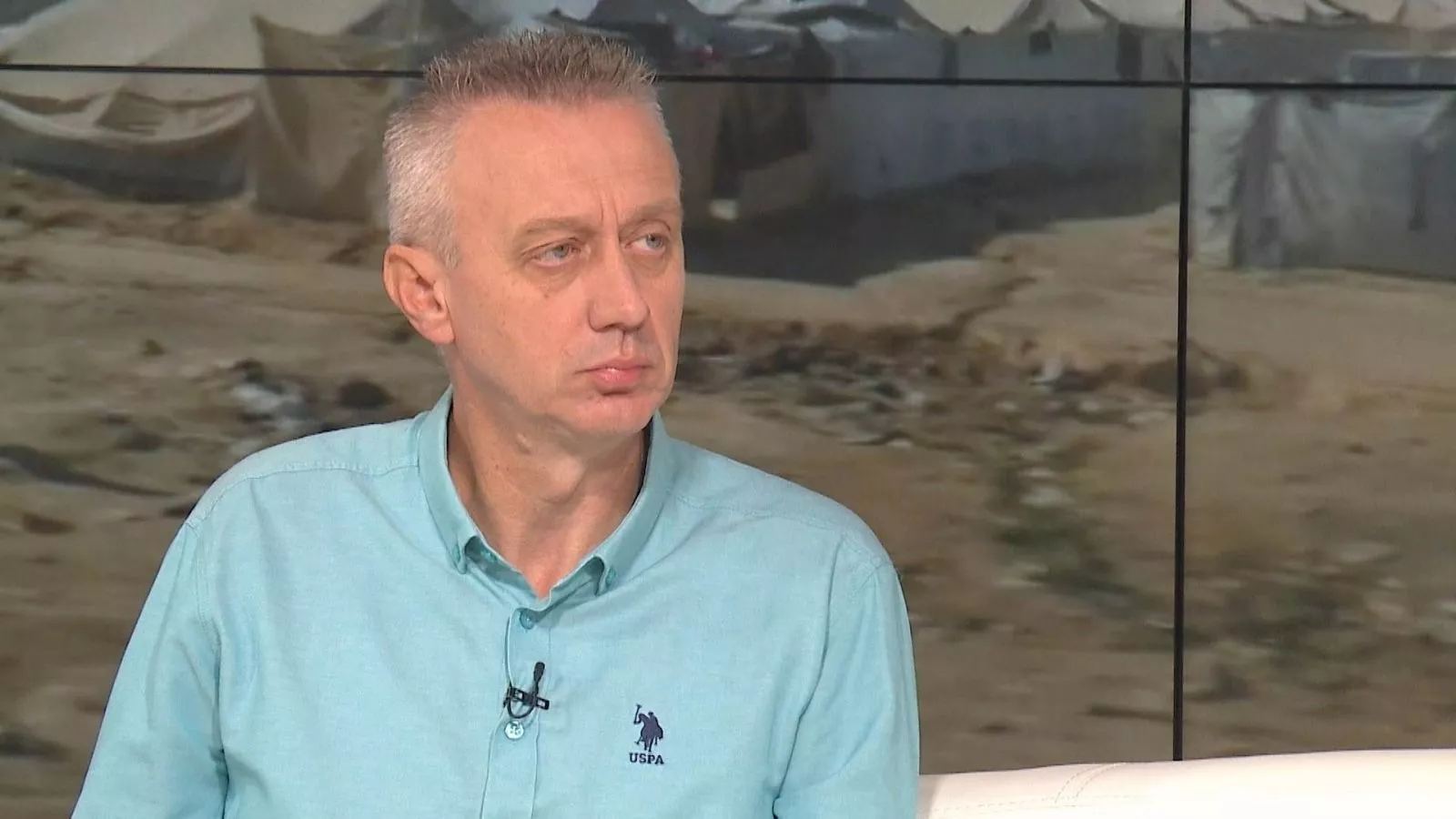
Amir Sužanj is a long-time journalist and editor at BH Radio 1.
Komentari (0)
Prijavite se za komentiranje
PrijavaJos nema komentara. Budite prvi!
Minuta
Sve →Iz drugih kategorija

High Representative Not Elected: Germans, French and British Sabotaged Americans, New Attempt at End of June

ČOVIĆ WITHOUT MERCY: How Those Who Brought Ademović to Office Created a Political Hell for Him



Sunny Saturday, quite warm



Tragedy in Albanian resort: Two minors drown












