
By: Amina Čorbo-Zećo
Bosnia and Herzegovina is definitively in a blockade when it comes to its path to the European Union. Only superficial observers of the political scene, or those gullible enough to believe in political marketing, can be surprised by this state of affairs.
Especially after the leaders of the Trojka (SDP, NiP, and Our Party) offered citizens a narrative about Milorad Dodik as a "new European politician," about the alleged breakdown of the SNSD–HDZ BiH alliance, and about the swift unlocking of the European path as an alleged reward for political concessions or, as they like to say, 'compromises'.
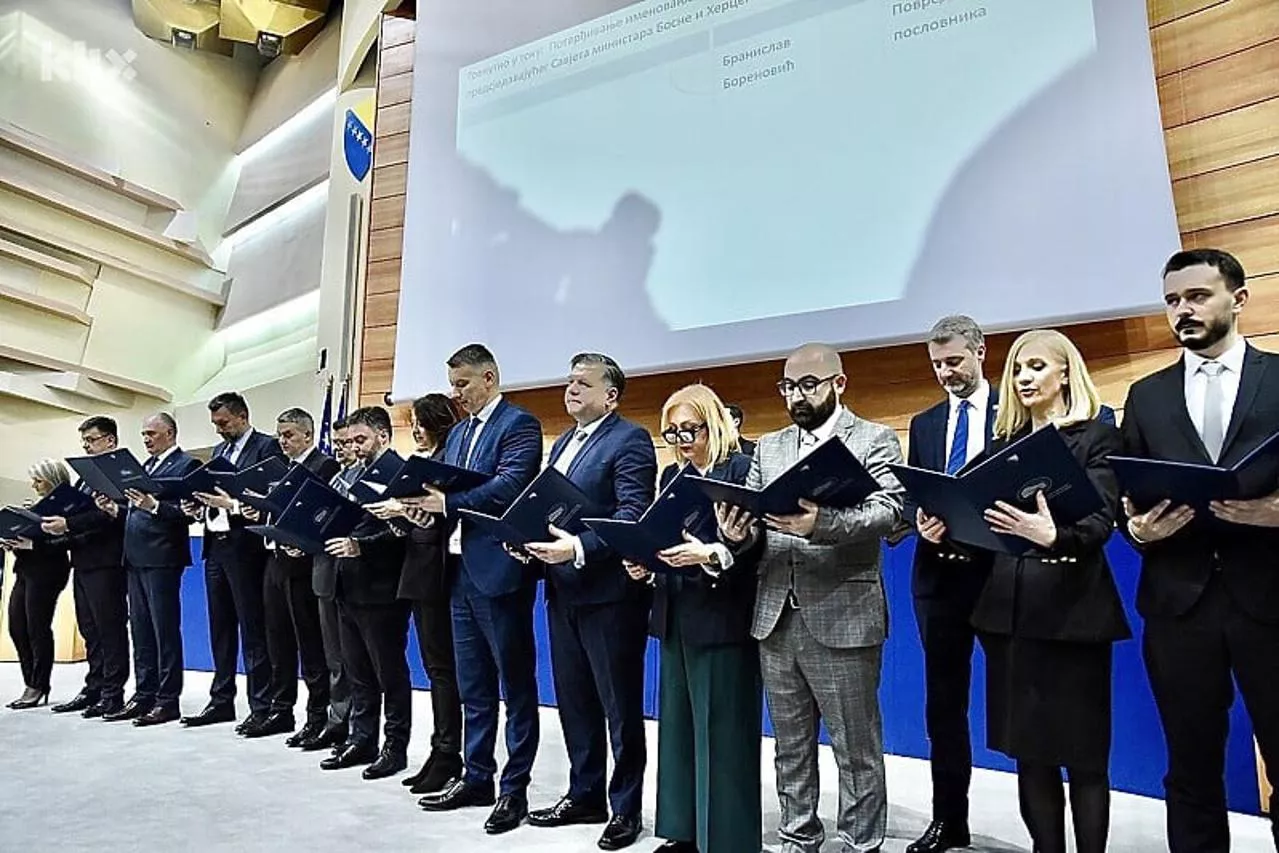
To understand today's complete institutional paralysis, it is necessary to go back to the very beginning of this political construct. It all started with the appointment of Borjana Krišto as Chairwoman of the Council of Ministers of BiH, without a work program, without clearly defined priorities, and without any serious discussion about the country's strategic goals.
As early as 2022, Denis Bećirović did not support Željko Komšić's request for Krišto to present her work program before the vote in the BiH Presidency, particularly in the segments of NATO integration and increasing the defense budget.
Instead of insisting on content, vision, and accountability, Bećirović, along with Željka Cvijanović, celebrated the appointment of Borjana Krišto as the "fastest formation of the Council of Ministers in history." Three years later, it has become evident that speed in politics, especially in a complex country like Bosnia and Herzegovina, is not a virtue, but a serious flaw. Speed has replaced competence, and political agreement has replaced accountability.
The hastily formed Council of Ministers resulted in the appointment of a series of incompetent individuals at the helm of key sectors, from finance, foreign affairs, and security, to transport and communications. Instead of people with experience, knowledge, and clear plans, we got ministers without the capacity to manage complex state processes, but with clear party assignments.
A particularly illustrative example is the complete failure of the Trojka and the opposition from Republika Srpska to appoint a Minister of Security of BiH – a sector of crucial importance for the stability of the country, the fight against crime, and security challenges. Instead of solutions, citizens have been offered fruitless explanations for months about the "lack of coalition agreement," while institutions remain blocked and accountability is diluted.
At the same time, arrests and resignations, such as the case of Nenad Nešić, further expose the way state institutions are run – not according to principles of professionalism and legality, but according to daily political interests and inter-party calculations. Because, if they had been serious, Nenad Nešić would never have been appointed to head the Ministry of Security. But our system does not react preventively, but only when the political balance allows it.
The failure is not limited to one sector. Inadequate budget planning, delays in reform laws, the absence of serious progress in NATO and EU integrations, as well as the constant disregard for key European obligations, show that incompetence is not an incident, but a rule.
The Council of Ministers is completely incapable of sending reform laws to the BiH Parliament, so parliamentarians themselves come to their aid, offering to pass laws through Parliament according to their proposals, not those of the Council of Ministers.
This is a systemic problem in which positions have become spoils of political agreements, rather than tools for governing the country.
The appointed personnel often lack both the experience and knowledge to lead complex processes, resulting in legal loopholes, administrative paralysis, and a complete stagnation of reforms that directly affect citizens' lives. The European path has been reduced to a phrase, while nothing substantial is moving forward.
Borjana Krišto, a long-time member of HDZ BiH and Dragan Čović's political right hand, has clearly shown through her mandate that party interests take absolute priority over the interests of the state and citizens. Instead of leadership, we are witnessing balancing within the coalition and the preservation of political positions, while Bosnia and Herzegovina sinks into ever-deeper institutional and political paralysis.
Three years later, there is no longer any doubt: the "fast formation" of the Council of Ministers has not brought stability, but has exposed the deep incompetence of the government that blocks reforms, halts the European path, and deprives the citizens of Bosnia and Herzegovina of any real prospects.
Komentari (0)
Prijavite se za komentiranje
PrijavaJos nema komentara. Budite prvi!
Minuta
Sve →Iz drugih kategorija

High Representative Not Elected: Germans, French and British Against Americans, New Attempt at End of June

ČOVIĆ WITHOUT MERCY: How Those Who Brought Ademović to Office Created a Political Hell for Him



Sunny Saturday, quite warm



Tragedy in Albanian resort: Two minors drown












