
Written by: Amra Vrabac
For about ten years now, there has been intense discussion about a set of fiscal laws, reducing the tax rate on wages and income, but even with the arrival of the new FBiH Government, nothing has changed.
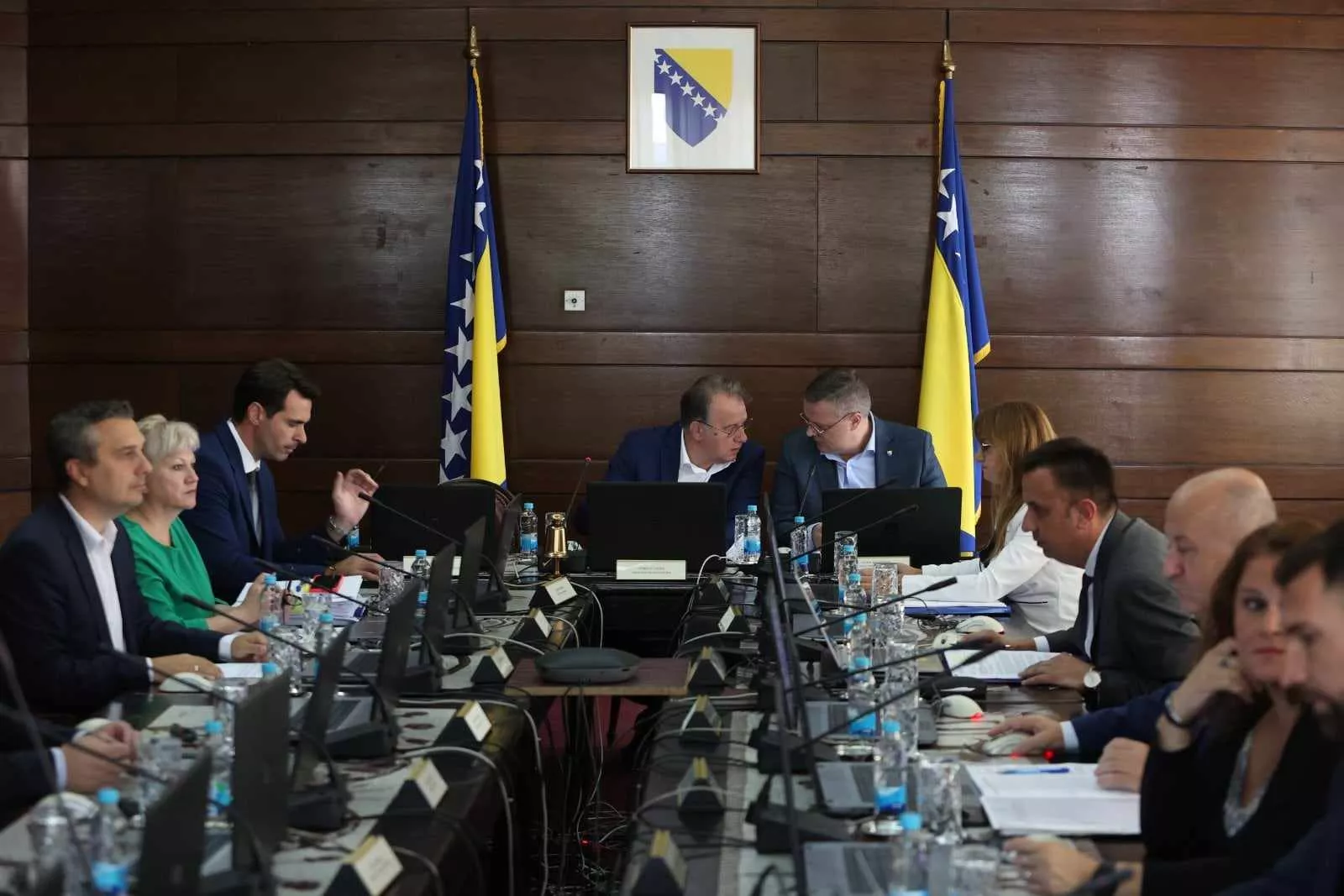
Federal Prime Minister Nermin Nikšić announced that a set of fiscal laws would be in the parliamentary procedure by the end of July, but July has passed and those laws are not there.
What the FBiH Government fears, and what Nikšić has also mentioned on several occasions, is that reducing these rates would decrease the inflow of money into the budget. That is true on one hand, but on the other, it would open up space for increasing workers' wages, who should be a priority in this whole story, because it would reduce the tax burden on employers, consequently increasing consumption itself, as well as VAT revenues paid to the entities. For months, the Indirect Taxation Authority of BiH has been informing the public that record revenues from indirect taxes have been collected. In July alone, 1.7 billion KM was collected.
For the seven months of 2024, the Federation of BiH was allocated 2 billion and 894 million KM, which is less than half of the FBiH budget, which for 2024 amounts to 7.5 billion KM. The BiH entity of Republika Srpska received 1 billion and 621 million KM in the same period, and the Brčko District received 162.5 million KM.
When, a few years ago, the hot meal allowance exceeding 8 KM was taxed, not all employers were ready to compensate workers for that loss. The hot meal allowance was reduced to avoid paying additional tax, while, for example, they did not raise the salary base. Some employers found ways to give workers a certain part "in an envelope" to avoid additional taxes.
To buy "apparent social peace," Nikšić's Government issued a non-binding decree on employer assistance at the end of 2023, allowing each employer to pay workers 2,520 KM tax-free until June 30, 2024. Naturally, the public administration paid out the most money, and the FBiH Government itself paid 1,360 KM to employees on December 29.
When this decree expired, about whose effects there are no exact data because it was not binding nor were employers obliged to notify the FBiH Tax Administration about these payments, the FBiH Government soon issued a new decree at the request of employers.
In the same period, the FBiH Government did not adopt the Draft Law on a minimum wage of 1,000 KM, but instead, with the new decree, allowed employers to pay assistance in the amount of 2,768 KM, but this time with the obligation to report it to the FBiH Tax Administration. The decree is valid until December 31, 2024.
The FBiH Government tried to present this decree as an "increase in the minimum wage" by adding the amount of the minimum wage, which in FBiH is 619 KM, set by the FBiH Government at the end of 2023, raising it by only 23 KM at a time when prices are soaring, groceries and utility costs are rising, and the amount of assistance under the decree divided into six equal installments, which is how Nikšić and the Federal Minister of Crafts, Vojin Mijatović, arrived at the amount of 1,039 KM. However, to this day, there is no data on how many workers were lucky enough to receive this money from their employer.
Nor will the new decree, with which Nikšić's Government is buying time, bring any benefits to the majority of workers.
Employers who have to watch every convertible mark will rather use that money to pay the next regular monthly salary than to find themselves in a situation where, due to paying assistance to workers, they are already panicking the next month. Especially since the decree specifies that each worker must be paid the same individual amount, regardless of how long they previously worked for the employer.
Federal representative Admir Čavalić initiated that these payment data be recorded in the Tax Administration to know the real effect of this decree and how strong employers are in deeds versus words.
Čavalić also pointed out that a break in the session of the FBiH Parliament follows, and then the election campaign, so it is certain that neither these crucial laws nor others will be passed before late autumn.
However, many citizens will face late autumn with smaller budgets due to increases in electricity prices, equipping students for school, and the rise in other living costs. But this government is apparently not too interested in that.
Komentari (0)
Prijavite se za komentiranje
PrijavaJos nema komentara. Budite prvi!
Minuta
Sve →Iz drugih kategorija

High Representative Not Elected: Germans, French and British Against Americans, New Attempt at End of June

ČOVIĆ WITHOUT MERCY: How Those Who Brought Ademović to Office Created a Political Hell for Him



Sunny Saturday, quite warm



Tragedy in Albanian resort: Two minors drown












