
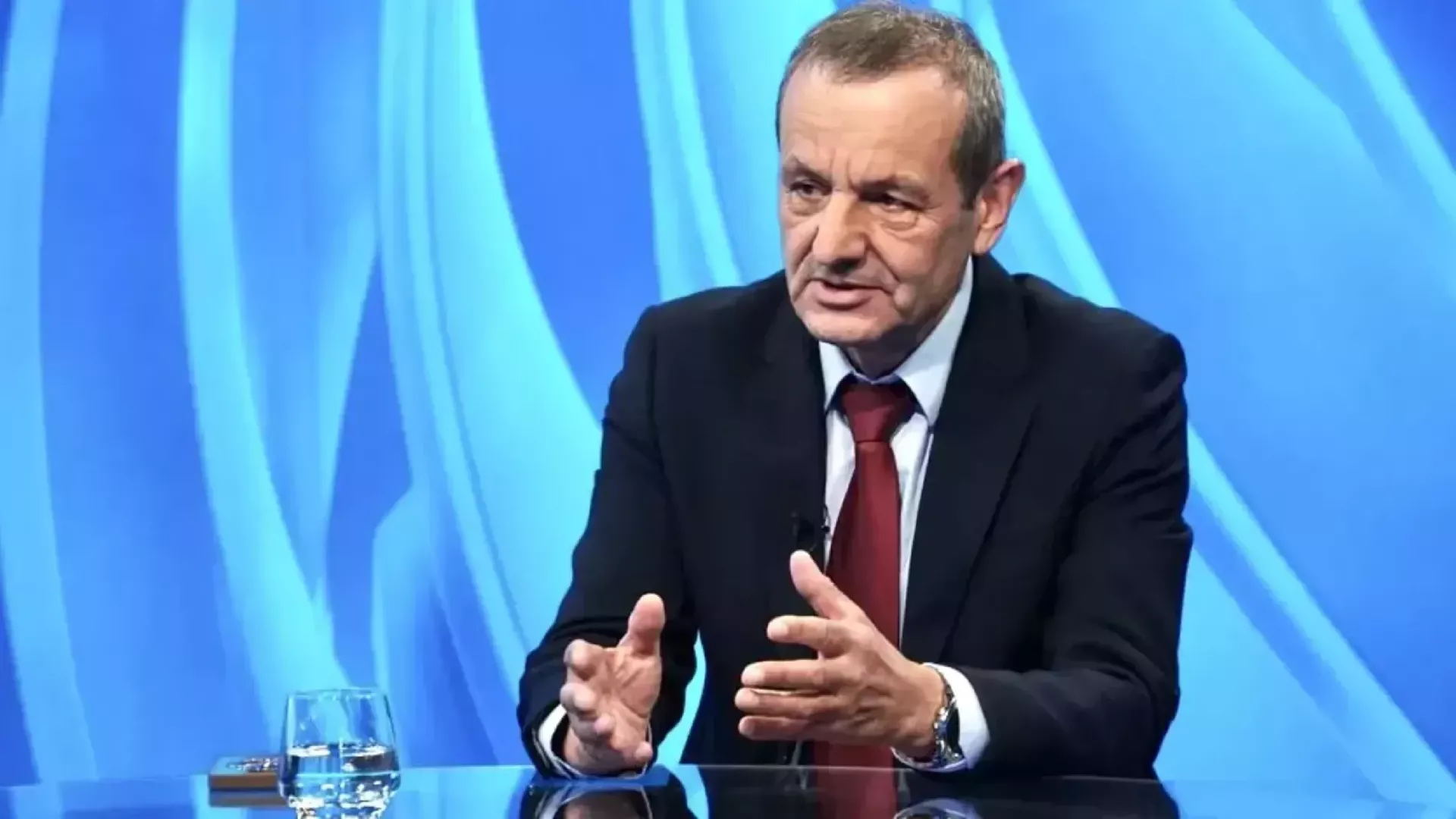
Written for NAP by: Prof. Dr. Hazim Bašić, member of the Presidency of Krug 99
The Paradox of Stability and Dysfunctionality
Speaking in Dayton on the occasion of the 30th anniversary of the signing of the peace agreement, High Representative Christian Schmidt precisely reflects international policy towards Bosnia and Herzegovina: much talk about stability, and little about justice and democracy. It has been confirmed once again that instead of a real transformation towards a civic, democratic state, BiH is kept in the status of a frozen ethnic construct from 1995. He defends the existing ethnic architecture, without its real functionality, and rejects the possibility of a civic state as "unrealistic". However, Schmidt is not alone in this stance. His speech fits into a broader matrix of political pressure from neighboring countries - Serbia and Croatia, which have been working for years to prevent Bosnia and Herzegovina from outgrowing the Dayton framework.
Schmidt calls the Dayton Peace Agreement "unique" and a "living document" that brought peace, but also "functional democracy". This is a questionable claim. Dayton did bring an end to the war, but its constitutional structure institutionalized the ethnic principle, disenfranchised all citizens, including the so-called 'constituent' ones. The fabricated term "functional democracy" is a rhetorical construct that ignores the judgments of the European Court of Human Rights (ECtHR) and the continuous blockade of institutions.
Maintaining the Dayton Framework Instead of the Path to a Civic State
In one part of his speech, Schmidt states: "If we do not look at the multi-ethnic structure of Bosnia and Herzegovina and expect it to be a civic state, we will not be successful in the long term."
This sentence reveals the fundamental problem. Instead of encouraging the evolution of the BiH Constitution from a peace document into a modern constitution with equal legal protection for all citizens, Schmidt clearly considers a civic state a threat to stability, not its goal. This is not just political opportunism but also a betrayal of the values on which modern European democracies are based. With this stance, as well as his actions, he shows not only a lack of will to encourage the transformation of the system but also a clear opposition to the civic model of the state.
His stance echoes a narrative that suits Zagreb and Belgrade, regimes that want to keep Bosnia and Herzegovina as a permanently open question, a state whose sovereignty is easily undermined precisely because of its internal constitutional design. A civic state would mean the end of the mentoring, paternalistic, and hegemonic relationship that Serbia and Croatia practice towards the entities and peoples in BiH, and finally closing the chapter of the war logic from the nineties.
Zagreb's offensive towards Brussels and Washington has boiled down to one thing for years: redefining the Election Law in BiH so that so-called "legitimate representation" becomes a legal norm. Croatia insists on a model that ensures HDZ BiH eternal power through an ethnically exclusive framework. This policy is contrary to the ECtHR judgments, but also to European standards themselves.
Schmidt's statement should be read in this light: "The election of the Croatian member of the Presidency is part of that problem..." But what exactly does "problem" mean? By uncritically accepting and using the fabricated term of the so-called 'Croatian issue', the High Representative is serving the interests of HDZ BiH. The problem is that one member of the BiH Presidency is not from HDZ. Schmidt thus accepts the logic whereby one political entity has a monopoly over an entire people. The democratic logic, that you elect political representatives as a citizen, not as a member of a collective, is disqualified here as dangerous and "unrealistic".
On the other hand, the regime in Serbia uses Republika Srpska as an instrument of geopolitical influence, and regularly dictates policies to M. Dodik that dismantle the state of Bosnia and Herzegovina. In this context, Schmidt's sentence: "Some irresponsible people from one of the two entities, but by no means the entire entity..." obscures the current threats to stability. By this, the High Representative downplays the systemic nature of political separatism in Republika Srpska, which is not an incident but a strategic direction, managed from Belgrade and Moscow. And even more dangerously, he labels this system as "democratic pluralism". This is the normalization of destruction and the relativization of responsibility.
Schmidt's Passivity as Policy
In his speech, Schmidt said: "I am working to be the last High Representative" (which is also the wish of all citizens of Bosnia and Herzegovina, as it would mean that the Dayton order has undergone a transformation into a state of law). However, if the condition for closing the OHR office, known as '5+2', is not mentioned, this sentence is the most dangerous part of the speech. The withdrawal of the international community from BiH at a time when its constitutional order is most denied means leaving the country to forces that have already proven ready for destruction. If the last High Representative leaves BiH without the implementation of ECtHR judgments, without unblocking institutions, without protecting state mechanisms from entity destruction, then it will not be the end of the mission, but its defeat.
Schmidt has the mandate to protect the BiH Constitution and the rule of law. He himself admitted this: "You must respect what is written in the original agreement, including the Constitutional Court of BiH, but also the High Representative and his powers." However, what he emphasizes in theory, he does not defend in practice with his indecisiveness. His work does not discourage attacks on the state, but relativizes them, as when he says that BiH has made "progress in democracy" because, well, there are different opinions within Republika Srpska.
C. Schmidt's speech in Dayton does not offer a real vision for the transformation of Bosnia and Herzegovina into a functional, civic state ready for EU integration. Instead, it confirms the status quo, sending no messages of hope and equality to the citizens. The claim that civic equality can threaten stability is a deeply inaccurate and counterproductive message for a country that desires a European future.
Why did Schmidt not present a vision of how BiH can evolve into a state of all its citizens, as required by Article II of the Constitution of Bosnia and Herzegovina, which places the Human Rights Convention above all other rights? Schmidt, consciously or unconsciously, acts as an intermediary for the policies of Belgrade and Zagreb. Is his rejection of the civic model an administrative error or a strategic positioning? A civic state is not a utopia but a European standard. Those who do not understand this cannot be allies of BiH on its European path. Bosnia and Herzegovina cannot join the EU as a tribal alliance; it is not ethnic groups that join the Union, but a state and its citizens as a whole. Those who want to prevent Bosnia and Herzegovina from becoming a civic state are not working for peace in the long run.
Komentari (0)
Prijavite se za komentiranje
PrijavaJos nema komentara. Budite prvi!
Minuta
Sve →Iz drugih kategorija

High Representative Not Elected: Germans, French and British Against Americans, New Attempt at End of June

ČOVIĆ WITHOUT MERCY: How Those Who Brought Ademović to Office Created a Political Hell for Him



Sunny Saturday, quite warm



Tragedy in Albanian resort: Two minors drown












