
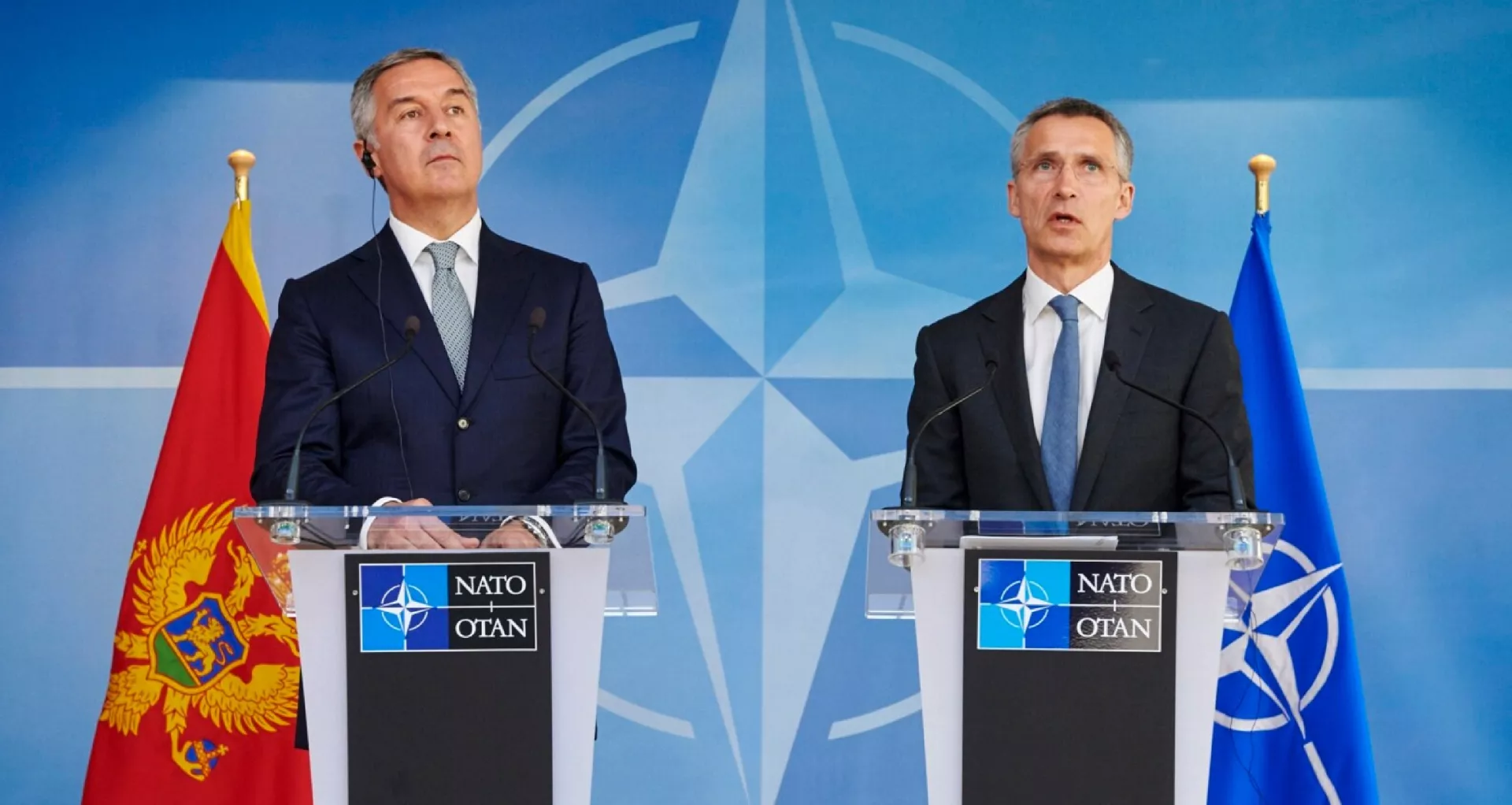
(Patria) - Preparation of an initiative to nominate Milo Đukanović for Deputy Secretary General of NATO is underway, backed so far by nine Alliance members, including Turkey.
This was reported by the influential Turkish portal "Firtina Haber", citing high diplomatic sources from several NATO members.
The Turkish media writes that the political assessment in these nine NATO members is that a candidate from Eastern Europe has a strong chance of becoming Deputy Secretary General of NATO, as the top position in the Alliance will again be assigned to the "old" Alliance members.
"We have seen an informal draft being worked on by diplomats from nine NATO members who intend to nominate Đukanović for a high position in NATO, and the justification for his selection is quite detailed," writes "Firtina Haber".
The reporting of the Turkish media was carried in full by Podgorica-based Antena M:
"The election season across Europe has, for now, overshadowed an electoral process that is no less significant than national elections or elections for the European Parliament. A complex process of nominations, lobbying, bargaining, and concessions within NATO regarding the selection of a new Secretary General is underway.
This process is slowly entering its final phase, as in just over three months, on October 1, the mandate of the current Secretary General Jens Stoltenberg, which has already been extended once exceptionally, expires.
The upcoming NATO summit in Washington in July should be the venue where coordination among NATO members on the new Secretary General will be more or less concluded.
It is almost certain that the former liberal Prime Minister of the Netherlands, Mark Rutte, is on track to become the Alliance's Secretary General. So far, 29 out of 32 members support Rutte's candidacy, certainly including the most important voice from the US.
Nevertheless, Romanian President Klaus Iohannis remains in the race, at least formally, although without particular prospects of success. His candidacy has more symbolic significance, as a voice of Eastern European NATO members demanding to finally be accepted as equals with influence compared to the 'old' members from Western Europe.
It is unlikely that this electoral cycle will satisfy the ambitions of Eastern Europeans to have their representative in the highest civilian position in the Alliance, but there remains room for them to be compensated with a lower, yet still quite influential, position in the Alliance instead of the number one role.
Given that there is almost no uncertainty regarding the selection of the Secretary General and that the path to the top NATO position is already paved for Mark Rutte, the race for the positions of his closest associates, as well as other high-ranking posts in the new leadership team, becomes much more interesting.
One name has recently emerged as a solid aspirant for the position of Deputy Secretary General, a role held for the past five years by former Romanian diplomat Mircea Geoană.
It is about the former President of Montenegro, Milo Đukanović, the long-time leader of this Balkan country, and the man who played a crucial role in Montenegro's process of joining NATO until its full membership in 2017.
As we have learned from high diplomatic sources from several NATO members, preparation of an initiative to nominate Đukanović for Deputy Secretary General is underway, backed so far by nine Alliance members. Among them is Turkey.
The assessment in these nine NATO members is that a candidate from Eastern Europe has a strong chance of becoming Deputy Secretary General, given that the Secretary General will again come from the ranks of the 'old' Alliance members.
Second, NATO leaders want to maintain the influence of the Eastern European bloc within NATO due to strategic plans to strengthen the eastern flank, as protection of the Alliance from aggressive Russian behavior.
But why did the choice for such a high position in NATO fall precisely on the long-time leader of Montenegro?
We have seen an informal draft being worked on by diplomats from nine NATO members who intend to nominate Đukanović for a high position in NATO, and the justification for his selection is quite detailed.
It highlights Đukanović's leadership in Montenegro's democratic transition towards NATO and EU membership, along with building a tolerant multi-ethnic society.
'Under Đukanović's leadership, Montenegro was not only the only country of the former Yugoslavia that managed to gain independence without military conflict, but it immediately became the most positive regional example of harmonious internal relations and the spread of tolerance and reconciliation in the post-conflict Balkans,' writes, among other things, in the justification for the possible nomination of Đukanović.
As benefits for the Alliance from his election as Deputy Secretary General, about ten specific points are listed, including a very important message that NATO would send by electing Đukanović: that it does not cede the influence of Russia over its member state, which is both a symbol and key to preserving security in the post-conflict Balkans.
Also, the election of the Montenegrin leader is justified by the fact that NATO would pay tribute to 'the sacrifice and determination to take risks in order for someone to become a NATO member and share its values.'
In this context, it is noted that Montenegro and Đukanović, during the period of NATO accession, were subjected to very strong pressure from Russia to abandon that path, culminating in 2016 when extremists under Russian influence attempted an armed coup in Montenegro, arresting and liquidating its pro-NATO leaders, including Đukanović himself.
The fact that Montenegro is relatively small and certainly one of the youngest NATO members is not seen as a handicap in this initiative, but quite the opposite, as a quality of Đukanović's candidacy.
It would be a decision, states the draft supporting Đukanović's candidacy, 'by which NATO demonstrates that it is open to further enlargement, towards all countries that share its values.'
Regardless of the fact that the process of coordination on top positions in NATO is quite complex and uncertain until the very end, the preparation for nominating Đukanović for the second highest civilian position in the Alliance seems well-founded and timely.
If it gains support from additional members beyond the current nine, it will have a chance to be treated very seriously in the coming months during the refinement of decisions on top personnel solutions, especially at the jubilee NATO summit in Washington next month."
Komentari (0)
Prijavite se za komentiranje
PrijavaJos nema komentara. Budite prvi!
Minuta
Sve →Iz drugih kategorija

High Representative Not Elected: Germans, French and British Against Americans, New Attempt at End of June

ČOVIĆ WITHOUT MERCY: How Those Who Brought Ademović to Office Created a Political Hell for Him



Sunny Saturday, quite warm



Tragedy in Albanian resort: Two minors drown












