
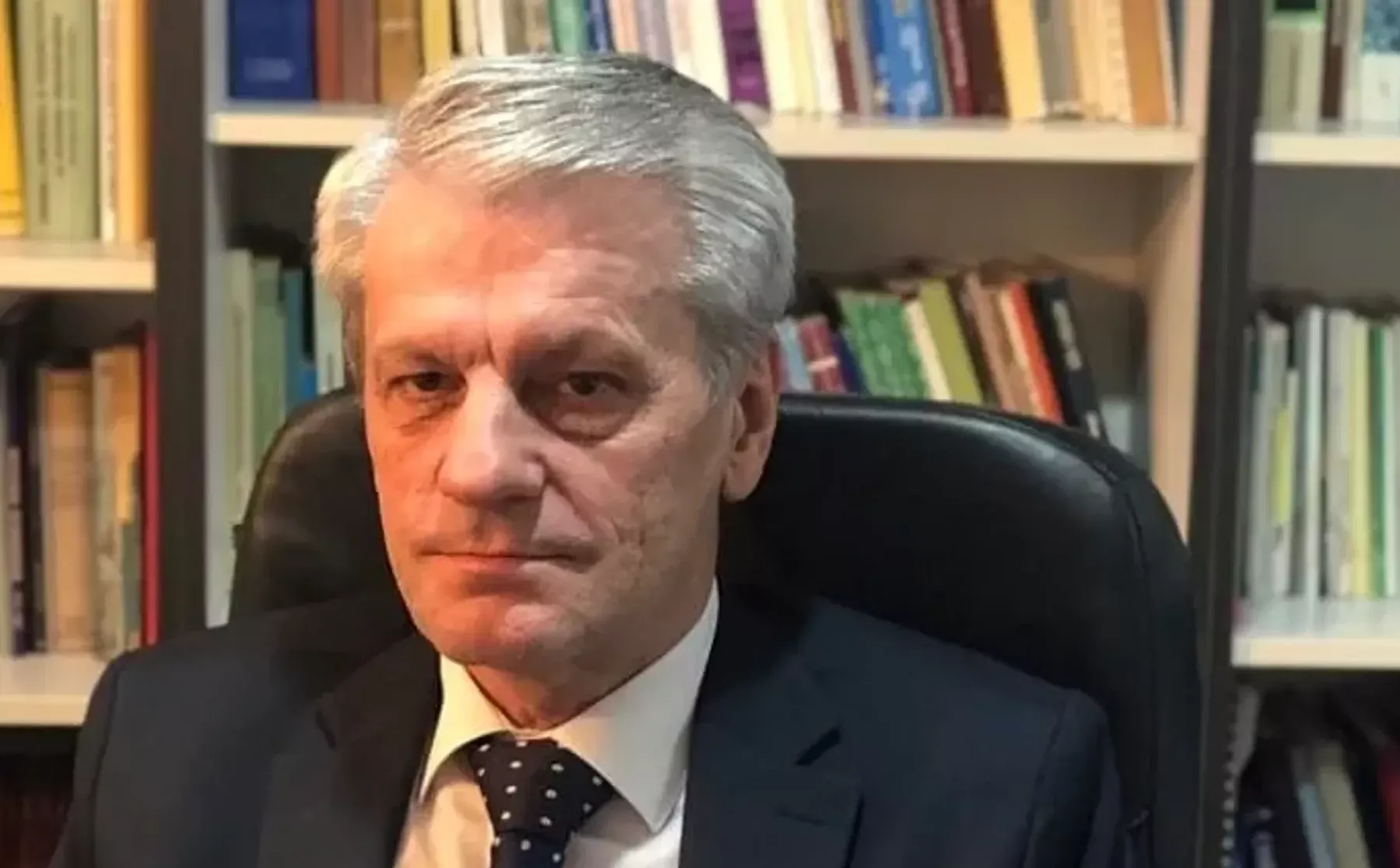
By Dr. sc. Enver Išerić
Taking hostages is one of the methods used by terrorist organizations, which use violence and the threat of violence to intimidate authorities and society in order to achieve certain goals (political, religious, or ideological). Bosnia and Herzegovina managed to defend itself against far more powerful attackers who committed aggression with the intention of dividing its territory, and reducing the most numerous nation, Bosniaks, to a manageable level for them through killing and displacement.
This was done through the organized and systematic actions of state structures, supported by certain forces from Bosnia and Herzegovina, and in the process, war crimes, crimes against humanity, and genocide were committed.
After almost four years of war, it became clear that these goals could hardly be achieved, so through the mediation of the international community, the Dayton Peace Agreement was concluded between Serbia, Croatia, and Bosnia and Herzegovina. By this agreement, the signatories committed to recognizing each other as independent and sovereign states. This agreement stopped the killing and destruction and was received with enthusiasm by the citizens of Bosnia and Herzegovina. Its integral part is also the Constitution of Bosnia and Herzegovina, which regulates the organization and functioning of its bodies.
It is precisely this part of the Dayton Peace Agreement that those who attacked Bosnia and Herzegovina use as leverage or mechanisms to hold the entire Bosnia and Herzegovina, or its citizens, hostage.
This hostage crisis in which we find ourselves as a society has been ongoing for 29 years, and we can freely consider it one of the largest and longest hostage crises in human history. Political organizations represented in the state bodies of Bosnia and Herzegovina not only use blockade mechanisms but also act completely illegally and unconstitutionally, continuously threatening the very existence of the state and intimidating citizens, thereby pressuring their coalition partners in government, as well as the international community, to achieve their earlier war objectives.
The international community has, all along, considered it acceptable to meet the demands of the "kidnappers" who hold the state and its citizens hostage, in order to end the "hostage crisis" and allow society to finally move forward. This would practically mean building a functional state in which all citizens are treated equally and in which laws are neither for nor against certain citizens, as well as a functional and impartial judiciary.
However, those who terrorize citizens and hold the entire state hostage have always, after all or part of their demands were met, presented new and more dangerous demands for the state of Bosnia and Herzegovina.
Domestic political forces advocating for the preservation of the integrity and sovereignty of Bosnia and Herzegovina resisted these demands and tried to provide food, air, and water to the hostages, meaning they tried to ensure the functioning of institutions to some extent. However, with the establishment of government after the 2022 elections, SNSD and HDZ, as parties that saw an excellent opportunity to realize their "age-old aspirations," presented demands to the "troika," i.e., their coalition partners, for the realization of their demands, all under the guise of fulfilling the 14 priorities for Bosnia and Herzegovina's accession to the European Union.
This concerns the so-called legitimate representation in the election of the Presidency members of Bosnia and Herzegovina, state property that should be taken from the state and given to the entities, foreign judges in the Constitutional Court who should be replaced by domestic ones with the introduction of an ethnic voting mechanism in the Constitutional Court, and the further division of energy resources on an entity or ethnic basis.
And all these demands would be met to "release the hostages," but in reality, their very survival would then be threatened. However, representatives of the international community, whose eyes are not blinded by power, functions, and positions, saw what was happening and stopped it. As the media informs us, the "kidnappers" and their helpers are not giving up, but are continuing to work towards realizing their goals.
The best example of this is the effort of the Government of the Federation of Bosnia and Herzegovina to establish a branch of BH-Gas in Mostar through amendments to its Statute, and this branch would implement the "South Interconnection" gas project. This is nothing more than fulfilling Dragan Čović's conditions for establishing a company that only Croats will manage. Why is the constitutional principle of proportional representation not respected in companies owned by the Federation, of which there are many, in the structure of employees, as well as in management structures, which would show that these companies are not just Bosniak, or Croatian, or Serbian. We all know the answer, and those who manage these companies and cause them huge losses know it best.
The international community, aware of all the above, has begun to tighten the noose around the kidnappers, but they ("kidnappers") continue to threaten. And they should not be underestimated. They are most dangerous when they are in a tight spot and are ready for anything.
Thus, after the Chairman of the Presidency of Bosnia and Herzegovina, Denis Bećirović, called on NATO to grant Bosnia and Herzegovina candidate status in that organization, he was met with a barrage of insults, claiming he was acting illegally and that Republika Srpska did not consent to membership.
They, the officials of Republika Srpska, are trying to impose a false claim on us that entities should have a say in this. Entities have nothing to do with it. On the contrary, all bodies of Bosnia and Herzegovina (Parliamentary Assembly, Council of Ministers, and Presidency) are obliged by the Law on Defense to work on fulfilling the conditions for Bosnia and Herzegovina's membership in NATO. No additional decisions from anyone are needed. It is simply a legal obligation.
And finally, with the adoption of the Resolution on the Genocide in Srebrenica by the United Nations General Assembly, opportunities will open up to end this unbearable hostage crisis for the citizens of Bosnia and Herzegovina. Until then, political forces that care about preserving the state must consolidate their ranks, achieve the necessary degree of unity and consensus on the most important issues, and establish red lines that no one will be allowed to cross.
Komentari (0)
Prijavite se za komentiranje
PrijavaJos nema komentara. Budite prvi!
Minuta
Sve →Iz drugih kategorija

High Representative Not Elected: Germans, French and British Against Americans, New Attempt at End of June

ČOVIĆ WITHOUT MERCY: How Those Who Brought Ademović to Office Created a Political Hell for Him



Sunny Saturday, quite warm



Tragedy in Albanian resort: Two minors drown












