
(Patria) - Just over 2.883 million voters in Croatia are deciding today in the second round of local elections who will lead Zagreb, Split, and Rijeka for the next four years - the current mayors or their challengers.
In addition to them, citizens are also deciding on the names of 12 prefects, 44 mayors, and 62 municipal heads.
In the three largest cities, incumbents Tomislav Tomašević (Možemo, SDP), Ivica Puljak (Centar), and Marko Filipović (independent) are "defending" their positions, while Marija Selak Raspudić, Tomislav Šuta (HDZ), and Iva Rinčić (AM coalition) want to take their places.
Mayors are also being elected in the second round in Pula, Dubrovnik, Šibenik, Karlovac, and Sinj, where voters will also decide whether their cities will be led for the next four years by current mayors Filip Zoričić (independent), Mato Franković (HDZ), Željko Burić (HDZ), Damir Mandić (HDZ), and Miro Bulj (Most) or their competitors Peđa Grbin (SDP), Anita Bonačić Obradović (SDP), Tonči Restović (SDP), Draženka Polović (Možemo), and Igor Vidalina (HDZ).
The outcome of the elections for mayors of Zadar and Vukovar is also eagerly awaited, where HDZ's Šime Erlić and SDP's Daniel Radeta will face each other in the second round, and Domagoj Bilić (DP, HDZ) and Suverenist Marijan Pavliček respectively.
It will also be tense in 12 counties, where some prefect candidates narrowly missed victory in the first round.
In Varaždin County, the current prefect, HDZ's Anđelko Stričak, and SDP's Bruno Ister will compete, in Zagreb County, current prefect Stjepan Kožić (SKNL coalition) and Mihael Zmajlović (SDP), and in Koprivnica-Križevci County, current prefect Darko Koren (HDZ) and Tomislav Golubić (SDP).
For the position of prefect in Brod-Posavina County, current prefect Danijel Marušić (HDZ) and Marko Lipovac (Duspara Mirko NL) are competing, and in Vukovar-Srijem County, Ivan Bosančić (HDZ) and Nikola Kajkić (Most/DOMiNO).
Sunday will also provide an answer as to whether Sanja Radolović (SDP) or current prefect Boris Miletić (independent) will head Istria County, whether Ivica Lukanović (SDP) or Alen Ružić (HDZ) will lead Primorje-Gorski Kotar, and whether current prefect Ernest Petry (HDZ) or Danije Tušak (LiPO) will lead Lika-Senj County.
In Zadar County, Josip Bilaver (HDZ) and Jure Zubčić (SDP) will face each other in the second round, in Šibenik-Knin County, Paško Rakić (HDZ) and Petar Baranović (SDP), in Split-Dalmatia County, current prefect Blaženko Boban (HDZ) and Ivana Ninčević-Lesandrić (Centar), and in Dubrovnik-Neretva County, HDZ's Blaž Pezo and Most's Božo Petrov.
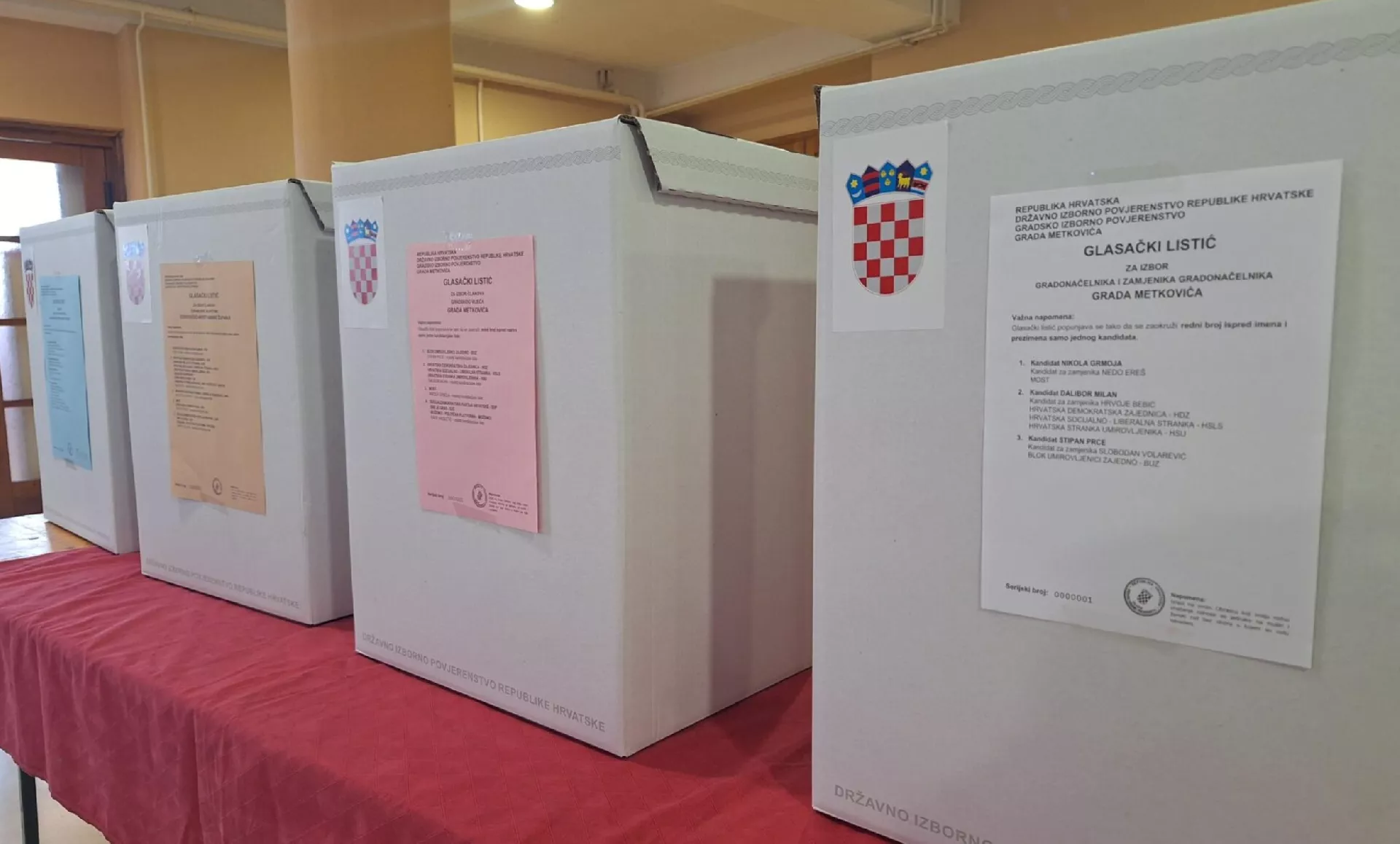
Voters who decide to come to the polling stations today will find a smaller number of ballots than two weeks ago, when both the executive and representative local authorities were elected simultaneously.
The ballot they receive will contain the names of only two candidates, and they will be arranged according to the number of votes they received in the first round - the rule of alphabetical order no longer applies in the second round.
As in the first round, the ballots for prefects and the mayor of Zagreb are blue, and white for mayors and municipal heads.
In the second round of elections for prefect, mayor, and municipal head, the candidate who receives a higher number of votes will win, and if both receive an equal number, for which there are examples, a third round of elections will be held.
In the 2021 elections, this is exactly what happened in the Zagorje municipality of Kraljevec na Sutli.
As in the first round, adult Croatian citizens residing in the municipality, city, or county for which the head, mayor, or prefect is being elected have the right to vote.
Voting can only be done at the place of residence, not in some other location, either in Croatia or abroad.
Given that the second round is being held at the end of a long weekend, it will be interesting to see if this further reduces the already low turnout in the local elections, where only 43.5 percent of voters participated in the first round.
The second round of elections is being held in 405 cities and municipalities, at 4,980 polling stations, which will be open today from 7:00 AM to 7:00 PM. Approximately 5,500 observers will monitor the elections.
Three million and 291,000 ballots have been printed for the second round, which is almost four times less compared to the first round.
When the polling stations close today, Croatia will conclude its fourth election in just over a year, and its voters will have a break for the next three years.
In April last year, they elected a new Croatian Parliament, in June members of the European Parliament, in January the President of the Republic, and in May new local authorities.
Komentari (0)
Prijavite se za komentiranje
PrijavaJos nema komentara. Budite prvi!
Minuta
Sve →Iz drugih kategorija

High Representative Not Elected: Germans, French and British Sabotaged Americans, New Attempt at End of June

ČOVIĆ WITHOUT MERCY: How Those Who Brought Ademović to Office Created a Political Hell for Him



Sunny Saturday, quite warm



Tragedy in Albanian resort: Two minors drown












