
By Armin Sijamić
How to solve the issue of Kosovo and how to achieve "normalization of relations" between Kosovo and Serbia are questions for numerous American administrations. Since the declaration of Kosovo's independence, George W. Bush, Barack Obama, Donald Trump, and Joseph Biden have resided in the White House, but "normalization of relations" has not occurred, even though political processes have been moving unstoppably towards Pristina's influence strengthening across Kosovo and Belgrade's weakening.
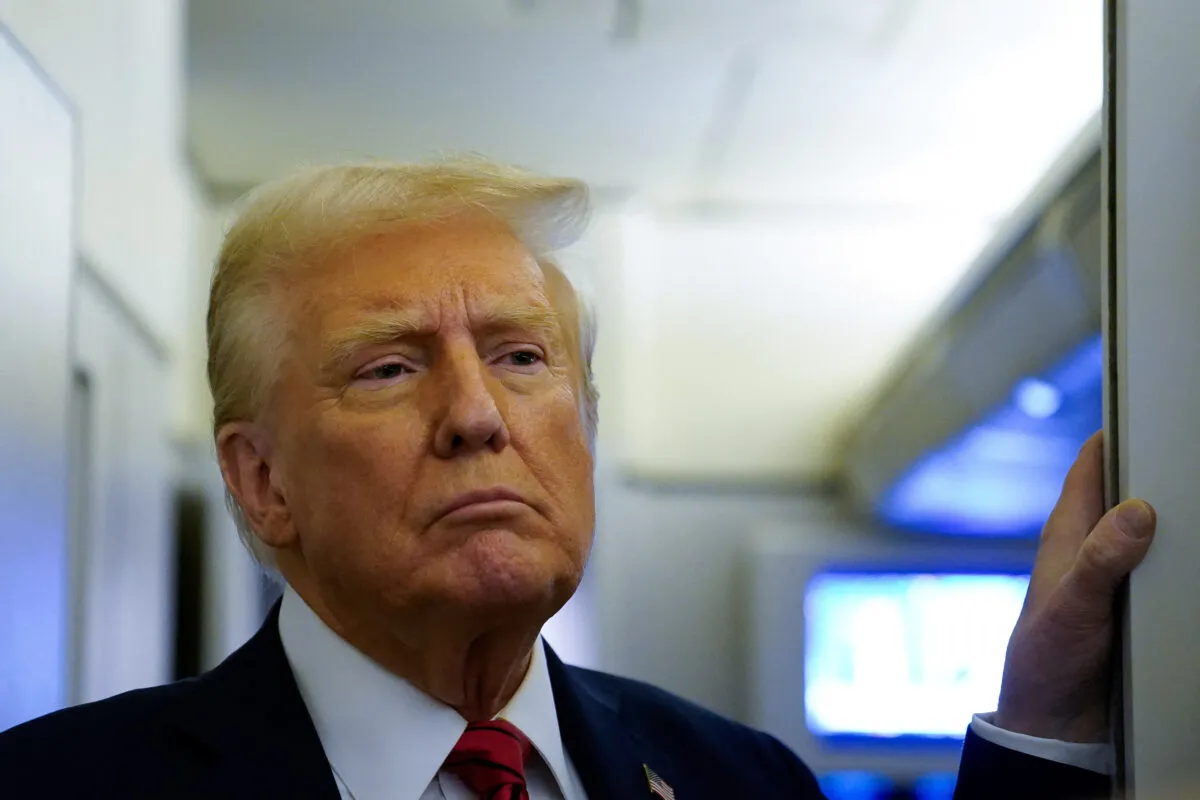
Richard Grenell, former special envoy of US President Donald Trump for negotiations between Belgrade and Pristina, is visiting Serbia and spoke to the state television there about how the former president wanted to end the Kosovo and regional conflicts, and how the current administration wants to do so. Grenell's media appearances almost always cause controversy, especially because he does not hide that he was, at least more openly than others, closer to Belgrade than to other Balkan addresses, which was difficult to turn into concrete political victories for Serbia, and due to the fact that this country is strongly looking towards Russia, even when it harms it.
In an interview with RTS, now as a person from the "private sector," he spoke about Trump's and Biden's approaches to Kosovo and Serbia. His appearance was reminiscent of a text by William Montgomery, former US ambassador to Serbia and Montenegro, who in 2004, six months after leaving his post in Belgrade, wrote an article titled "What to do with Kosovo," in which he concluded that the international community had applied "deep double standards" in Kosovo to the detriment of Serbs. Both of them, as individuals not part of the US administration, spoke "more freely" about Serbia and Kosovo. After his mandate expired, Montgomery continued his influence on Serbia's political life through "strange connections," as the Belgrade weekly "Vreme" once described it. Whether Grenell will build other strange connections with Belgrade remains to be seen, and until then, it is worth considering what he said in the aforementioned interview.
Mutual recognition does not put food on the table
Grenell's argumentation could be summarized in four main theses. The first is that Biden, unlike Trump, does not pay attention to the region and that his administration's words are not backed by actions. The second is that Albin Kurti represents an obstacle to any agreement. The third thesis is that the US has left Europe to handle the Western Balkans, and that this is a mistake. The fourth thesis he presented is that Washington has a completely wrong approach to solving the problem, first by insisting on mutual recognition, unlike Trump, who insisted on economic issues, and then because US policy towards Kosovo is now led by the State Department, not the White House.
He believes that the US president should get involved in the relations between Serbia and Kosovo, and that the starting point for such involvement must be foreign investment on both sides of the border. Thus, "mutual recognition" would wait for a better time because it "does not put food on the table for people trying to start a family," says Grenell. He believes that the failure of the US administration in Kosovo was contributed to by the decision to entrust the job to Europeans, and that the Franco-German proposal lacks details about the agreement. Europeans are managing the processes so poorly, says Grenell, that NATO had to intervene and prevent conflicts between Serbs and Albanians. Finally, Grenell targets Kurti as the main destructive element whom the West indulges, adding that the agreement on the Community of Serb Municipalities (CSM) is an old agreement and must be implemented.
The statement by the former Trump envoy seems carefully prepared, as many theses were presented in just about ten minutes of conversation at a very specific moment, and ultimately, the realization of these theses leads to Serbia gaining time and Kurti being put under pressure. Kurti refuses any "normalization of relations" unless there is mutual recognition between Kosovo and Serbia, and he refuses to implement the CSM agreement that Pristina signed earlier. Grenell's statement comes after Derek Chollet, who serves as an advisor in the State Department and does the job that Grenell previously did, also visited Belgrade.
Essentially, Aleksandar Vučić, who is trying to maintain ties with Russia despite warnings from the West, supports Grenell's proposals. On the other hand, Kurti is Vučić's worst opponent for several reasons, including the fact that he was a prisoner of the regime in which Vučić was a minister and an opposition figure who did not criticize Slobodan Milošević for wars and genocide, but for the defeat of Greater Serbian policy throughout the former Yugoslavia.
Future in Euro-Atlantic integration
Chollet's arrival in Belgrade was not treated with fanfare in most Serbian media, as is usually the case when someone with much less political weight visits the capital of Serbia, even though the local public knows the guest from his time as Richard Holbrooke's assistant. The reason is probably very simple – what Chollet said is not pleasant for the local public. The American diplomat has no doubt that Serbia and Kosovo have a "Euro-Atlantic future" in line with their "aspirations." In several statements made before and during his visit to the region, Chollet said that the US wants mutual recognition between Belgrade and Pristina, the establishment of the CSM, an end to Serbia's energy dependence on Russia, and the continuation of the Euro-Atlantic path for the countries of the region, in which, it seems, no one in the current US administration doubts.
The modalities for achieving this are diverse, but difficult to achieve, according to Serbian Foreign Minister Ivica Dačić. After talks with Chollet, Dačić said that Serbia is ready to distance itself from Russia and sign a strategic partnership agreement with the US, but on the condition that the West shows its intentions through concrete actions and that Serbia satisfies its interests. Otherwise, says Dačić, Serbia will not "let go of the hand" of Russia, which is the only one keeping it "above the abyss." Thus, Belgrade will continue to sit on two chairs for as long as possible.
Chollet believes that this is the right moment for Serbia to decide to cooperate with the West, given that a war waged by Russia is raging near the Balkans. He believes that the current moment should be used to resolve the issue of Kosovo and reach a sustainable agreement. The unity of the West is what scares Belgrade the most, because the cordon around Serbia, made up of NATO and EU members, can only be used if there is unity. Grenell's and Chollet's statements precisely reflect this dilemma, and official Belgrade skillfully uses it, even if it does not publicly state it.
In any case, the issue of Kosovo will not be resolved anytime soon; Belgrade will not get Kosovo, and Pristina will not join the UN. Therefore, in recent months, various ideas have been released to the public, such as Kosovo's membership in NATO or the EU, without recognizing it as an independent state. However, even such solutions require unity on Kosovo, which is currently lacking in the West. Chollet himself expressed confidence that an agreement between Belgrade and Pristina is possible, but he refused to set a timeframe.
Komentari (0)
Prijavite se za komentiranje
PrijavaJos nema komentara. Budite prvi!
Minuta
Sve →Iz drugih kategorija
High Representative Not Elected: Germans, French and British Sabotaged Americans, New Attempt at End of June
ČOVIĆ WITHOUT MERCY: How Those Who Brought Ademović to Office Created a Political Hell for Him

Sunny Saturday, quite warm
Tragedy in Albanian resort: Two minors drown