
(Patria) - The situation in Serbia has further deteriorated in the past year, EU membership is only a declarative goal, therefore, consideration should be given to suspending financial aid to that country, it was said during a debate at the European Parliament's foreign affairs committee.
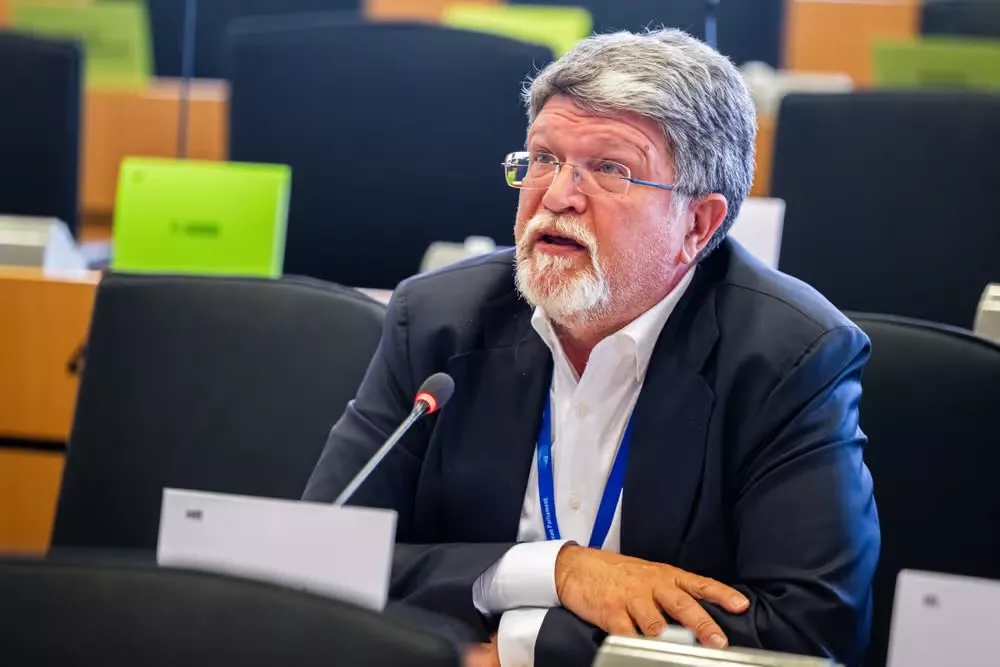
- Unfortunately, Serbia's reforms related to EU accession have largely slowed down significantly. In some segments, they have even regressed, which is particularly evident in the areas of the rule of law and democratic system standards - said parliamentary rapporteur for Serbia, Tonino Picula, presenting the draft of his report on Serbia's progress.
Picula says that the overall pace of the accession process has been stagnating for years, which is a consequence of limited progress in the dialogue with Kosovo, continuous non-compliance with the EU's common foreign and security policy, a general lack of genuine political will for progress, frequent rhetoric against EU officials, a worsening of conditions for the free work of media and civil society, as well as the ignoring of recommendations for reforming the electoral process.
The Croatian MEP also criticized the "actors" in the EU who have indulged Serbia for years in the name of stability.
- The policy of turning a blind eye and pushing for stability as an alibi by some European actors has not yielded results in the country's transformation, but has unfortunately only moved it further away from membership - Picula emphasizes.
He stresses that despite Serbia officially declaring EU membership as a strategic goal, there is no confirmation of this in practice, citing as examples the non-participation of President Aleksandar Vučić at the EU-Western Balkans summit last December and his participation in the military parade in Moscow last May.
Picula also stated that good neighborly relations are an important aspect of approaching the European Union.
- In this context, Serbia is expected to participate more actively and constructively in determining the fate of persons missing in the wars in Croatia, Bosnia and Herzegovina, and Kosovo. Likewise, I call on the relevant authorities in Serbia to cooperate with the judicial bodies of the member states in prosecuting war crimes from the nineties - said Picula.
Austrian MEP from the liberal Renew group, Helmut Brandstaetter, was extremely sharp.
- I am sure that the Serbian government does not want to join the European Union; what it wants is only money from the EU - said Brandstaetter, adding that money should not be given to the government but to civil society organizations.
He also noted that Serbian officials boast to the public that they are allocating money for various purposes, but it is actually European money.
- The European Union is foolish enough to give money there and then not even pay attention to what it is doing with it - Brandstaetter emphasized.
Picula offered a similar assessment: "It is questionable how much this stagnation, and even regression of Serbia on its European path, is complementary to the payments from the EU Growth Plan".
Several MEPs pointed out in the debate that the European Parliament delegation was recently met with an extremely hostile reception in the pro-government media in Belgrade, and negative comments were also made by President Vučić and Parliament Speaker Ana Brnabić.
Rapporteur Picula was particularly attacked, and his colleagues expressed solidarity with him.
Croatian MEP Željana Zovko (HDZ/EPP) called on "the citizens of Serbia to show their true pro-European faith and hold the government accountable, because what is happening to Serbia is not pro-European".
She said that Serbia and its citizens have the opportunity to finally come to terms with the past, open archives, and reveal what happened to the missing persons.
Davor Ivo Stier (HDZ/EPP), the EPP group's rapporteur for Serbia, also assessed that Serbia is moving further away from the European path and is becoming a security threat in southeastern Europe.
- Society in Serbia is polarized and deeply divided, and the desire to join the EU remains declarative, while they are moving away from European values, especially regarding freedom of assembly and media and academic freedom.
At the same time, Serbia refuses to clearly align with European foreign and security policy, while strengthening military cooperation with Russia and China and acquiring not only defense systems but also expensive and sophisticated offensive weapons, such as Chinese supersonic missiles - said Stier.
He also touched upon the position of national minorities in Serbia, emphasizing that the status of the Hungarian community has significantly improved, while significant problems remain in respecting the rights of other minorities, such as the Romanian, Bulgarian, and Croatian.
The only praise in the debate for Serbia came from MEP Annamarija Vicsek from Vojvodina, who entered the European Parliament on the list of the Hungarian ruling party Fidesz, and Grzegorz Braun from the Polish far-right party Konfederacja.
Vicsek said that Picula's report "is not criticism but a political judgment", that the text does not acknowledge what is positive, and that negative things are overemphasized.
Polish MEP Braun said that contempt and a sense of superiority towards Serbia were shown in the debate.
- I do not want to be one of the self-proclaimed democracy teachers; I would rather recommend everyone to live as they wish, and I would not recommend Serbia to join Europe - said Braun, who concluded his address with the sentence "Kosovo is Serbia".
Picula said in his closing remarks that the MEPs' debate indicates that Serbia's path to the European Union is in serious danger, primarily because its government continuously and deliberately sets aside almost every key aspect of accession required for progress.
He added that Serbia, as a candidate country for membership, has significant influence in the Western Balkan region, so its internal situation affects the overall enlargement policy.
Committee members have until April 9 to submit amendments. The committee is expected to vote on the report on June 3 or 4, after which it will be sent for debate at a plenary session.
Komentari (0)
Prijavite se za komentiranje
PrijavaJos nema komentara. Budite prvi!
Minuta
Sve →Iz drugih kategorija

High Representative Not Elected: Germans, French and British Against Americans, New Attempt at End of June

ČOVIĆ WITHOUT MERCY: How Those Who Brought Ademović to Office Created a Political Hell for Him



Sunny Saturday, quite warm



Tragedy in Albanian resort: Two minors drown












