
By: Amina Čorbo-Zećo
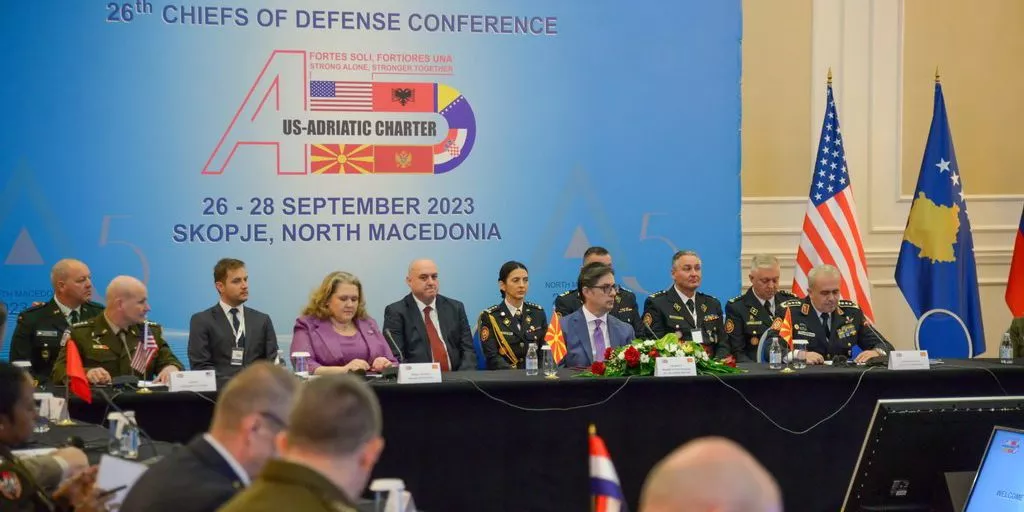
Bosnia and Herzegovina is officially the host of the 28th A5 Chiefs of Staff Conference (U.S.–Adriatic Charter Chiefs of Defense – CHODs Conference), planned for September 16–18, 2025.
However, the conference will not be held in BiH, but in Tirana!? Albania has agreed to be a co-host. Why? Because, as officially stated, it was necessary to “bypass diplomatic sensitivities” related to inviting Kosovo.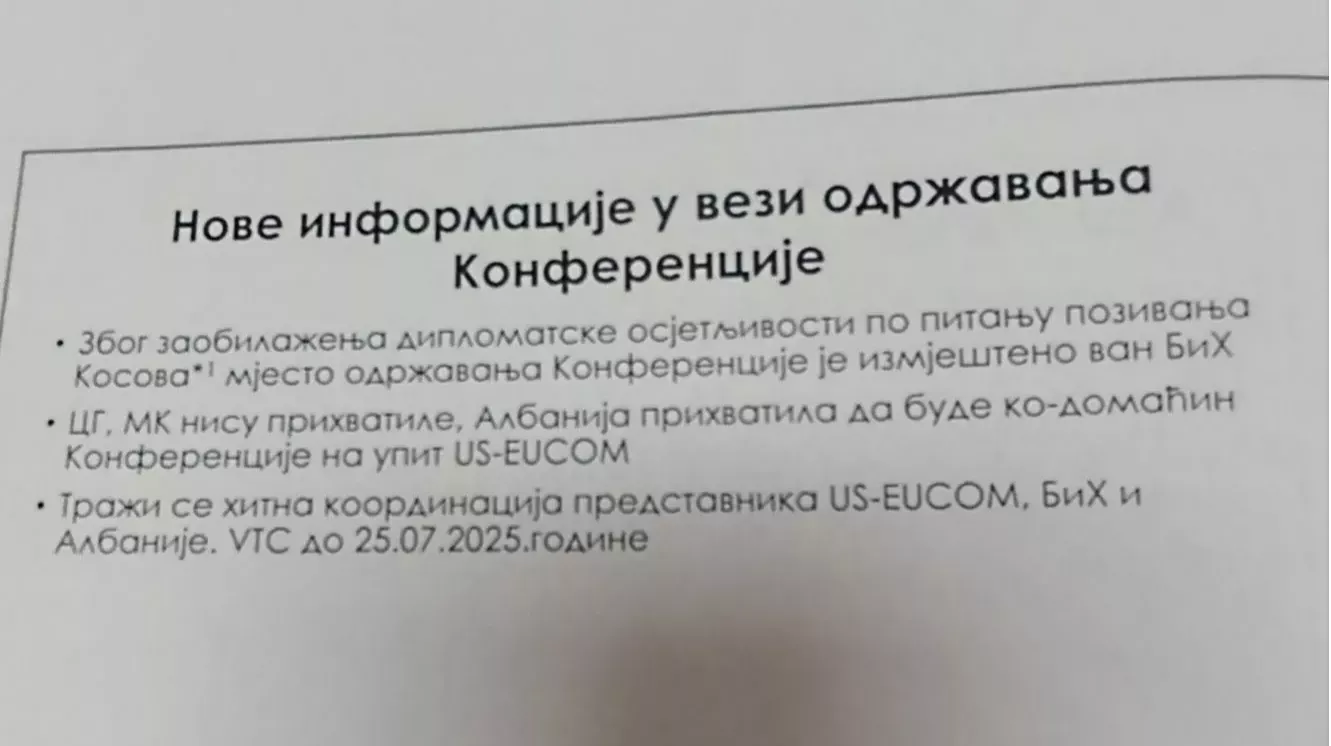
In other words, the host country is not politically capable or sovereign enough to organize an event involving all members of the A5 initiative on its own territory.
Bosnia and Herzegovina, due to known internal blockades regarding the recognition of Kosovo's independence, is clearly unable to invite that country without causing a political crisis within its own institutions. It seems Milorad Dodik is dictating the pace. Our sources claim that Gojko Knežević, Chief of the Joint Staff of the BiH Armed Forces, and Deputy Minister of Defense Aleksandar Goganović, exerted pressure.
Therefore, a “technical solution” was resorted to: the conference is moving from BiH to another country, while BiH remains the host in theory.
Such an approach reveals the painful truth that a country that cannot make a unified foreign policy decision on one conference cannot realistically manage its international obligations. The Kosovo issue is just a symptom; the real cause is the dysfunctional state structure and the lack of a minimum consensus.
The American-Adriatic Charter is an initiative formed by Albania, Croatia, Macedonia, and the United States of America to support aspiring countries on their path to NATO membership, later joined by Bosnia and Herzegovina and Montenegro. Serbia, Slovenia, and Kosovo participate in meetings as observers.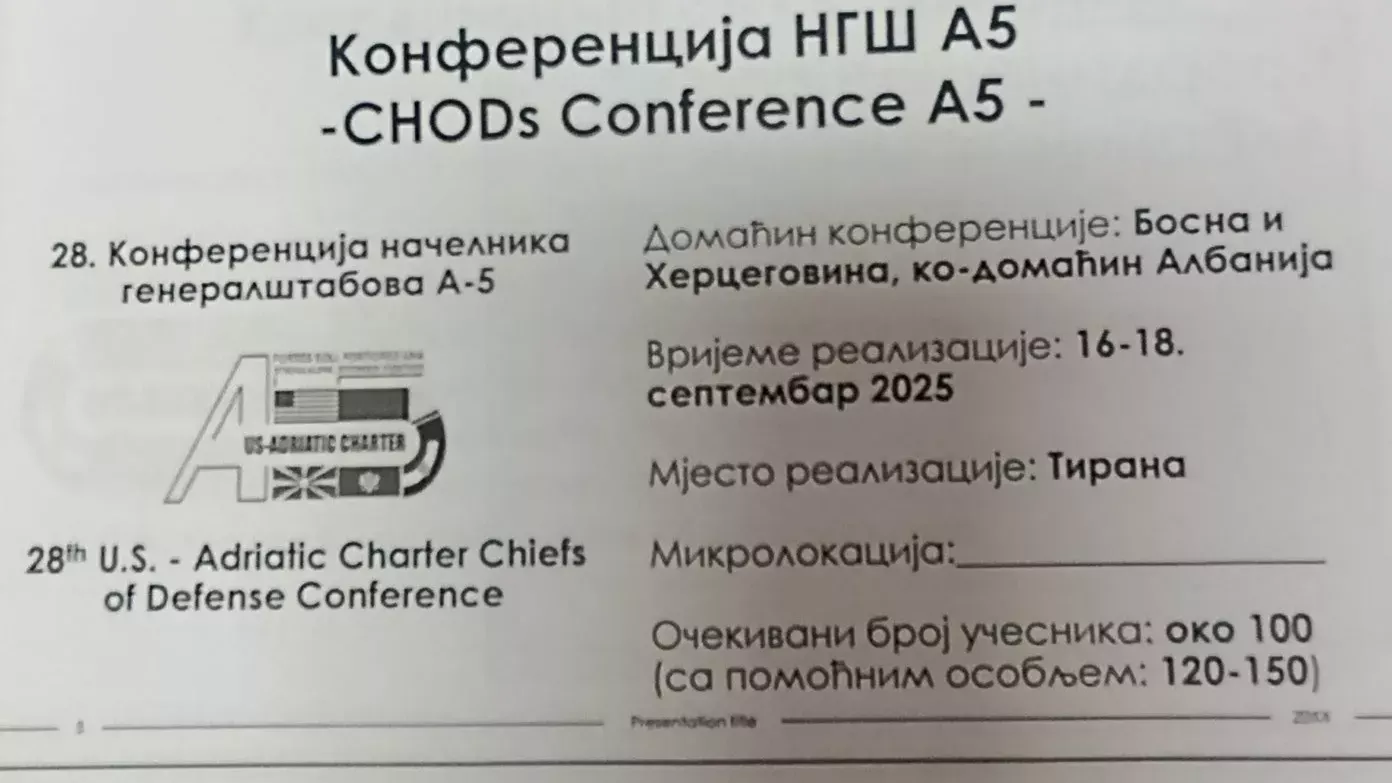
Even more indicative in this whole story is the fact that Montenegro and North Macedonia refused to be hosts, while Albania accepted the invitation from US-EUCOM (U.S. European Command). But unlike BiH, those countries at least had political consistency; if they can't or won't, they don't accept symbolic or financial responsibility either.
BiH, on the other hand, cannot organize the event, but it can pay all the costs. And thereby further loses credibility.
Calling this “bypassing diplomatic sensitivities” is a euphemism for what is a political humiliation of a country that pays but does not decide. The question is not why Kosovo is a sensitive topic, but why BiH lacked the courage or capacity to resolve this issue as the conference host, or to not assume the hosting role at all in that case.
If we cannot even symbolically accept the guests invited by A5, why are we signatories to the Charter at all?
Now there is a series of open questions: who, on behalf of BiH, accepted the hosting with full awareness that it could not be realized on BiH territory, who agreed that BiH would bear all costs and undertake all logistical and protocol obligations, while Albania “saves face” for the event, and most importantly, why is this decision not subject to broader public or parliamentary debate?
All in all, Bosnia and Herzegovina has once again shown itself to be a country with limited sovereignty and minimal international capacity. In its desire to be seen as a reliable partner, it has agreed to a model where others decide, and it pays.
If the price of “diplomatic sensitivity” is that BiH loses its dignity, then it is not about sensitivity, but about capitulation.
Komentari (0)
Prijavite se za komentiranje
PrijavaJos nema komentara. Budite prvi!
Minuta
Sve →Iz drugih kategorija

High Representative Not Elected: Germans, French and British Against Americans, New Attempt at End of June

ČOVIĆ WITHOUT MERCY: How Those Who Brought Ademović to Office Created a Political Hell for Him



Sunny Saturday, quite warm



Tragedy in Albanian resort: Two minors drown












