
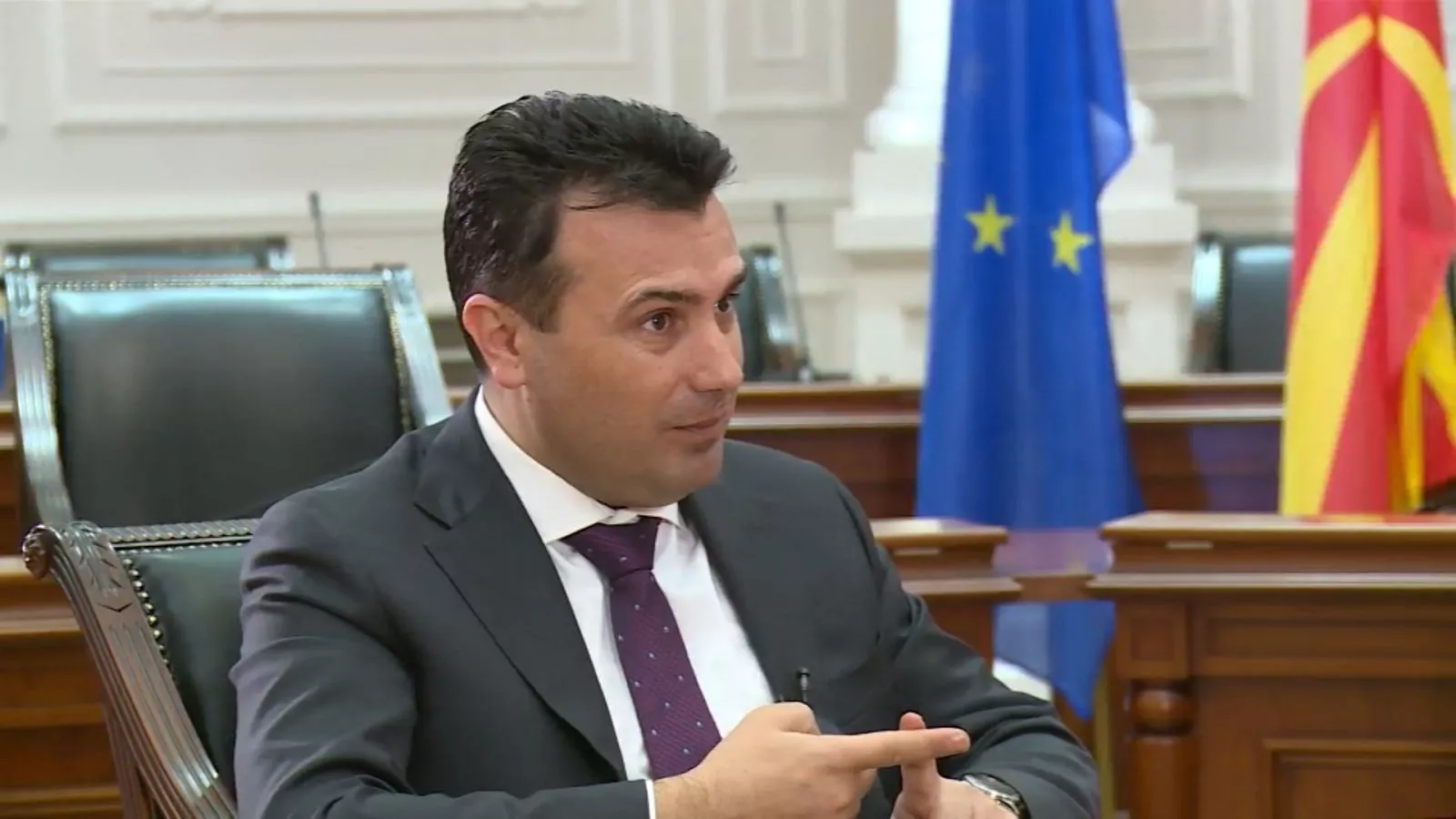
(Patria) - North Macedonia has successfully resolved a decades-long conflict with Greece, thereby managing to move the country forward, towards the European Union and NATO membership. With this move, the region has been reduced to Serbia and Bosnia and Herzegovina, which, each with their own problems, have remained fertile ground for all influences that can profit from the destabilization of the region. Serbian politicians, for their part, have either not congratulated their southern neighbors on this success or have done so rather lukewarmly, analyzes "Voice of America", reports the Patria agency.
"I would not agree, they welcomed the achievement of the agreement from Belgrade, President Vučić did so, with the expectation that the agreement will be implemented. Serbia has no reason to oppose the resolution of the Greek-Macedonian dispute. Serbia also suffered for years due to the unresolved dispute between Athens and Skopje," says Dr. Orhan Dragaš, director of the International Security Institute.
Zijad Bećirović, director of the International Institute for Middle Eastern and Balkan Studies (IFIMES) from Ljubljana, believes that Serbia did this "because of the interests of a larger and stronger player on the international stage." At the time of the breakup of SFRY, Serbia was one of the few countries that recognized Macedonia under that name, while it is noticeable that the reactions of Serbian officials have now been absent, or have been limited to earlier statements that Serbia will respect the official decision of the Macedonian institutions, recalls Vlade Radulović, director of the Center for Geostrategic Research and Terrorism.
"So, it is obvious that a series of actions by official Skopje, including support for the self-proclaimed independence of Kosovo, and later support during some votes like UNESCO, have taken their toll, and the relationship between Belgrade and Skopje has become colder," notes Radulović.
Meanwhile, Serbian Minister of Defense Aleksandar Vulin assessed that "Skopje has become a space from which attacks on Serbia and its president are initiated and will be initiated." His statement followed a meeting between Macedonian Prime Minister Zoran Zaev and the leader of the opposition Alliance for Serbia, Dragan Đilas, in Skopje.
The interlocutors of the Voice of America assess Minister Vulin's statements as arbitrary and in the realm of "science fiction," and Bećirović emphasizes that North Macedonia cannot even be a fictional enemy to its neighbors in "play station" games.
"Aleksandar Vučić can only be defeated by Aleksandar Vučić, because the current political forces of the opposition in Serbia are a heterogeneous conglomerate of radical leftists, anarchists, a part of individuals who have lost privileges that were controversial or were even linked to committed crimes, (pro)fascist forces, all of whom are trying to "steal" the citizens' protests in order to come to power and regain lost privileges without a clearly defined political program," is Bećirović's opinion.
Radulović, on the other hand, states that it was not "Macedonian state security operatives" who stormed the National Assembly of the Republic of Serbia, but the other way around.
Dragaš explains that Serbia has a friend in North Macedonia, and that increased efforts by other, much larger and more influential factors, primarily Russia, to slow down or thwart the unraveling of historical, conflict-ridden knots in the Balkans are noticeable.
"This did not succeed in the case of Macedonia, as it did before in the case of Montenegro, so Serbia, with the Kosovo issue, remains an important polygon for demonstrating Russian influence. The closer the solution to the Kosovo issue gets, the greater and sharper and more diverse Russia's resistance to that solution will be, using all available resources – human, media, propaganda, economic, and intelligence," says Dragaš.
He believes that a compromise between Serbia and Kosovo does not serve Russian interests, because it is stronger only in the case of as many frozen and unresolved conflicts as possible.
Komentari (0)
Prijavite se za komentiranje
PrijavaJos nema komentara. Budite prvi!
Minuta
Sve →Iz drugih kategorija

High Representative Not Elected: Germans, French and British Sabotaged Americans, New Attempt at End of June

ČOVIĆ WITHOUT MERCY: How Those Who Brought Ademović to Office Created a Political Hell for Him



Sunny Saturday, quite warm



Tragedy in Albanian resort: Two minors drown












