
By: Amina Čorbo-Zećo
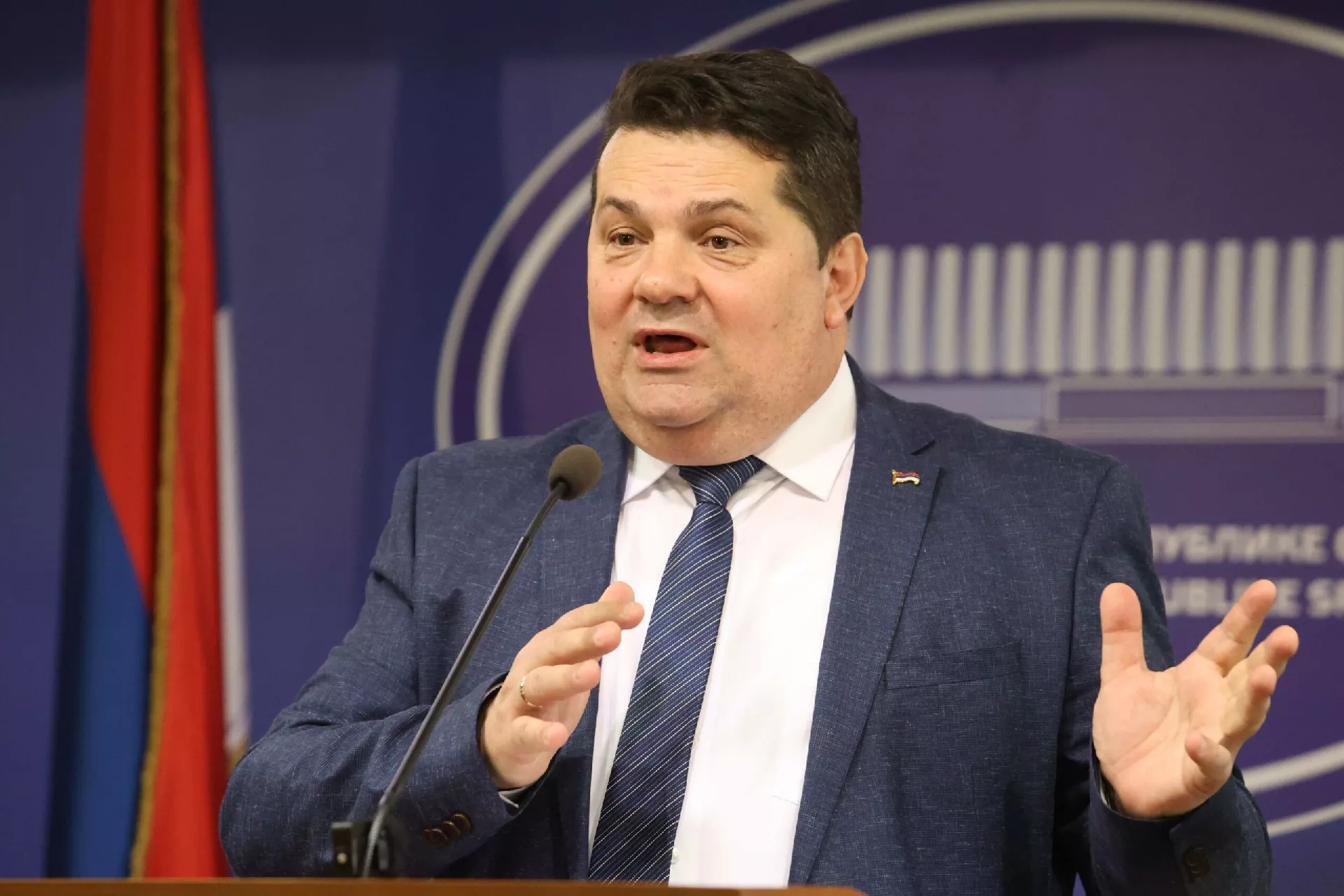
The statement by Nenad Stevandić, Speaker of the National Assembly of Republika Srpska and a fugitive from BiH justice, opens a series of key questions about the consistency and legality of decisions made by the authorities in Republika Srpska.
A 'Swedish buffet' is in effect, only the privileged take from it. Specifically, the political leadership of Republika Srpska, which does not mind the population of the RS entity being arrested by SIPA, under the order of the BiH Prosecutor's Office, while the top brass of the smaller BiH entity must be protected!
Stevandić claims on one hand that the laws of the NSRs prohibit the operation of state judicial bodies on the territory of Republika Srpska, and on the other hand, he admits that cooperation with SIPA is possible when it comes to serious criminal offenses such as murder, money laundering, and drug trafficking. Such a stance indicates selective application of laws, which further erodes legal certainty, primarily in Republika Srpska, but also throughout BiH.
Stevandić makes a fundamental contradiction here – if the NSRs laws are clear and categorical in prohibiting the work of SIPA and other state institutions on the territory of Republika Srpska, then any cooperation with those institutions would be illegal according to those same laws. However, when there is an interest in fighting crime, cooperation with SIPA is justified and presented as necessary. This approach shows that the laws adopted by the NSRs are not universal, but are applied according to the political needs and interests of the authorities in Republika Srpska.
The question is how much the citizens of Republika Srpska understand the point of the story and that they are the biggest victims of the secessionist policy of Dodik and his team.
Stevandić's statement implies that the decisions of judicial institutions at the BiH level are considered political tools against the authorities of Republika Srpska. However, at the same time, he emphasizes that criminals will not be protected, which may suggest that cooperation with state institutions will only occur when it suits the authorities in Republika Srpska!
State institutions should not agree to this in the first place, because such a selective approach shows double standards in interpreting laws and judicial decisions.
If the authorities of Republika Srpska truly want to fight crime, then cooperation with state institutions such as SIPA, the Court, and the Prosecutor's Office of BiH should be unquestionable and consistent. All the aforementioned institutions must operate in Republika Srpska regardless of what Stevandić or others say.
Stevandić's statement attempts to shift the blame for the political crisis in BiH to the abuse of state institutions, while at the same time, it is precisely the authorities of Republika Srpska that are making decisions that undermine the constitutional and legal order of the state. Challenging the jurisdiction of SIPA and the BiH Court in Republika Srpska is not just a political move, but also has long-term consequences for the rule of law.
If the MUP of Republika Srpska truly cooperates with international institutions when it comes to crime, as Stevandić states, then there is no legal justification for refusing cooperation with domestic institutions that have legally based jurisdiction throughout the entire territory of BiH.
Stevandić's statement shows an attempt to balance between challenging state institutions and acknowledging their necessity in the fight against crime. However, this further confirms that the laws adopted by the NSRs are a political instrument, not a legally consistent framework.
Ultimately, such statements confirm that the authorities of Republika Srpska are using the political crisis as an excuse for legal destabilization, while at the same time recognizing that they still need state institutions in certain situations. This is about the strategic erosion of the legal order, which in the long run can only bring harm to everyone, including the citizens of Republika Srpska the most.
Komentari (0)
Prijavite se za komentiranje
PrijavaJos nema komentara. Budite prvi!
Minuta
Sve →Iz drugih kategorija

High Representative Not Elected: Germans, French and British Against Americans, New Attempt at End of June

ČOVIĆ WITHOUT MERCY: How Those Who Brought Ademović to Office Created a Political Hell for Him



Sunny Saturday, quite warm



Tragedy in Albanian resort: Two minors drown












