
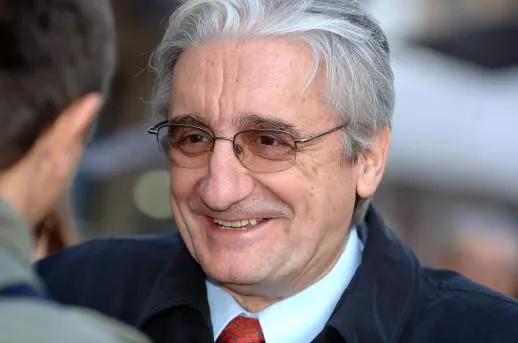
The Party of Democratic Action of Croatia (SDA) reacted to the interview of Miroslav Tuđman in the last issue of the Zagreb weekly Globus, in which he spoke about radicalism among Bosniaks, reports the Patria agency.
- The interview of Miroslav Tuđman published in issue 1395 of Globus is full of inaccurate information, distorted interpretations, and a clear attempt to manipulate readers. Given Tuđman's academic title, it is evident that this is not a matter of ignorance or lack of information, but a conscious suppression of truth and the spread of Islamophobia.
First of all, Miroslav Tuđman uses the word terrorism with the adjective "Islamic". In doing so, he tries to portray Islam as a religion of terror and violence. No religion calls for the killing of innocent people, and neither does Islam.
The Quranic verse from Surah Al-Ma'idah is well-known, which states: "Whoever kills a soul unless for a soul or for corruption [done] in the land, it is as if he had slain mankind entirely. And whoever saves one - it is as if he had saved mankind entirely."
Terrorism has neither religious nor national characteristics. It is an evil phenomenon that everyone must fight equally because, ultimately, terrorism threatens all of humanity. We will respond to the lies and deceptions presented about the Bosniak leader Alija Izetbegović with quotes and historical facts.
Tuđman claims that Alija Izetbegović rejected the Cutileiro plan because he did not want Bosnia and Herzegovina to consist of three constituent and sovereign peoples. It is widely known that this plan envisaged the recognition of Bosnian Serbs as a party to the negotiations. The Greater Serbian criminal Radovan Karadžić later boasted about this in the RS Assembly:
- You know what the Cutileiro map looked like when Bosnia broke apart. That's when we were accepted as a party to the conflict. The international community made a grave mistake by sending Cutileiro and Carrington to us before the war. By accepting us as a party to the conflict. If they had remained silent and recognized Bosnia and then said there were some rebels there who were overthrowing their own state, we would have been in serious trouble. No one would have talked to us.
War criminals Momčilo Krajišnik and Ratko Mladić spoke in a similar vein. In addition, Izetbegović rejected the plan after a meeting with the US Ambassador to the former Yugoslavia, W. Zimmermann, held on March 28, 1992, during which Zimmermann guaranteed Izetbegović the recognition of Bosnia and Herzegovina as an independent state.
Furthermore, Tuđman promotes the thesis that Izetbegović pursued a unitarist policy, equating it with the Greater Serbian one. Such an attempt to manipulate the truth is shocking, considering that Alija Izetbegović stated on numerous occasions that he and the Bosniaks advocated for a whole and democratic Bosnia and Herzegovina. While writing this article, 12 such quotes were found, and we will share at least one:
- Our goal is a democratic state - multinational and multi-party. This commitment gives our political model a distinct advantage over the clearly retrograde, ethnically, religiously, and one-party concept of Karadžić's SDS and Boban's HVO. Our democratic concept is a prerequisite for our political, and even military, victory in this war. Without this concept, there is no whole Bosnia.
And confirmation of this is the referendum question (The Referendum on the Independence of Bosnia and Herzegovina was held on February 29 and March 1, 1992. A total of 2,073,568 voters participated, with 99.7% voting for independence and 0.3% against), which read: Are you for a sovereign and independent Bosnia and Herzegovina, a state of equal citizens, the peoples of Bosnia and Herzegovina - Muslims, Serbs, Croats, and members of other peoples living in it?
Anyone who has analyzed (objectively and rationally) the work of Alija Izetbegović knows how senseless it is to try to promote the thesis of Alija Izetbegović's unitarist policy. Paradoxically, all other parties to the conflict had the greatest desire for this to happen. They wished for a scenario where Bosniaks would occupy 30% of the territory, which Izetbegović persistently refused, to their astonishment.
The next deception that is being attempted by Miroslav Tuđman, as well as other participants in the events of that period, is that there was no agreed-upon division by Tuđman and Milošević.
In recent times, several works have been published in Croatia that argue this point with equal force. These are primarily the book by Davorin Rudolf, "The Creation of the Croatian State 1991 - Ministerial Memoirs," then the book by Vladimir Šeks, "Coup d'état - How Manolić and Mesić Overthrew Tuđman and Croatian Policy Towards Bosnia and Herzegovina," and the latest in the series of books by Miroslav Tuđman, "The Other Side of the Rubicon - Alija Izetbegović's Political Strategy."
This phenomenon is interestingly correlated with the opinion of W. Zimmermann, who states that in the early 1990s, after the meeting between Tuđman and Milošević in Karađorđevo, the Croatian and Serbian press almost simultaneously began to talk about Bosnia as an Islamic state using the same arguments. Such a current phenomenon is clearly coming out of fear of a future verdict from the Hague tribunal, which is expected to be announced in November, against the former political and military leadership of the so-called Herceg-Bosna, led by Jadranko Prlić.
The fact that the attitude towards Bosniaks from the Croatian side, militarily and politically, changed after the meeting in Karađorđevo is undeniable. It is also known that expert groups from the Croatian and Serbian sides met in Tikveš on April 15, 1991, and discussed methods for dividing Bosnia.
The next shocking thing is that Miroslav Tuđman denies the genocide in Srebrenica! Every time Srebrenica is mentioned, he uses the words "massacre" and "tragedy." Tuđman, who advocates for the Europeanization of Bosnia and Herzegovina, clearly needs to be reminded that the International Criminal Tribunal for the Former Yugoslavia characterized the atrocities in Srebrenica as genocide in January 2007.
The "European" Tuđman is apparently also unaware that the European Parliament declared July 11 as the "Day of Remembrance of the Genocide in Srebrenica" in January 2009. With such a stance, Miroslav Tuđman aligns himself with a small number of Greater Serbian radicals who still deny the genocide in Srebrenica.
Tuđman's statements about war crimes in Central Bosnia are also unreasonable. It is undeniable that perpetrators of every war crime should be duly punished. Regardless of which side they fought for, or to which religion or nationality they belonged. Tuđman mentions about 50 such crimes committed by mujahideen. At the same time, he remains silent about the widely known Croatian crimes against Bosniaks committed in Central Bosnia.
From all of the above, Tuđman's effort to tarnish the actions of the Bosniak leader Alija Izetbegović and incite Islamophobia is evident. The use of the term "Islamic terrorism," the denial of genocide in Srebrenica, the denial of the division of Bosnia, and the silence about Croatian crimes in Central Bosnia are clear evidence of this.
It seems that fear and jealousy are growing in these regions because Alija Izetbegović undoubtedly emerged as the most positive figure from all the unfortunate events and became a role model for many people around the world. Furthermore, Alija Izetbegović was a victim of communist authorities on several occasions and spent many years in prison under the former regime, and he was never part of the communist government and regime of the former Yugoslavia.
It is impossible for us all to share the same views and preferences, which is human and logical. But it is shocking that facts are being manipulated and attempts are being made to defend the indefensible. We hope that Miroslav Tuđman will recognize all the negative consequences arising from his statements and apologize to all Bosniaks, especially those who defended the Republic of Croatia in the Homeland War, and to the mothers of over 1180 fallen Bosniak defenders of the Republic of Croatia - the statement from SDA Croatia concludes.
Komentari (0)
Prijavite se za komentiranje
PrijavaJos nema komentara. Budite prvi!
Minuta
Sve →Iz drugih kategorija

High Representative Not Elected: Germans, French and British Sabotaged Americans, New Attempt at End of June

ČOVIĆ WITHOUT MERCY: How Those Who Brought Ademović to Office Created a Political Hell for Him



Sunny Saturday, quite warm



Tragedy in Albanian resort: Two minors drown












