
By: Rasim Belko
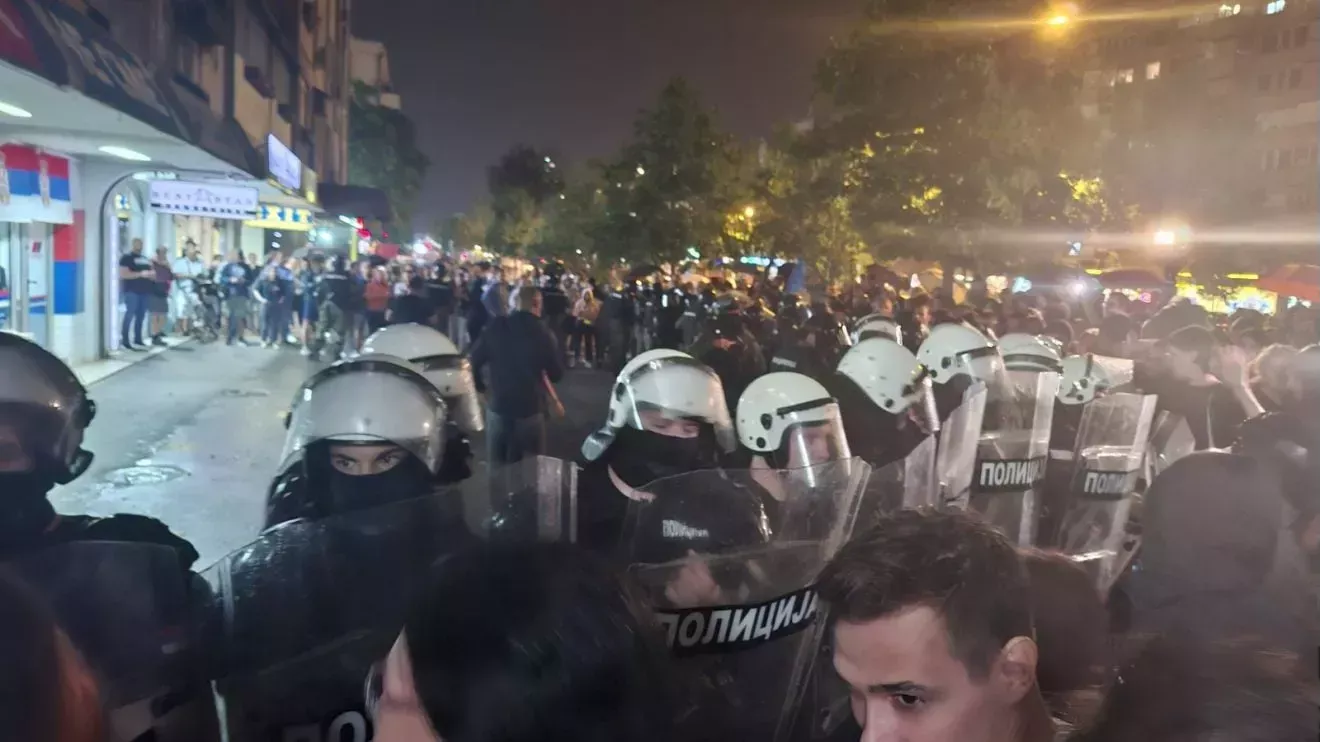
The clashes in Novi Pazar, the recent outbursts of brutality and repression by the Serbian police against Bosniaks in Sandžak, did not come out of nowhere. They are not an "incident", as the regime propaganda machine would like to present them, nor are they solely the result of local dissatisfaction. This is merely the latest symptom of a deeply rotten political symbiosis – between Aleksandar Vučić's regime and his Sandžak satellites who have been shaping the destiny of Bosniaks in that part of Serbia for decades.
SDA Sandžak, Rasim Ljajić's SDP, and more recently Usame Zukorlić's SPP are not political options that have worked towards the emancipation of Bosniaks. They have been and remain an extended arm of the Belgrade regime, regardless of who that regime was – Milošević, Koštunica, Tadić, or today Vučić. All three options, each in their own time and context, have betrayed the political interests of Bosniaks for the sake of personal positions, budget funds, and functional loyalty to Belgrade.
Paradoxically, just over a month ago, Usame Zukorlić visited Sarajevo, presenting himself as a self-proclaimed "missionary of reconciliation between Bosniaks and Serbs." In that role, he spoke of brotherhood, joint projects, and alleged rapprochements. Today, only a few weeks later, we see chauvinistic and openly racist statements being hurled from Belgrade against the Bosniaks of Sandžak – people who are marginalized and demonized, with the silence of those who claimed to bring "peace and development."
Zukorlić's "reconciliation" with Serbia means nothing when Bosniaks are beaten in the streets of Pazar. Ljajić's silence is not a diplomatic skill, but complicity. And SDA Sandžak is already a considerable political fossil that Belgrade uses when it needs "Bosniak legitimacy" for international forums.
Where is Sarajevo? And why should it be cautious?
As the situation in Sandžak heats up, Sarajevo must react – but with an awareness of the complexity of the political terrain. It is easy to fall into a trap, to react impulsively and "defend Bosniaks," but an ill-considered reaction can have the opposite effect.
Firstly, this is Serbia's internal affair. And as much as Sarajevo has a moral responsibility towards the Bosniaks in Sandžak, it must also protect its sovereignty. We cannot, on the one hand, demand that Belgrade and Zagreb stop influencing processes in BiH, and on the other hand, directly interfere in the political currents in Sandžak. There are mechanisms for action, but they must be used in a realpolitik manner, with emotional outbursts, which we often hear from Sarajevo and which are mostly counterproductive, excluded.
Because any fuel added from Sarajevo suits Vučić in his fight against internal political chaos, and even against the Sandžak Bosniaks themselves, so emotions must not guide Sarajevo's reaction.
Secondly, it is worth remembering that only yesterday, Sarajevo's official policy enthusiastically advocated for accession to the Open Balkan initiative – a regional initiative backed by precisely the Vučić regime. In that narrative, there was talk of "millions of Bosniaks" who would be part of that economic space, without any reflection on how these same people would be treated in real life. Sandžak today testifies how naive, if not dangerous, that idea was.
In essence, it was a mask for the Serbian world, and the thoughtless and self-proclaimed politicians of Sarajevo were caught, both then and now, imagining themselves in the mirror as Vučić and the Bosniak world. But imagination is one thing, reality is quite another.
Thirdly, in all of this, Sarajevo is silent about the most important thing: no one from official or political structures is calling to account the political factors in Sandžak who are direct accomplices in this crisis. Ljajić and Zukorlić are not neutral observers – they are political proxies for Aleksandar Vučić's system. Their role is crucial in creating a loyal and politically sterile Bosniak scene in Sandžak, which lacked the strength to articulate the real needs of the people. Today, we see the results of that opportunism.
The Bosniaks of Sandžak need neither patronage from Sarajevo nor blackmail from Belgrade. They need autonomous political representatives who will not play for a salary, position, or a comfortable seat. Sandžak must break with the politics of subservience and learn that political loyalty to a regime never pays off – because that same regime will be the first to sacrifice you when you become a burden. To help with this, Sarajevo must first learn a lesson, and that is not achieved with press releases and social media statuses.
Instead of cheap cross-border symbolism, Sarajevo should finally start acting as the political center of the people to whom it belongs – but with dignity, consistency, and a real strategy. This includes clear messages to "our own" who sell out Bosniak interests for a handful of power.
Otherwise, the cycle of political abuse of Sandžak will only continue – with increasingly brutal consequences.
But I repeat, Sarajevo must first define its strategy for internal affairs, and then, if successful, play the regional game. And that game requires time, strategy, responsibility, and readiness. If it does not have these, it is better for Sarajevo and the Bosniaks of Sandžak that nothing is heard from this side, the damage will be less!
Komentari (0)
Prijavite se za komentiranje
PrijavaJos nema komentara. Budite prvi!
Minuta
Sve →Iz drugih kategorija

High Representative Not Elected: Germans, French and British Against Americans, New Attempt at End of June

ČOVIĆ WITHOUT MERCY: How Those Who Brought Ademović to Office Created a Political Hell for Him



Sunny Saturday, quite warm



Tragedy in Albanian resort: Two minors drown












