
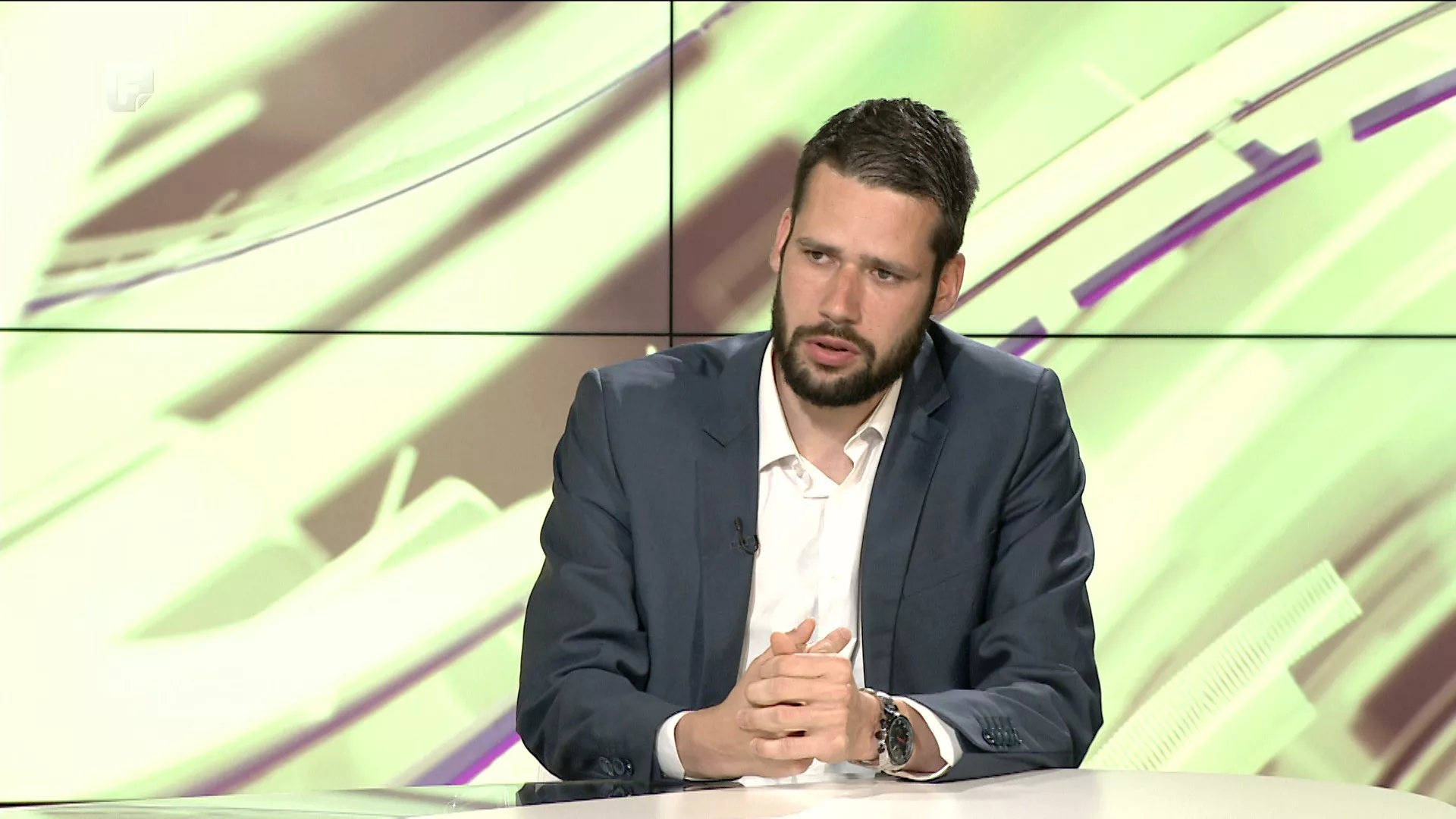
Written by: Jahja Muhasilović, Prof. Dr. of International Relations at IUS and one of the founders of 'Čuvari Bosne'
The commemoration of July 11 is turning into a manifestation where many who have disenfranchised Bosniaks and Bosnia and Herzegovina get the opportunity to morally 'cleanse' their Islamophobic policies and, from that people who suffered the most in the past war, buy credit for continuing their constant humiliation.
Politicians, both domestic and foreign, such as High Representative Christian Schmidt or Dragan Čović, in their hypocritical policy towards Bosnia and Herzegovina, have the opportunity to tell those Bosniaks that they 'have the right' to mourn their victims, but nothing more than that.
In a similar tone to what Schmidt recently awkwardly said, that Bosniaks have the right to live here, today Bosniaks are being forced to build their national narrative exclusively through cemeteries, for which the very same international community is most responsible, due to whose guarantees they ended up in them.
As 'atonement' for the dishonorable role of the international community in the genocide, Schmidt did everything he could to disenfranchise Bosniaks with his amendments to the Election Law, by which he handed over the Federation of Bosnia and Herzegovina to the HDZ.
From that party, which, by the way, has never distanced itself from the separatist policies that initiated ethnic cleansing against Bosniaks in parts of Bosnia and Herzegovina where their military branch, the HVO, had control, and continues to celebrate the crimes and criminals of the UZP, Schmidt made a kingmaker in half the country.
That same apartheid policy almost every July 11 goes to Srebrenica to pay tribute to the killed. Namely, Croatian policy is very zealous in condemning Serbian crimes. But that same Croatian policy will celebrate the crimes of the HVO in the company of war criminals. As if, say, in Ahmići, members of the same people as in Srebrenica did not suffer. As if the HVO did not turn its gun against the ARBiH precisely at the moment when it seemed that the VRS would win.
As if today the main ally of Milorad Dodik's policy is not precisely Dragan Čović. That same Čović on July 11 bows to Bosniaks in Srebrenica, while as a manager in the Mostar-based company SOKO, he held members of that same people in a slave-like position. Now his party, with the help of the international community, wants to politically enslave Bosniaks. Just as it once tacitly approved the genocide, so today the international community remains silent and paves the way for political enslavement.
There are many in the Bosnian corps who say that we should not spoil relations with Croatia or its outposts in Bosnia and Herzegovina. At least from the well-intentioned, such a view is based on wrong premises. Croatian policy itself decided to spoil relations with Bosnia and Herzegovina the moment it refused to correct the mistakes of the 1990s. It is precisely Croatia that decided to behave like Serbia, arrogantly and aggressively. Zagreb strives on every occasion to undermine the sovereignty of Bosnia and Herzegovina and bring instability. It is Zagreb that lobbied in 'centers of power' so that today the voice of Bosniaks in some parts of Bosnia and Herzegovina is worth ten times less than the Bosniak one.
That same Zagreb is an ally of Milorad Dodik's policy. The President of Croatia is a man who says that Bosniaks need soap. So, what is the difference between what the Croatian president says and the messages written on the walls in Potočari.
We are deceiving ourselves if we think that by choosing either of the two options, we are choosing the lesser of two evils. It is about identical politics with two faces. Both agree that the civic concept in Bosnia and Herzegovina must never be allowed. That Bosniaks must never gain the capacity to articulate their own demographic superiority. Therefore, both Belgrade and Zagreb will always push stories about how there is no Bosnian patriotic bloc, but that it is a Bosniak great-state project, which anyone even slightly familiar with the situation in the Bosnian bloc knows that no one, even in their wildest dreams, dreams of such a state. The struggle in Bosnia and Herzegovina is waged between two basic forces.
The first, the force of resistance to separatism and integrity, while the second is the force of separatism and constant weakening of the state capacities of Bosnia and Herzegovina. Of course, in the force of subversive action against us, they try to convince us that state unitarism is a bad idea and that it goes in the direction of denying the Serbian and Croatian cultural identity in Bosnia and Herzegovina.
That is a notorious lie and a trick of the neighboring intelligence structures! If state unitarism is bad, why are Serbia and Croatia then unitary states? Well, of course, such policies will be pushed by agents of neighboring countries whose national narrative survives on the idea of partitioning Bosnia and Herzegovina and taking away from it. To adequately defend ourselves against such attacks, we must first understand that we have two forces striking at us.
Cheap attempts to buy our favor, after we are constantly disenfranchised, must not satisfy us, nor deceive us. And perhaps most importantly, our national course of action must begin to abandon the defeatist shirt of victimhood and start building the narrative on successes and the fact that, despite all the evil predictions, we nevertheless defended ourselves against a much stronger enemy.
For those who push our national pride and successes into obscurity, we are only acceptable as victims. For them, only a dead Bosniak is a sufficiently good Bosniak.
Komentari (0)
Prijavite se za komentiranje
PrijavaJos nema komentara. Budite prvi!
Minuta
Sve →Iz drugih kategorija

High Representative Not Elected: Germans, French and British Against Americans, New Attempt at End of June

ČOVIĆ WITHOUT MERCY: How Those Who Brought Ademović to Office Created a Political Hell for Him



Sunny Saturday, quite warm



Tragedy in Albanian resort: Two minors drown












