
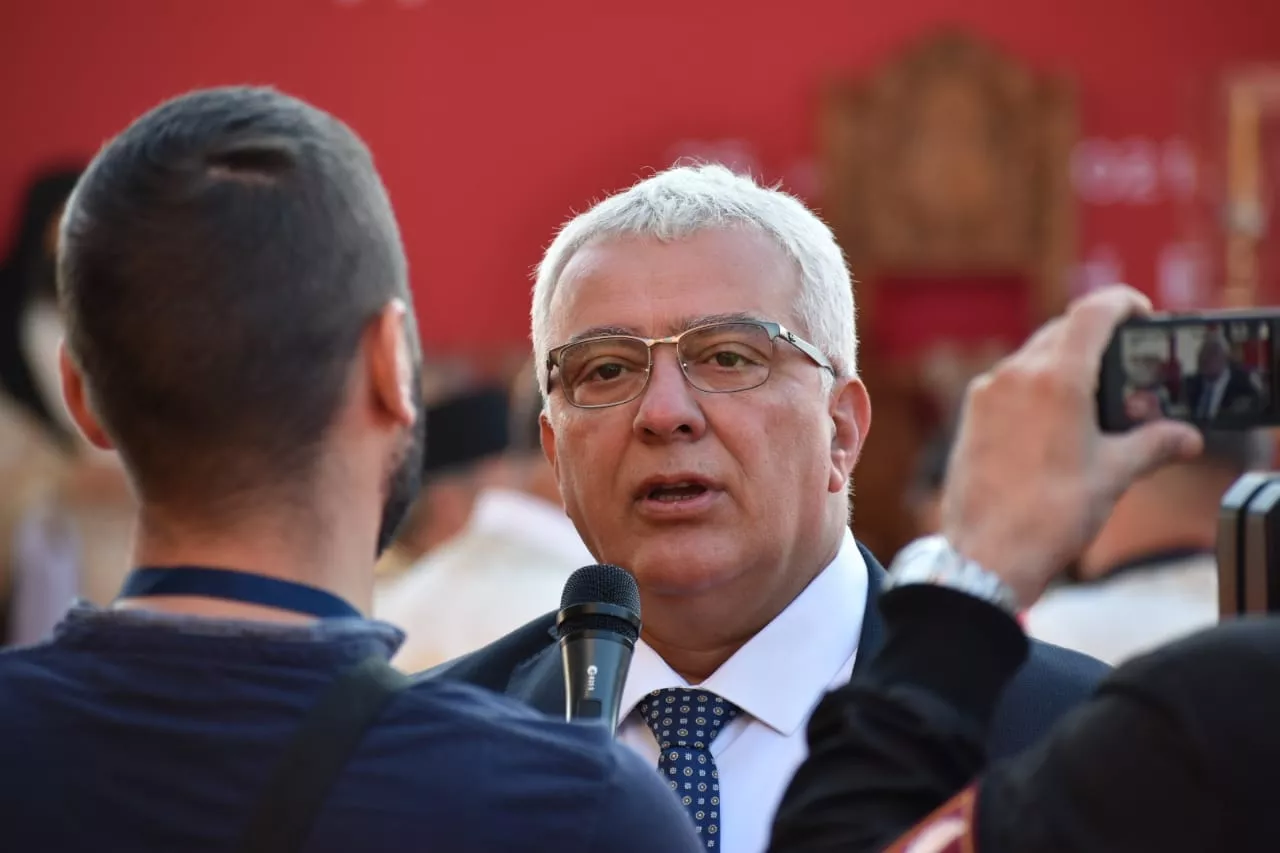
By Armin Sijamić
The appointment of Andrija Mandić as the head of the Montenegrin parliament by parties supported by the West could be a dangerous precedent for the entire post-Yugoslav space, especially in the context of these countries' path towards Euro-Atlantic integration, regional stability, and the building of a civil society based on universal values and human rights.
It seems that Aleksandar Vučić has become the West's best student and has best understood the message that the most effective way to distance oneself from that part of the world is to repeat countless times that you want to join the European Union and do almost the opposite. In parts of the West, regardless of what those who utter it do, this is the ultimate proof of victory over the "malignant influence" of other powers interested in the Balkans.
Although such a statement can also apply to NATO, it is primarily important for the path of countries towards the EU, which is ideologically a peace project. Therefore, the appointment of the Chetnik duke Andrija Mandić is a paramount issue, because wherever Chetnik forces reached in the region, mass graves were left behind. Now, the heirs of that ideology, or its sympathizers and inheritors, are gaining the cloak of acceptable politicians who are supposedly leading the region towards peace and stability.
Mandić's appointment to the head of the parliament has gone beyond political and legal frameworks, although many, with reason, problematize the fact that a man on trial for a coup d'état and who does not hide his sympathy for Vladimir Putin will have access to NATO documents, while the West is saying that Moscow's influence is growing in the region and that trenches must be dug towards Moscow accordingly.
The Manifestation of the "Euro-Atlantic Path"
In the late 19th and early 20th centuries, a debate was held in Egypt about whether women there should wear the hijab or widely adopt the European style of dress, which was already being embraced by the wealthier segments of the population and the rising liberals.
Who knows what Egypt's fate would have been if British Consul Evelyn Baring had not joined the discussion, who, as expected, supported those who favored the European style. Whether Baring did it out of good intentions is less important than the fact that his stance served as an argument for conservatives to link the issue of the hijab with the issue of resistance to Western imperialism and colonialism. To be against the hijab then meant to be for those who wanted a enslaved Egypt.
In the Montenegrin case, Mandić's appointment to the third most important position in the country, following the Egyptian example, raises the question of the acceptability of fascist ideology, for which hundreds of thousands of people, including Serbs, suffered. Namely, does the West's support for Duke Mandić's coalition partners mean that Chetnikism, or any other form of fascism, has become socially and politically acceptable, or is it just a new manifestation of the "Euro-Atlantic path"?
The support Mandić received from his coalition partners indicates that someone is seriously testing the limits of what is acceptable to the West in this part of the world. Mandić's appointment shows us that one can now reach important positions in countries controlled by the West as a Chetnik duke. Thus, the heirs of the ideas of Adolf Hitler and Benito Mussolini's collaborators have become a legitimate political factor in a part of the world politically, economically, and militarily controlled by the West.
Evidence of this is the vote in parliament where Mandić received the support of pro-Western, pro-Serbian, and pro-Russian parties, as well as a few Albanian MPs. In the same parliament, a verbal confrontation occurred between two proteges of the West, former Prime Minister Dritan Abazović and his successor Milojko Spajić. Abazović mentioned the "sponsors" of his successor and his government several times.
The sponsors themselves are the main actors in the Montenegrin drama, where the goal was to remove Milo Đukanović from power on corruption charges. In addition to official Belgrade, which supports Mandić and all variants of such policies, Kosovo and Albania also got involved in forming the government. Albin Kurti was against such an outcome, but some Albanian politicians voted for the Chetnik duke, suggesting that Aleksandar Vučić's friend, Albanian Prime Minister Edi Rama, likely had a hand in it.
Simple Calculations and Dangerous Plans
Whether Abazović was referring to these sponsors is not entirely clear, but it is clear that official Belgrade, the United States, and most of the West have (in)directly supported the election of a Chetnik duke to head the parliament and the formation of a government without Montenegrin and Bosniak parties. Let's recall that Đukanović was criticized for forming governments without Serbian parties. In the new episode of the Montenegrin drama, which is both a comedy and a tragedy, the majority nation of that country is not in the government.
Can we believe that this outcome is a coincidence and a result of the West's lack of information, or is it due to the ignorance of those making the decisions? In the Montenegrin parliament, which has 81 seats, to avoid the scenario with a Chetnik duke at its head, it would have been enough to count to 41 and know that any majority without the Democratic Party of Socialists (DPS) and the Bosniak Party implies those who are against NATO, who seek border redrawing, and who support Moscow.
At the end of May, the Special Envoy of the United States for the Western Balkans, Gabriel Escobar, warned of the risk of Russian interference in the elections in Montenegro. "You can be sure that (Russia) will try by all differences and all methods to divert Montenegro from its European path. Therefore, yes, I am concerned about the elections not only in Montenegro but also in the region," Escobar said.
"As you know, whoever keeps Montenegro on its European path, whoever remains committed to Montenegro's NATO membership obligations, and whoever is an ally in the fight against corruption, can expect US support," Escobar added.
Thus, before the elections, Escobar portrayed a government without the DPS and parties gathered around Mandić. But in mid-September, when it became clear that Spajić had to choose between the DPS and the Bosniak Party on one side, and Mandić on the other, if he didn't want new elections, Escobar changed his tone.
"There have been many recommendations, I wouldn't say demands, but recommendations from the US, the European Union, Great Britain, and even NATO that Montenegro should avoid bringing an anti-NATO, anti-Western political party that is also against the European Union into its coalition. If Montenegro does this, then it chooses to accept the pressure of another country over the recommendations of the transatlantic community. I don't think it's necessary to think about what would happen afterwards. Montenegro is a very strong and good NATO member and ally, and we expect it to continue to be so," said Escobar.
Could Escobar have made such a mistake in his assessments, or is there a planned effort to strengthen the policy that led to the war in the 1990s with a hundred thousand dead and millions displaced? Is the fact that the world's largest power could not foresee such an outcome more frightening, or the fact that it perhaps wanted precisely this to happen?
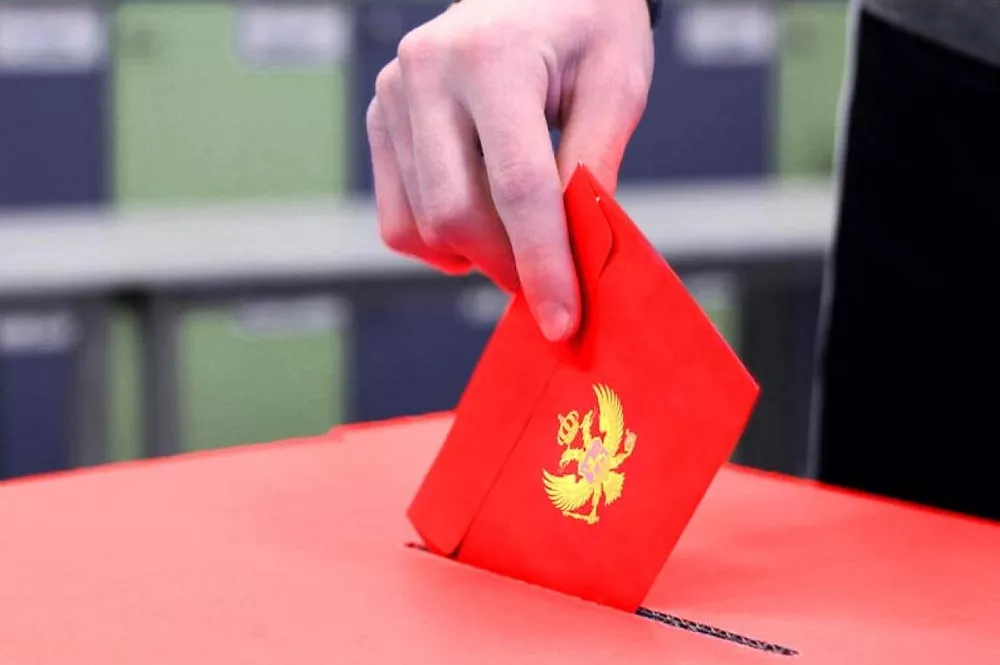
The experiment with Montenegrin governments, which has been ongoing for four years, is costing the region more and more. The plan to remove the DPS and then bring parties and governments with short lifespans to power, as has been the case in Italy for decades, is currently working incorrectly in Montenegro, because in this Russian roulette, those who would like to see that country and its majority people erased from the political map could come to power.
As the West gets lost in calculations of parliamentary majority and in its plans to strengthen Vučić, who allegedly wants to distance Serbia from Russia, but whose policies from Kosovo to Montenegro to Bosnia and Herzegovina lead to instability and increasingly frequent conflicts, citizens should begin to get used to a "new normal" where it is possible for a Chetnik duke with sympathies for Putin to lead a NATO member state towards the European Union and Western values.
Komentari (0)
Prijavite se za komentiranje
PrijavaJos nema komentara. Budite prvi!
Minuta
Sve →Iz drugih kategorija

High Representative Not Elected: Germans, French and British Against Americans, New Attempt at End of June

ČOVIĆ WITHOUT MERCY: How Those Who Brought Ademović to Office Created a Political Hell for Him



Sunny Saturday, quite warm



Tragedy in Albanian resort: Two minors drown












