
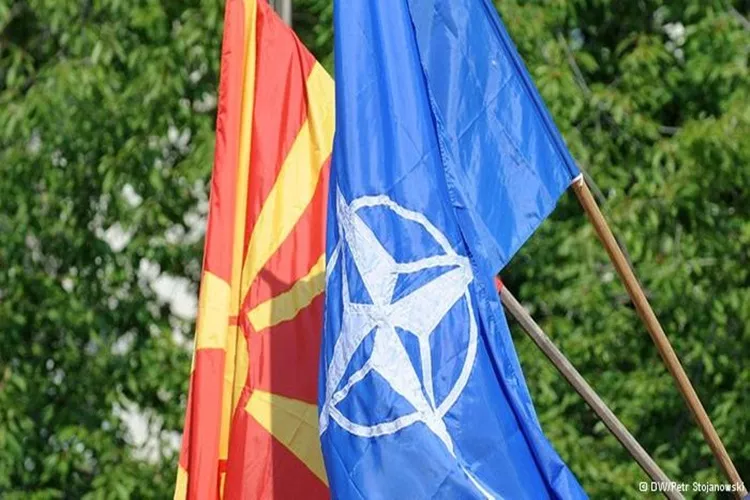
(Patria) - The first round of presidential elections is being held in North Macedonia on Sunday, with three candidates participating - the ruling coalition Social Democratic Union of Macedonia - Democratic Union for Integration, the largest opposition VMRO DPMNE, and opposition Albanian parties.
Polling stations opened at 7:00 AM.
A period of silence will last until the closing of polling stations at 7:00 PM, and the heads of the presidential candidates' campaign teams have previously called for a high turnout and a peaceful election day.
The International Institute IFIMES has prepared a comprehensive analysis regarding the elections.
Citizens are once again choosing between antiquity and the future
In the Republic of North Macedonia (RSM), the sixth presidential elections since the declaration of independence on September 8, 1991, will be held on April 21, 2019. A total of 1,808,131 voters are eligible to vote in these elections. It is symptomatic that 1,803,131 voters are registered for these elections, while the total population of North Macedonia is slightly less than 2,100,000 inhabitants. The number of voters is about 20% less than the total population of Macedonia. The question arises whether it is possible that only 20% of Macedonia's population is under 18 years of age, or if this is a classic attempt to manipulate citizens' votes by including deceased individuals and those who have not lived in North Macedonia for a long time, or who live abroad temporarily or permanently, on the voter lists.
Three candidates will compete for the presidential position: Stevo Pendarovski, the joint candidate of the ruling SDSM (Social Democratic Union of Macedonia) and 30 other political parties, Gordana Siljanovska Davkova, the candidate of the opposition VMRO-DPMNE supported by several smaller coalition parties, and Blerim Reka, the candidate of the Alliance for Albanians (DR-ADP, UNITETI, NDP) and the BESA movement.
In addition to the presidential elections, local elections will be held to elect mayors in the municipalities of Ohrid, Novo Selo, and Debar.
The second round of presidential elections is scheduled for May 5.
The final showdown with Gruevism and Ivanovism
The presidential elections represent an opportunity to continue the changes in the Republic of North Macedonia initiated by the formation of the new coalition Government of the Republic of North Macedonia on May 31, 2017, led by Prime Minister Zoran Zaev (SDSM).
The presidential elections in the Republic of North Macedonia are unusual elections for both sides of the political spectrum (SDSM and VMRO-DPMNE), as they involve a political struggle between democracy and authoritarianism, or between the civic and/or ethnic character of North Macedonia. Although these are presidential elections, they are essentially a choice between "Antiquity and the Future," even though nominally everyone is for "the West."
The upcoming presidential elections mark the end of the transition, i.e., the transfer of power, which began with the formation of the new Government of the Republic of North Macedonia on May 31, 2017, through the local elections in October 2017, which definitively defeated the regime of the duo Nikola Gruevski (VMRO-DPMNE) – Sašo Mijalkov (VMRO-DPMNE).
Therefore, the presidential elections are important because they deliver the final blow to so-called Gruevism and Ivanovism, which was produced by the current president of RSM, Gjorge Ivanov, and which he is trying to reinstate through his candidate Gordana Siljanovska Davkova.
Zoran Zaev and Alexis Tsipras, with the Prespa Agreement, defeated the doctrine of Slobodan Milošević and Constantine Mitsotakis, assisted by certain Macedonian political parties, which did not envision the existence of Macedonia as a state. From this, it is clear that the Republic of Serbia recognized Macedonia only in 1996, after the failure of the Greater Serbian project in the region.
Pendarovski against two VMRO-DPMNE candidates?
Gordana Siljanovska Davkova was carefully chosen in the VMRO-DPMNE laboratory, and the influence of Nikola Gruevski and Gjorge Ivanov is evident in her appearances. Gruevski is the mentor of the Siljanovska Davkova concept, and Ivanov is the inspiration. Siljanovska Davkova does not recognize the constitutional name Republic of North Macedonia, despite being a professor and doctor of law, while she submitted her candidacy for president to the State Election Commission of the Republic of North Macedonia. Siljanovska Davkova is unclear on some other issues, trying to please voters, offering not a new but an old, already seen policy of Gjorge Ivanov.
Siljanovska Davkova publicly insists that a woman should be president, while Blerim Reka states that it is time for an Albanian to be president of RSM. Both candidates are addressing misguided issues, again emphasizing the gender or ethnic principle, rather than the future president being the president of all citizens. Blerim Reka even demands that the Republic of North Macedonia regain its republican status as if it were a monarchy until now?
Also interesting is the 11 years of silence from Ambassador Blerim Reka, who was the ambassador of Nikola Gruevski's regime to the EU in Brussels. The question arises: where was Blerim Reka when A1 television was shut down? Where was Reka when the autonomy of the university was being undermined? He is a university professor. Where was Reka on December 24, 2012? And finally, where was Blerim Reka on April 27, 2017? The Macedonian public does not recall hearing a single word from him regarding all these events. And now he speaks of democracy, for the Republic. Yes, it is nice and easy when someone else wins your democracy and republic. You cannot lead a republic while remaining silent when it was humiliated, broken, and trampled upon.
From Reka's statements, the message is clear: his participation in the elections is aimed at preventing Pendarovski's victory in the first round of elections - the question remains whether he will succeed?
Analysts warn about the role of presidential candidate Blerim Reka, who essentially represents another VMRO-DPMNE candidate and reveals the behind-the-scenes dealings on the Macedonian political scene, where a segment of Albanians still closely cooperates with VMRO-DPMNE and maintains communication/cooperation with Nikola Gruevski.
Presidential candidate Stevo Pendarovski has an advantage over Siljanovska Davkova and Reka because he is the candidate of a broad political and ethnic spectrum, representing as many as 31 political entities. His political program is based on the concept of "One Society for All" and the continuation of accelerated reforms initiated by the current RSM Government, the completion of full NATO membership, and the start of negotiations with the EU in June 2019, all in affirmation of RSM's international reputation, which was brought to its lowest level during Ivanov's presidential term, while Ivanov's support in RSM is less than 10% of citizens' support. The President of RSM must be the most reputable politician because, given the modest constitutional powers, their influence in society and the state is built on their reputation. Siljanovska Davkova and Reka have already shown in their announcements tendencies to be presidents of only one part of the citizens, not of all citizens of RSM, which is a multi-ethnic, multi-religious, and multilingual state.
Therefore, the upcoming presidential elections are an opportunity for the final blow to Gruevski's regime and to send the current president of RSM, Gjorge Ivanov, to the dustbin of history.
No fair and honest elections without free media
Key issues for the conduct of presidential elections include the voter list, media regulation and their reporting, updating the voter list, and ensuring the unimpeded and transparent operation of the State Election Commission (SEC). Media regulation is a very important issue, especially concerning the public broadcaster Macedonian Radio Television (MRT), which, with minor corrections, still operates as it did during the rule of Nikola Gruevski's regime and VMRO-DPMNE, instead of transforming into a modern public service that serves the public and citizens, because without free media, there are no fair and honest elections. The public service must be independent and a watchdog of the government.
The issue of media regulation will continue to be a challenge for Macedonian society, as most media outlets ignore their social mission and serve specific political parties and/or the government. As before, direct candidate duels are rare, as they mostly appear in media outlets considered close to their political option. It is very important that the Agency for Audio and Audiovisual Media has adopted guidelines for the implementation of the election law.
De-Gruevization of Macedonia is an inevitable and long-term process
The de-Gruevization of the Republic of Macedonia is not just about confronting the causes and consequences of Nikola Gruevski's regime and VMRO-DPMNE, but it is a long-term process of dismantling that regime, which is capillarized throughout all segments of the Macedonian state and society. In addition to the role of the Special Public Prosecutor's Office (SPO), broader social action and efforts to eliminate the harmful consequences of Gruevski's 11-year rule are important. Gruevski and his associates cannot escape responsibility and judicial prosecution for all that was committed during their 11-year rule. Gruevski, although in exile in Hungary, is proceeding with a scenario for the presidential elections where he will force/stage a crisis and early parliamentary elections through the presidential elections, thereby attempting to halt positive political processes such as the Good Neighborliness Agreement with Bulgaria, the Prespa Agreement, and the NATO Accession Protocol.
Gruevski faces serious charges from the Special Public Prosecutor's Office (SPO), while the new party leader Hristijan Mickoski will have to reform the party if he wants to profile himself as a young conservative leader. Resistance to reforms is growing within VMRO-DPMNE, especially among Gruevski's cadres, which complicates Mickoski's position, as he must rid himself of cadres who bear part of the responsibility for the committed crimes and the damaged reputation of VMRO-DPMNE.
Presidential elections – elections for personality and program
The upcoming presidential elections in the Republic of Macedonia represent another confrontation between two opposing political blocs, SDSM and VMRO-DPMNE. Presidential elections are specific in that personalities nominated by parties/coalitions and the offered program play a key role.
The impression from the campaign is that the leaders of the two largest parties, SDSM and VMRO-DPMNE, Zoran Zaev and Hristijan Mickoski, are confronting each other more than the presidential candidates themselves.
VMRO-DPMNE has missed the election campaign theme, as it criticizes the current state government during the presidential election campaign, and at pre-election rallies, it boasts about its achievements while in power for a long time, which were devastating for the citizens and the Republic of North Macedonia. It criticizes the good neighborliness agreement signed between the Republic of Macedonia and the Republic of Bulgaria, the Prespa Agreement, the migrant strategy, economic policy, debates about migrants, makes promises about infrastructure projects, ecology, tens of thousands of new jobs, and a better standard of living, instead of addressing issues within the purview of the President of RSM. The entire VMRO-DPMNE campaign is conceived around returning to the previous state and not recognizing signed agreements, even not recognizing the constitutional name Republic of North Macedonia, but exclusively using the unconstitutional name Republic of Macedonia in their public appearances.
The coalition gathered around SDSM comprises a total of 31 political entities, which gives additional strength to presidential candidate Stevo Pendarovski, as it includes all ethnic communities living in the Republic of Macedonia (Macedonians, Albanians, Serbs, Turks, Vlachs, Roma, Bosniaks, etc.) and represents a novelty on the political scene in RSM and the region.
A chance to fall the last stronghold of Gruevism in RSM
The International Institute IFIMES believes that the upcoming presidential elections in the Republic of North Macedonia are extremely important for the future of the Republic of North Macedonia, as they will represent a continuation of the positive political processes and changes initiated in the last early parliamentary elections held on December 11, 2016, in the local elections of October/November 2017, and the results of the work of the current RSM Government. The victory of Stevo Pendarovski, supported by the coalition around SDSM, will mean the completion of the power transition and an accelerated continuation of reforms and North Macedonia's new international positioning as a NATO member and the commencement of negotiations with the EU. The opposite situation would lead to a blockade of further democratization processes and renewed obstructions, which could return the Republic of North Macedonia to the period before the overthrow of Nikola Gruevski's regime.
Analysts expect the rhetoric to intensify in the final phase of the campaign, which must not lead to conflicts, violence, or the interference of foreign factors, primarily Russia, which continues to work intensely to destabilize North Macedonia. Successfully conducted presidential elections will be another important step towards the Republic of North Macedonia becoming the 30th full member of NATO in December 2019 and finally starting negotiations for full membership in the EU in June 2019. The presidential elections are a chance to fall the last stronghold of Gruevism in RSM.
Komentari (0)
Prijavite se za komentiranje
PrijavaJos nema komentara. Budite prvi!
Minuta
Sve →Iz drugih kategorija

High Representative Not Elected: Germans, French and British Sabotaged Americans, New Attempt at End of June

ČOVIĆ WITHOUT MERCY: How Those Who Brought Ademović to Office Created a Political Hell for Him



Sunny Saturday, quite warm



Tragedy in Albanian resort: Two minors drown












